Lilly China Research and Development Center, Shanghai, 201203, China.
Present Address: Fosun Kite Biotechnology, No. 222 Kangnan Road, Shanghai, 201210, China.
BMC Genomics. 2018 Mar 9;19(1):188. doi: 10.1186/s12864-018-4575-3.
Noninvasive biomarkers are urgently needed for patients with nonalcoholic steatohepatitis (NASH) to assist in diagnosis, monitoring disease progression and assessing treatment response. Recently several exploratory studies showed that circulating level of microRNA is associated with NASH and correlated with disease severity. Although these data were encouraging, the application of circulating microRNA as biomarkers for patient screening and stratification need to be further assessed under well-controlled conditions.
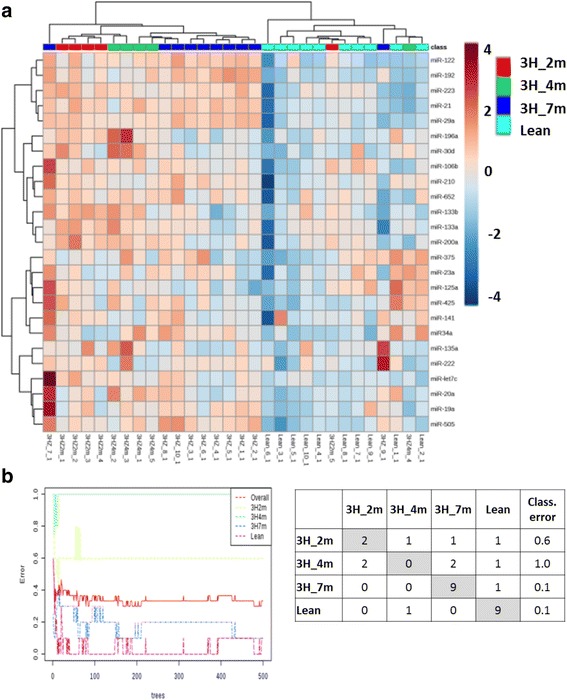
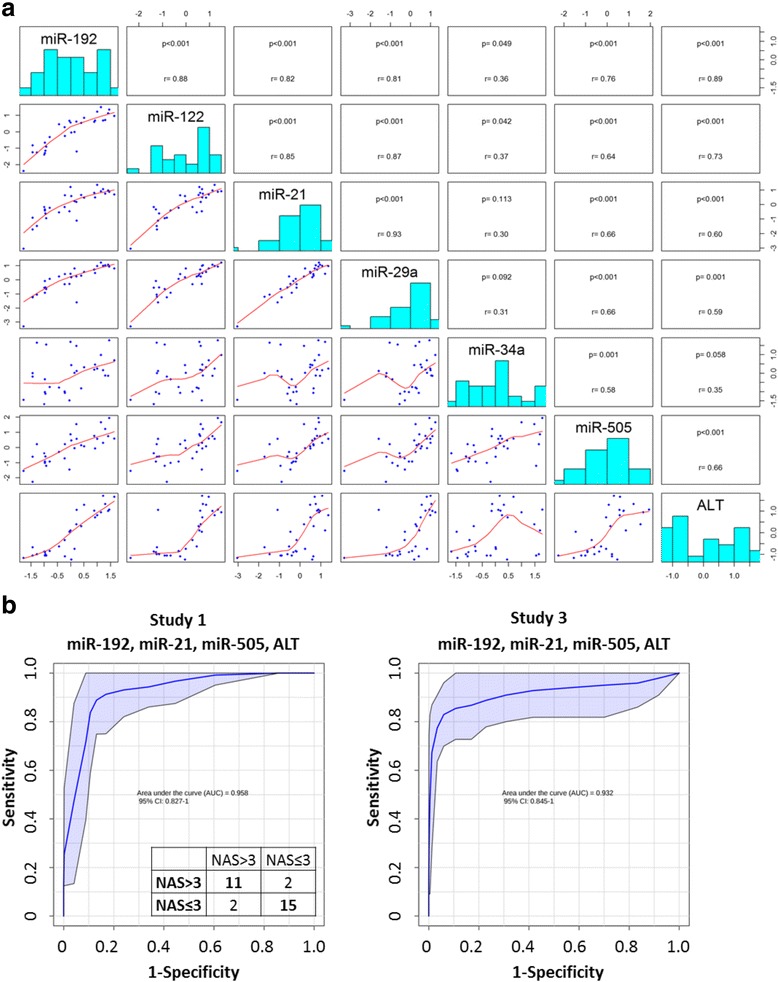
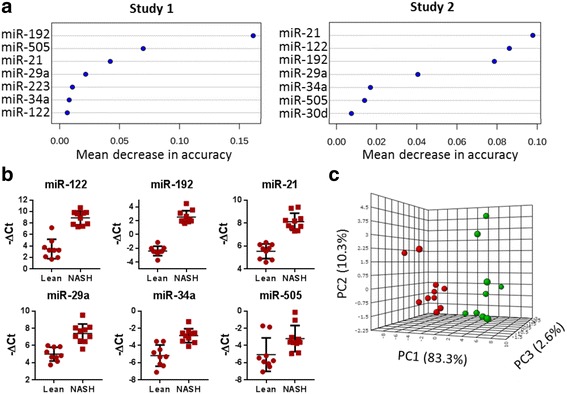
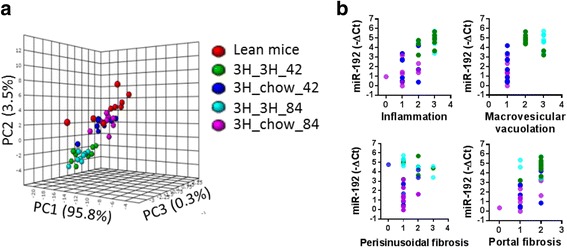
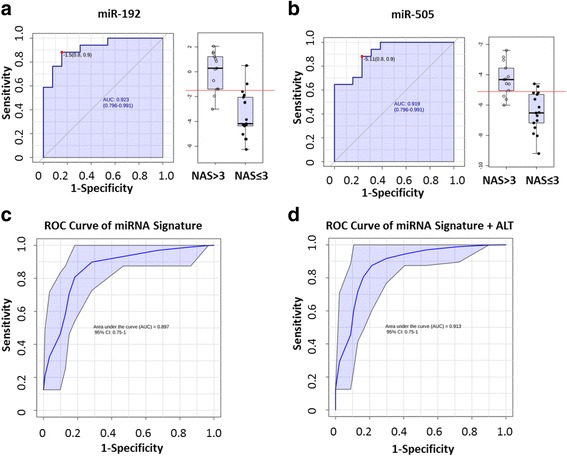
The expression of circulating microRNAs were profiled in diet-induced NASH progression and regression models to assess the diagnostic and prognostic values and the translatability between preclinical mouse model and men. Since these mice had same genetic background and were housed in the same conditions, there were minimal confounding factors. Histopathological lesions were analyzed at distinct disease progression stages along with microRNA measurement which allows longitudinal assessment of microRNA as NASH biomarkers. Next, differentially expressed microRNAs were identified and validated in an independent cohorts of animals. Thirdly, these microRNAs were examined in a NASH regression model to assess whether they would respond to NASH treatment. MicroRNA profiling in two independent cohorts of animals validated the up-regulation of 6 microRNAs (miR-122, miR-192, miR-21, miR-29a, miR-34a and miR-505) in NASH mice, which was designated as the circulating microRNA signature for NASH. The microRNA signature could accurately distinguish NASH mice from lean mice, and it responded to chow diet treatment in a NASH regression model. To further improve the performance of microRNA-based biomarker, a new composite biomarker was proposed, which consists of miR-192, miR-21, miR-505 and ALT. The new composite biomarker outperformed the microRNA signature in predicting NASH mice which had NAS > 3, and deserves further validations in large scale studies.
The present study supported the translation of circulating microRNAs between preclinical models and humans in NASH pathogenesis and progression. The microRNA-based composite biomarker may be used for non-invasive diagnosis, clinical monitoring and assessing treatment response for NASH.
非酒精性脂肪性肝炎(NASH)患者急需非侵入性生物标志物,以辅助诊断、监测疾病进展和评估治疗反应。最近几项探索性研究表明,循环 microRNA 水平与 NASH 相关,并与疾病严重程度相关。尽管这些数据令人鼓舞,但循环 microRNA 作为生物标志物用于患者筛选和分层的应用仍需要在严格控制的条件下进一步评估。
在饮食诱导的 NASH 进展和消退模型中分析了循环 microRNA 的表达,以评估其诊断和预后价值,以及临床前小鼠模型和人类之间的可转化性。由于这些小鼠具有相同的遗传背景,并在相同的条件下饲养,因此几乎没有混杂因素。在不同的疾病进展阶段进行组织病理学病变分析,同时进行 microRNA 测量,从而可以对 microRNA 作为 NASH 生物标志物进行纵向评估。其次,在独立的动物队列中鉴定和验证差异表达的 microRNAs。第三,在 NASH 消退模型中检查这些 microRNAs,以评估它们是否对 NASH 治疗有反应。在两个独立的动物队列中进行 microRNA 分析验证了 6 种 microRNAs(miR-122、miR-192、miR-21、miR-29a、miR-34a 和 miR-505)在 NASH 小鼠中的上调,这被指定为 NASH 的循环 microRNA 特征。该 microRNA 特征可以准确地区分 NASH 小鼠和瘦小鼠,并在 NASH 消退模型中对低热量饮食治疗有反应。为了进一步提高基于 microRNA 的生物标志物的性能,提出了一种新的复合生物标志物,由 miR-192、miR-21、miR-505 和 ALT 组成。新的复合生物标志物在预测 NAS>3 的 NASH 小鼠方面优于 microRNA 特征,值得在大规模研究中进一步验证。
本研究支持了循环 microRNA 在 NASH 发病机制和进展中的临床前模型与人类之间的转化。基于 microRNA 的复合生物标志物可用于 NASH 的非侵入性诊断、临床监测和评估治疗反应。