Thrombosis and Atherosclerosis Research Institute, McMaster University and Hamilton Health Sciences, 237 Barton St. E. Hamilton, Ontario, Canada L8L 2X2.
Department of Biochemistry and Biomedical Sciences, McMaster University, 1280 Main St W. Hamilton, Ontario, Canada L8S 4L8.
Biochem J. 2018 Apr 5;475(7):1253-1265. doi: 10.1042/BCJ20170703.
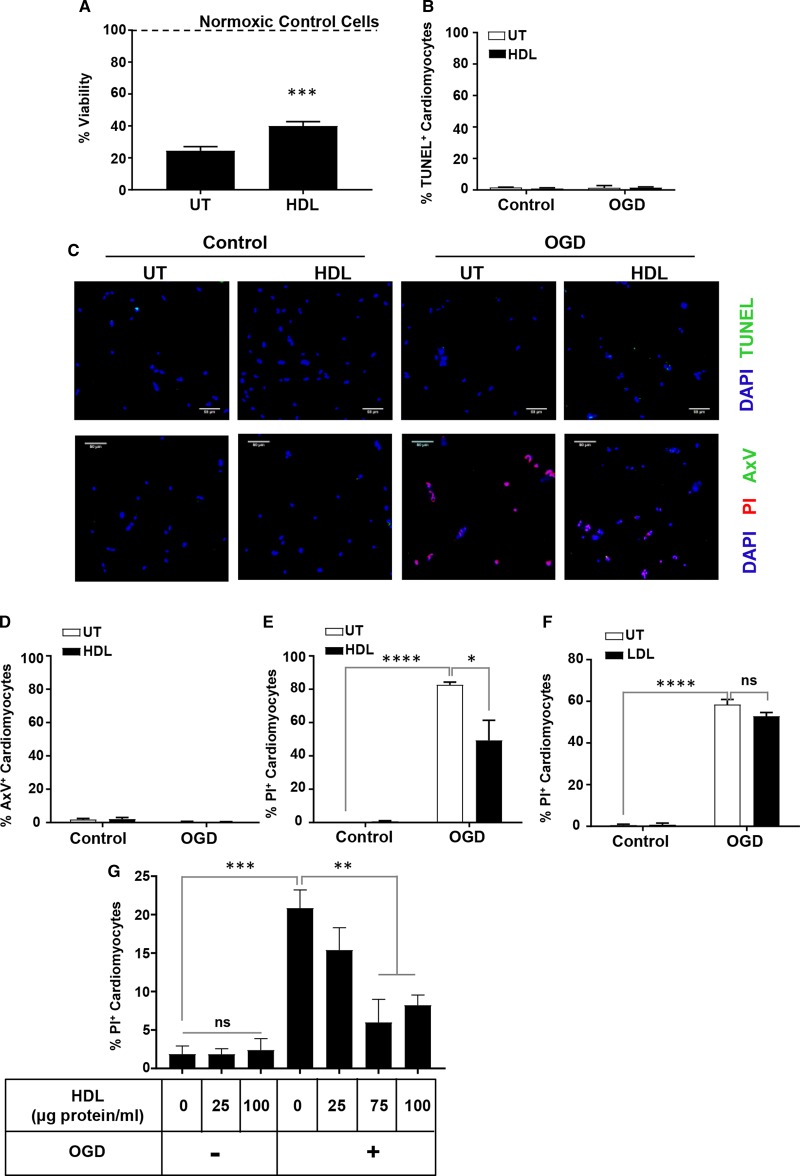
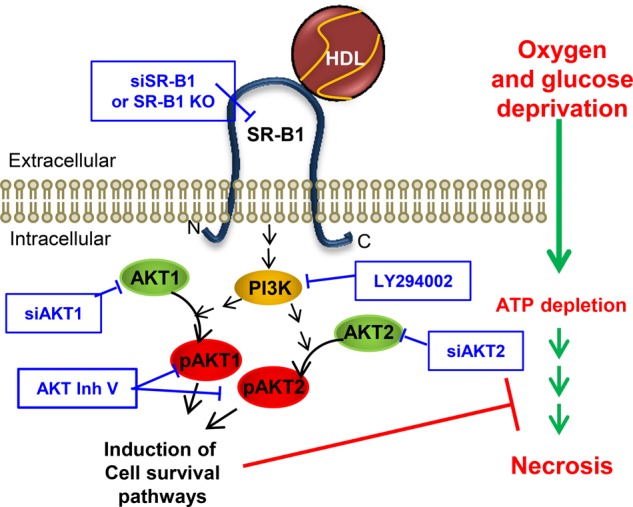
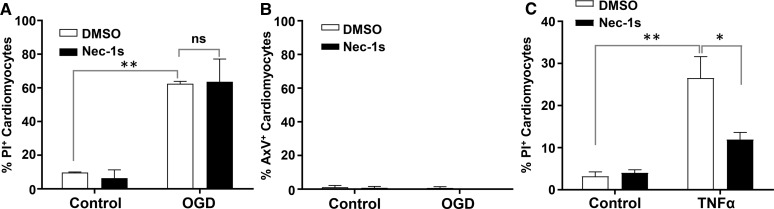
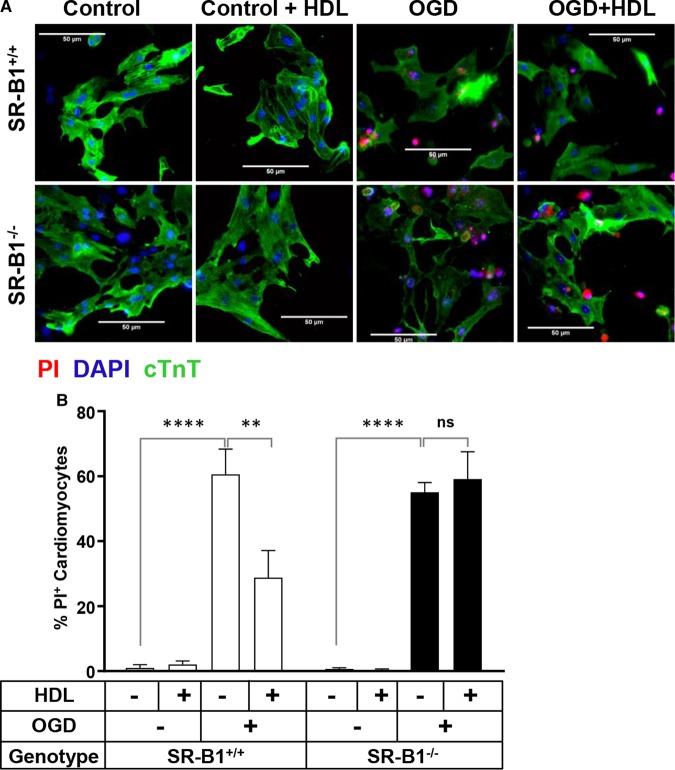
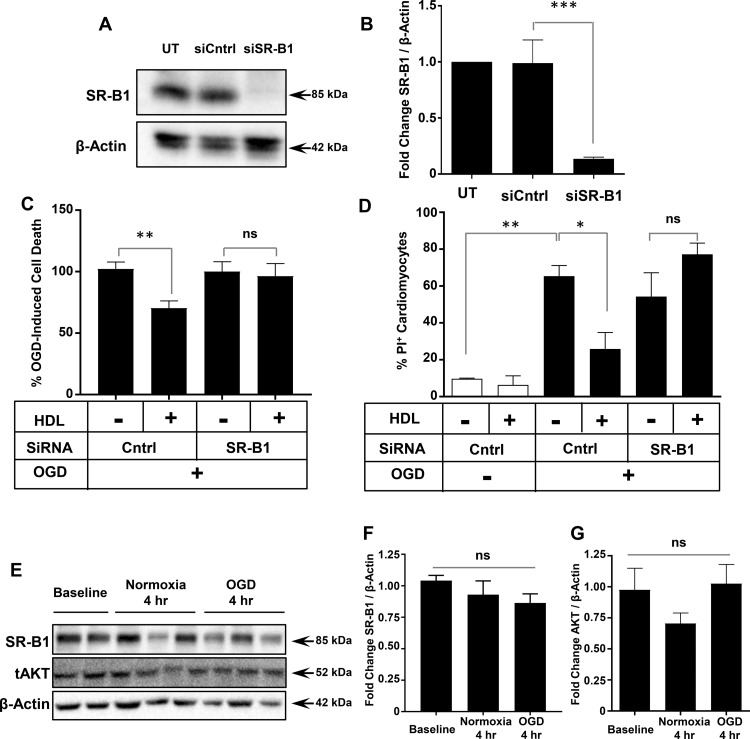
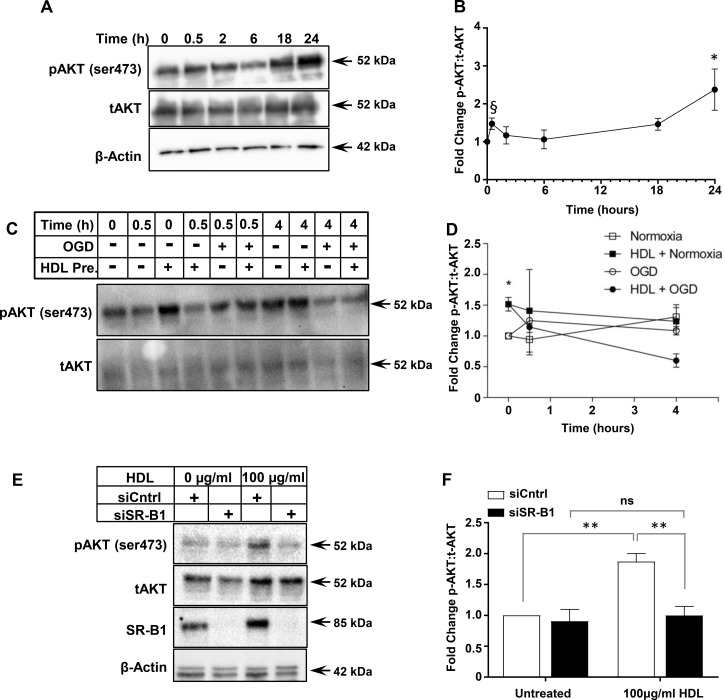
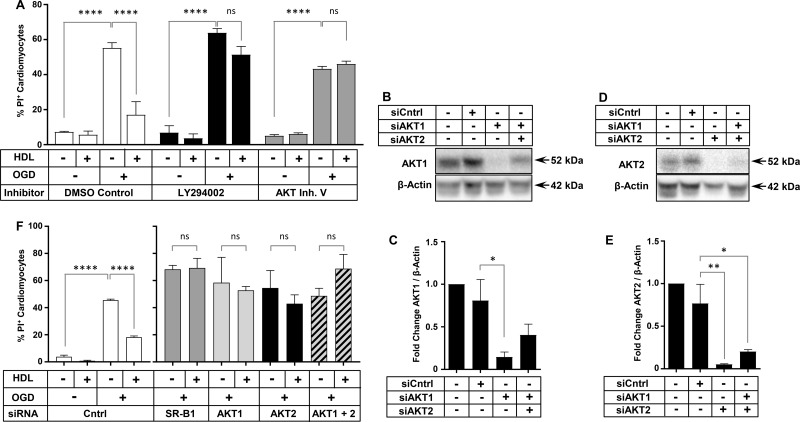
The cardioprotective lipoprotein HDL (high-density lipoprotein) prevents myocardial infarction and cardiomyocyte death due to ischemia/reperfusion injury. The scavenger receptor class B, type 1 (SR-B1) is a high-affinity HDL receptor and has been shown to mediate HDL-dependent lipid transport as well as signaling in a variety of different cell types. The contribution of SR-B1 in cardiomyocytes to the protective effects of HDL on cardiomyocyte survival following ischemia has not yet been studied. Here, we use a model of simulated ischemia (oxygen and glucose deprivation, OGD) to assess the mechanistic involvement of SR-B1, PI3K (phosphatidylinositol-3-kinase), and AKT in HDL-mediated protection of cardiomyocytes from cell death. Neonatal mouse cardiomyocytes and immortalized human ventricular cardiomyocytes, subjected to OGD for 4 h, underwent substantial cell death due to necrosis but not necroptosis or apoptosis. Pretreatment of cells with HDL, but not low-density lipoprotein, protected them against OGD-induced necrosis. HDL-mediated protection was lost in cardiomyocytes from SR-B1 mice or when SR-B1 was knocked down in human immortalized ventricular cardiomyocytes. HDL treatment induced the phosphorylation of AKT in cardiomyocytes in an SR-B1-dependent manner. Finally, chemical inhibition of PI3K or AKT or silencing of either AKT1 or AKT2 gene expression abolished HDL-mediated protection against OGD-induced necrosis of cardiomyocytes. These results are the first to identify a role of SR-B1 in mediating the protective effects of HDL against necrosis in cardiomyocytes, and to identify AKT activation downstream of SR-B1 in cardiomyocytes.
具有心脏保护作用的脂蛋白 HDL(高密度脂蛋白)可预防心肌梗死和心肌细胞因缺血/再灌注损伤而死亡。清道夫受体 B 型,第 1 类(SR-B1)是一种高亲和力的 HDL 受体,已被证明可介导 HDL 依赖性脂质转运以及各种不同细胞类型中的信号转导。SR-B1 在心肌细胞中对 HDL 保护心肌细胞免于缺血后存活的作用尚未得到研究。在这里,我们使用模拟缺血(缺氧和葡萄糖剥夺,OGD)的模型来评估 SR-B1、PI3K(磷脂酰肌醇-3-激酶)和 AKT 在 HDL 介导的心肌细胞保护作用中的机制参与,防止细胞死亡。在缺氧 4 小时后,新生鼠心肌细胞和永生化人心室肌细胞会因坏死而发生大量细胞死亡,但不会发生坏死性凋亡或细胞凋亡。用 HDL 预处理细胞而不是用 LDL 预处理可防止 OGD 诱导的坏死。SR-B1 敲除的心肌细胞或在永生化人心室肌细胞中敲低 SR-B1 后,HDL 介导的保护作用丧失。HDL 处理以 SR-B1 依赖的方式诱导心肌细胞中 AKT 的磷酸化。最后,PI3K 或 AKT 的化学抑制或 AKT1 或 AKT2 基因表达的沉默消除了 HDL 介导的对 OGD 诱导的心肌细胞坏死的保护作用。这些结果首次确定了 SR-B1 在介导 HDL 对心肌细胞坏死的保护作用中的作用,并确定了 SR-B1 在心肌细胞中 AKT 的激活。