Public Health Science Division, Fred Hutchison Cancer Research Center, USA.
Department of Biostatistics, University of North Carolina, Chapel Hill, USA.
Nucleic Acids Res. 2018 Apr 6;46(6):3009-3018. doi: 10.1093/nar/gky131.
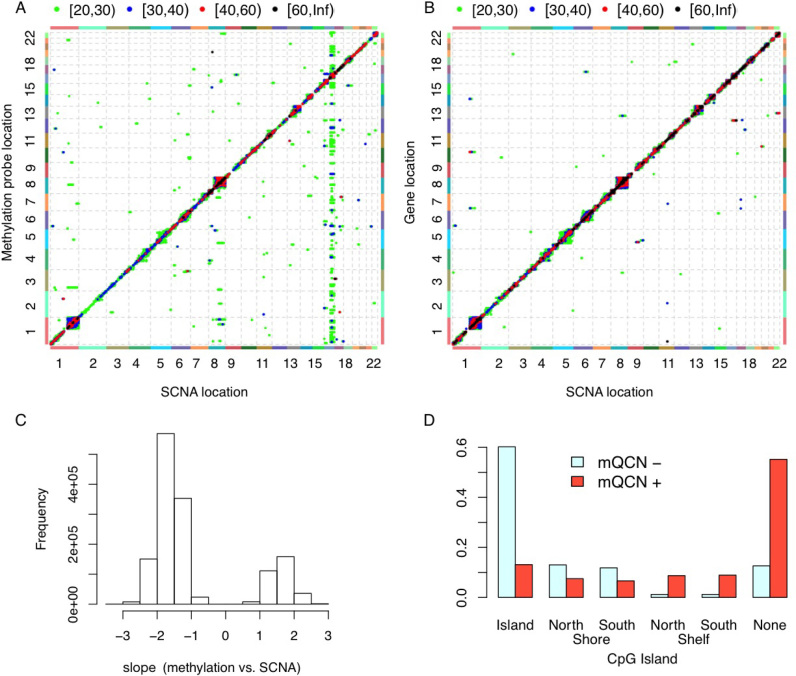
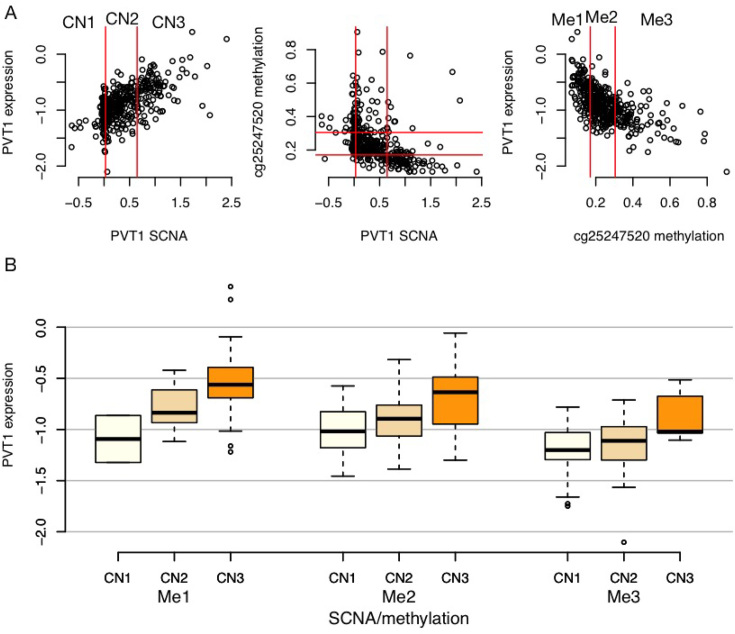
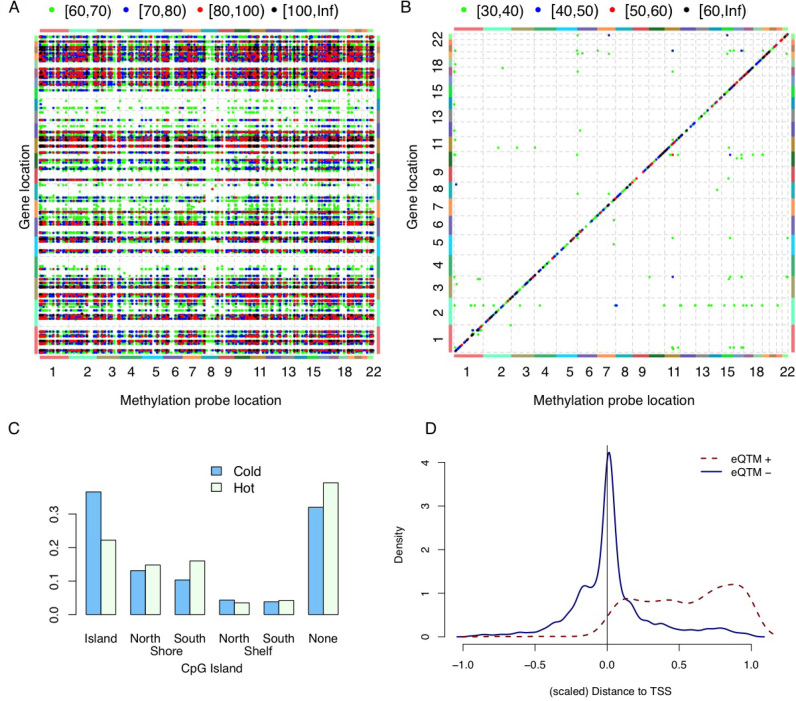
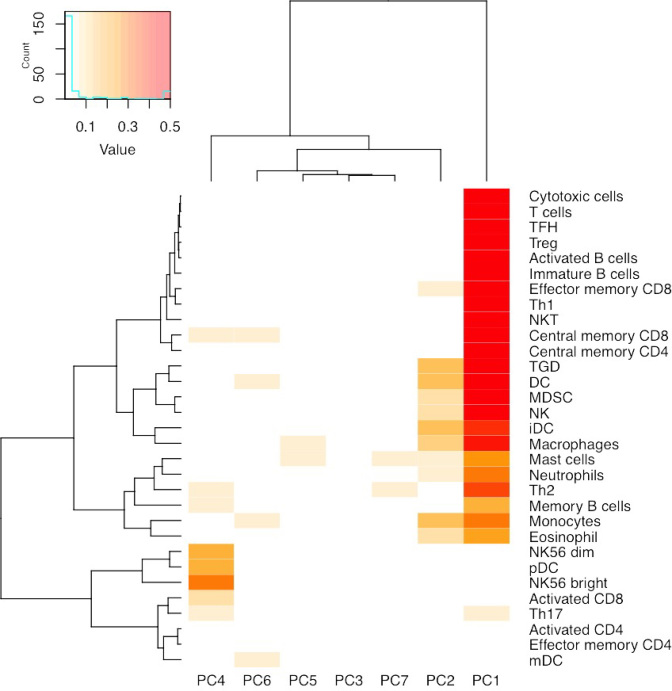
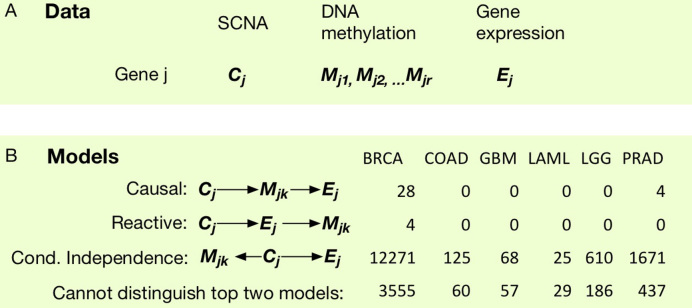
We systematically studied the association between somatic copy number aberration (SCNA), DNA methylation and gene expression using -omic data from The Cancer Genome Atlas (TCGA) on six cancer types: breast cancer, colon cancer, glioblastoma, leukemia, lower-grade glioma and prostate cancer. A major challenge for such integrated study is that the association between DNA methylation and gene expression is severely confounded by tumor purity and cell type composition, which are often unobserved and difficult to estimate. To overcome this challenge, we developed a method to remove confounding effects by calculating the principal components that span the space of the latent factors. Another intriguing findings of our study is that there could be both positive and negative associations between SCNA and DNA methylation, while the CpGs with negative/positive associations with SCNA are often located around CpG islands/ocean, respectively. A joint study of SCNA, DNA methylation, and gene expression suggest that SCNA often affect DNA methylation and gene expression independently.
我们使用来自癌症基因组图谱(TCGA)的六个癌症类型(乳腺癌、结肠癌、胶质母细胞瘤、白血病、低级别胶质瘤和前列腺癌)的组学数据,系统地研究了体细胞拷贝数异常(SCNA)、DNA 甲基化和基因表达之间的关联。对于这种综合研究,一个主要的挑战是 DNA 甲基化和基因表达之间的关联受到肿瘤纯度和细胞类型组成的严重混淆,而这些往往是不可观察和难以估计的。为了克服这一挑战,我们开发了一种通过计算跨越潜在因素空间的主成分来消除混杂影响的方法。我们研究的另一个有趣发现是,SCNA 和 DNA 甲基化之间可能存在正相关和负相关,而与 SCNA 呈负/正相关的 CpG 通常分别位于 CpG 岛/海洋周围。SCNA、DNA 甲基化和基因表达的联合研究表明,SCNA 通常独立地影响 DNA 甲基化和基因表达。