Division of Virology, Department of Pathology, University of Cambridge, Addenbrooke's Hospital, Cambridge, United Kingdom
Division of Virology, Department of Pathology, University of Cambridge, Addenbrooke's Hospital, Cambridge, United Kingdom.
Antimicrob Agents Chemother. 2018 Apr 26;62(5). doi: 10.1128/AAC.00201-18. Print 2018 May.
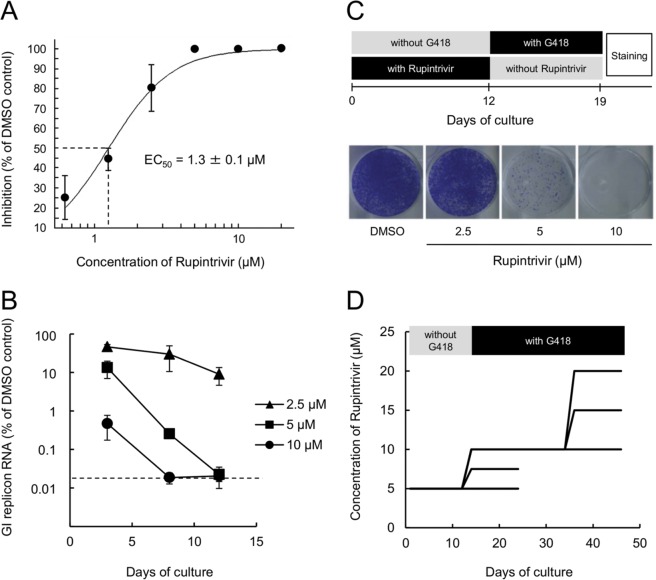
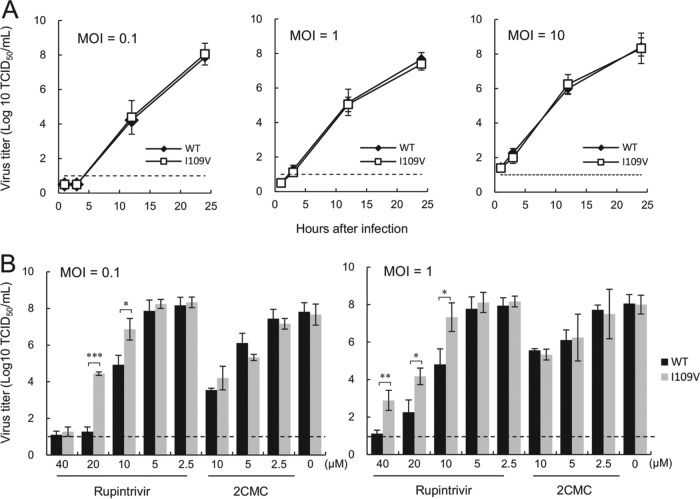
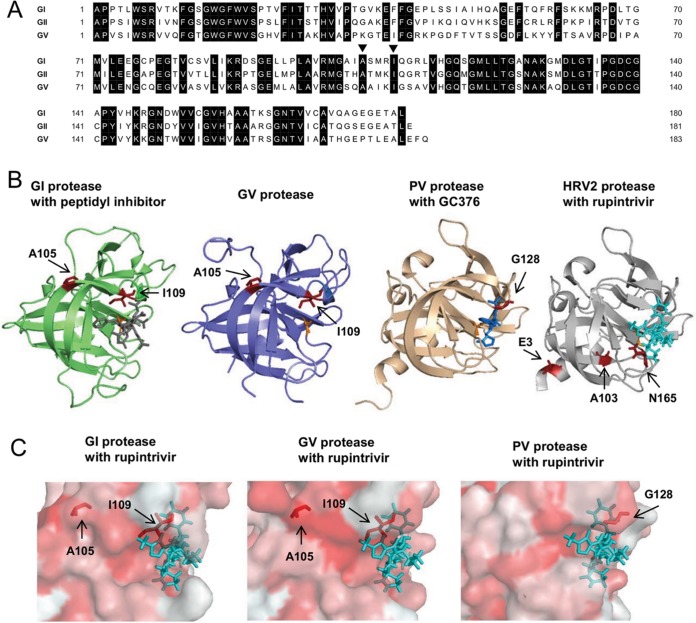
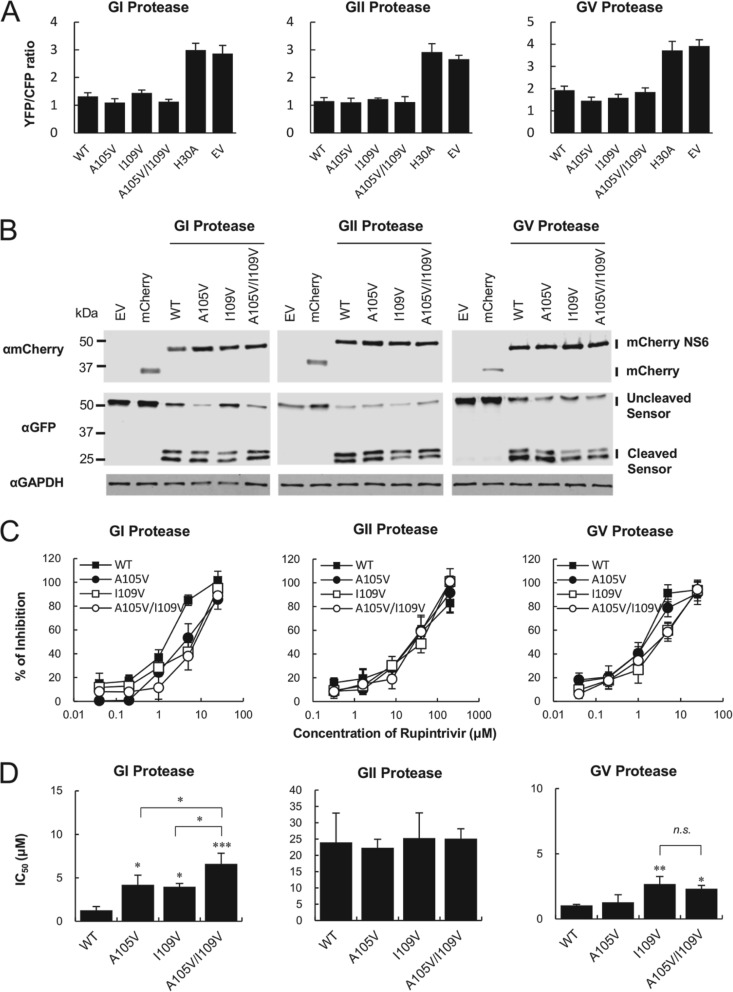
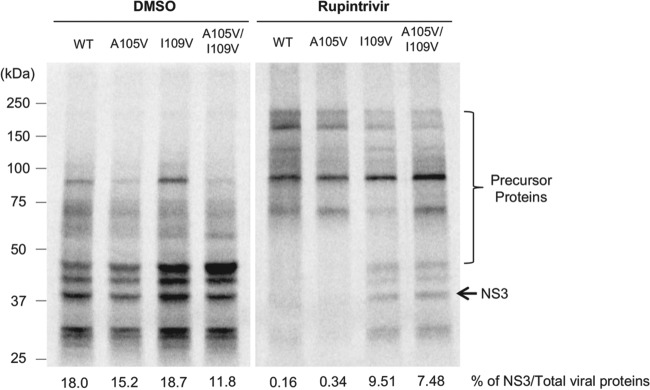
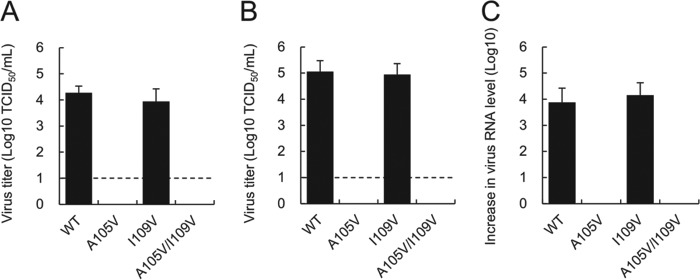
Human norovirus (HuNoV) is a major cause of nonbacterial gastroenteritis worldwide, yet despite its impact on society, vaccines and antivirals are currently lacking. A HuNoV replicon system has been widely applied to the evaluation of antiviral compounds and has thus accelerated the process of drug discovery against HuNoV infection. Rupintrivir, an irreversible inhibitor of the human rhinovirus 3C protease, has been reported to inhibit the replication of the Norwalk virus replicon via the inhibition of the norovirus protease. Here we report, for the first time, the generation of rupintrivir-resistant human Norwalk virus replicon cells Sequence analysis revealed that these replicon cells contained amino acid substitutions of alanine 105 to valine (A105V) and isoleucine 109 to valine (I109V) in the viral protease NS6. The application of a cell-based fluorescence resonance energy transfer (FRET) assay for protease activity demonstrated that these substitutions were involved in the enhanced resistance to rupintrivir. Furthermore, we validated the effect of these mutations using reverse genetics in murine norovirus (MNV), demonstrating that a recombinant MNV strain with a single I109V substitution in the protease also showed reduced susceptibility to rupintrivir. In summary, using a combination of different approaches, we have demonstrated that, under the correct conditions, mutations in the norovirus protease that lead to the generation of resistant mutants can rapidly occur.
人类诺如病毒(HuNoV)是全球非细菌性肠胃炎的主要病因,但尽管其对社会有影响,目前仍缺乏疫苗和抗病毒药物。HuNoV 复制子系统已广泛应用于评估抗病毒化合物,从而加速了针对 HuNoV 感染的药物发现过程。报道称,作为人鼻病毒 3C 蛋白酶的不可逆抑制剂,鲁匹那韦通过抑制诺如病毒蛋白酶来抑制诺如病毒复制子的复制。在此,我们首次报告了产生鲁匹那韦耐药性人类诺如病毒复制子细胞。序列分析显示,这些复制子细胞中的病毒蛋白酶 NS6 存在丙氨酸 105 突变为缬氨酸(A105V)和异亮氨酸 109 突变为缬氨酸(I109V)。应用基于细胞的荧光共振能量转移(FRET)测定法进行蛋白酶活性检测表明,这些取代与对鲁匹那韦的增强耐药性有关。此外,我们使用鼠诺如病毒(MNV)的反向遗传学验证了这些突变的效果,证明在蛋白酶中单个 I109V 取代的重组 MNV 株也显示出对鲁匹那韦的敏感性降低。总之,我们通过结合使用不同的方法证明,在适当的条件下,导致产生耐药突变体的诺如病毒蛋白酶突变可以迅速发生。