Matthes Frank, Hettich Moritz M, Schilling Judith, Flores-Dominguez Diana, Blank Nelli, Wiglenda Thomas, Buntru Alexander, Wolf Hanna, Weber Stephanie, Vorberg Ina, Dagane Alina, Dittmar Gunnar, Wanker Erich, Ehninger Dan, Krauss Sybille
1Deutsches Zentrum für Neurodegenerative Erkrankungen e.V., Bonn, Germany.
2Max Delbrueck Center for Molecular Medicine (MDC) Berlin-Buch, Berlin, Germany.
Cell Death Discov. 2018 Jan 29;4:4. doi: 10.1038/s41420-017-0003-8. eCollection 2018 Dec.
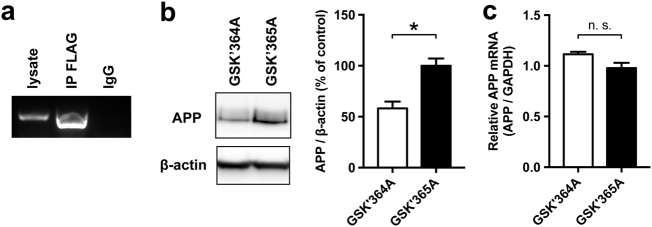
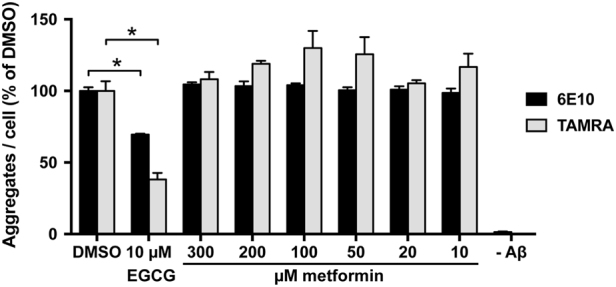
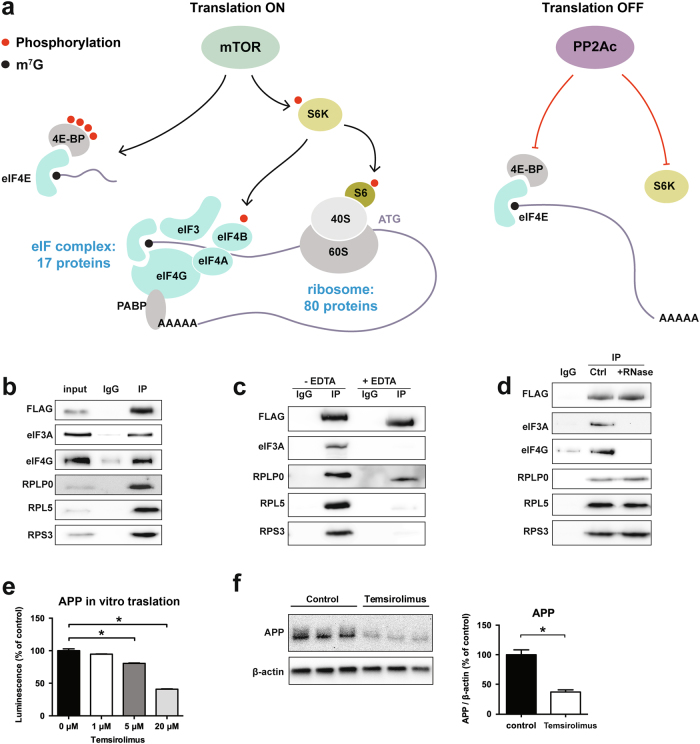
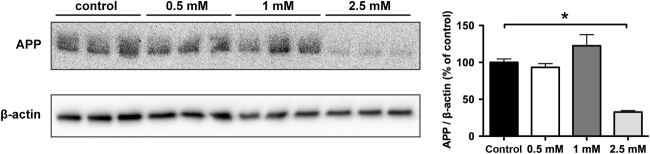
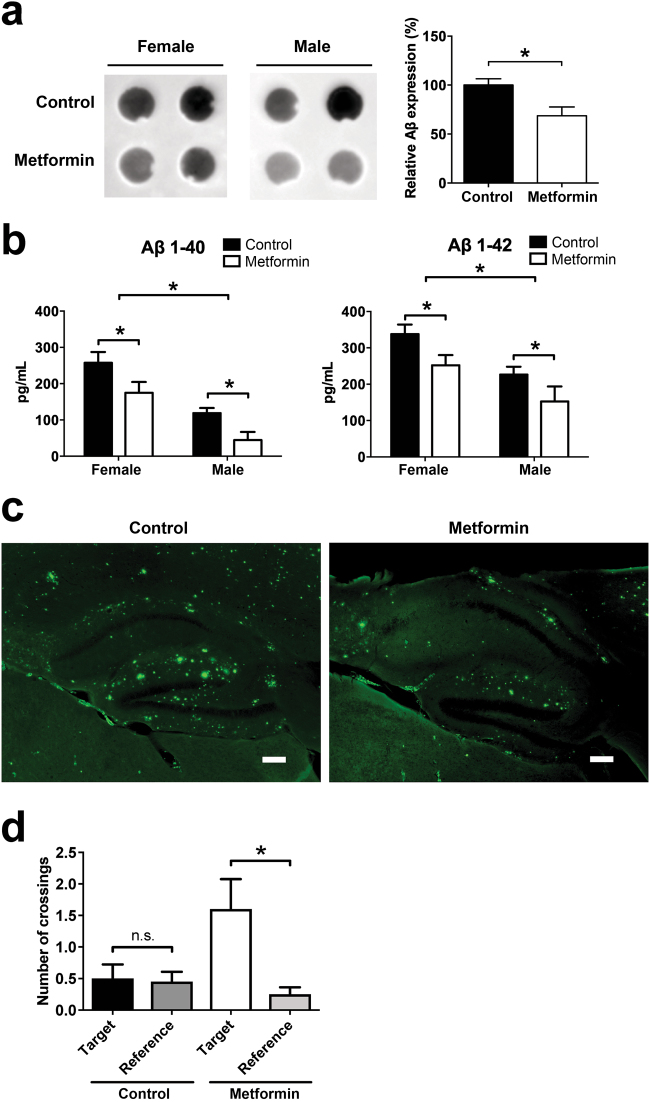
Alzheimer's disease (AD) is characterized by two neuropathological hallmarks: senile plaques, which are composed of amyloid-β (Aβ) peptides, and neurofibrillary tangles, which are composed of hyperphosphorylated tau protein. Aβ peptides are derived from sequential proteolytic cleavage of the amyloid precursor protein (APP). In this study, we identified a so far unknown mode of regulation of APP protein synthesis involving the MID1 protein complex: MID1 binds to and regulates the translation of APP mRNA. The underlying mode of action of MID1 involves the mTOR pathway. Thus, inhibition of the MID1 complex reduces the APP protein level in cultures of primary neurons. Based on this, we used one compound that we discovered previously to interfere with the MID1 complex, metformin, for in vivo experiments. Indeed, long-term treatment with metformin decreased APP protein expression levels and consequently Aβ in an AD mouse model. Importantly, we have initiated the metformin treatment late in life, at a time-point where mice were in an already progressed state of the disease, and could observe an improved behavioral phenotype. These findings together with our previous observation, showing that inhibition of the MID1 complex by metformin also decreases tau phosphorylation, make the MID1 complex a particularly interesting drug target for treating AD.
阿尔茨海默病(AD)具有两个神经病理学特征:由淀粉样β(Aβ)肽组成的老年斑,以及由过度磷酸化的tau蛋白组成的神经原纤维缠结。Aβ肽源自淀粉样前体蛋白(APP)的顺序蛋白水解切割。在本研究中,我们确定了一种迄今未知的APP蛋白合成调节模式,该模式涉及MID1蛋白复合物:MID1结合并调节APP mRNA的翻译。MID1的潜在作用模式涉及mTOR途径。因此,抑制MID1复合物可降低原代神经元培养物中的APP蛋白水平。基于此,我们使用了一种先前发现的可干扰MID1复合物的化合物二甲双胍进行体内实验。事实上,在AD小鼠模型中,长期使用二甲双胍可降低APP蛋白表达水平,从而降低Aβ水平。重要的是,我们在小鼠生命后期、疾病已进展到一定程度的时间点开始使用二甲双胍治疗,并观察到行为表型有所改善。这些发现以及我们之前的观察结果表明,二甲双胍抑制MID1复合物也可降低tau磷酸化,这使得MID1复合物成为治疗AD特别有吸引力的药物靶点。