Department of Human Genetics, University of Chicago, Chicago, IL, United States of America.
Illinois Institute of Technology, Chicago, IL, United States of America.
PLoS One. 2018 Mar 13;13(3):e0193334. doi: 10.1371/journal.pone.0193334. eCollection 2018.
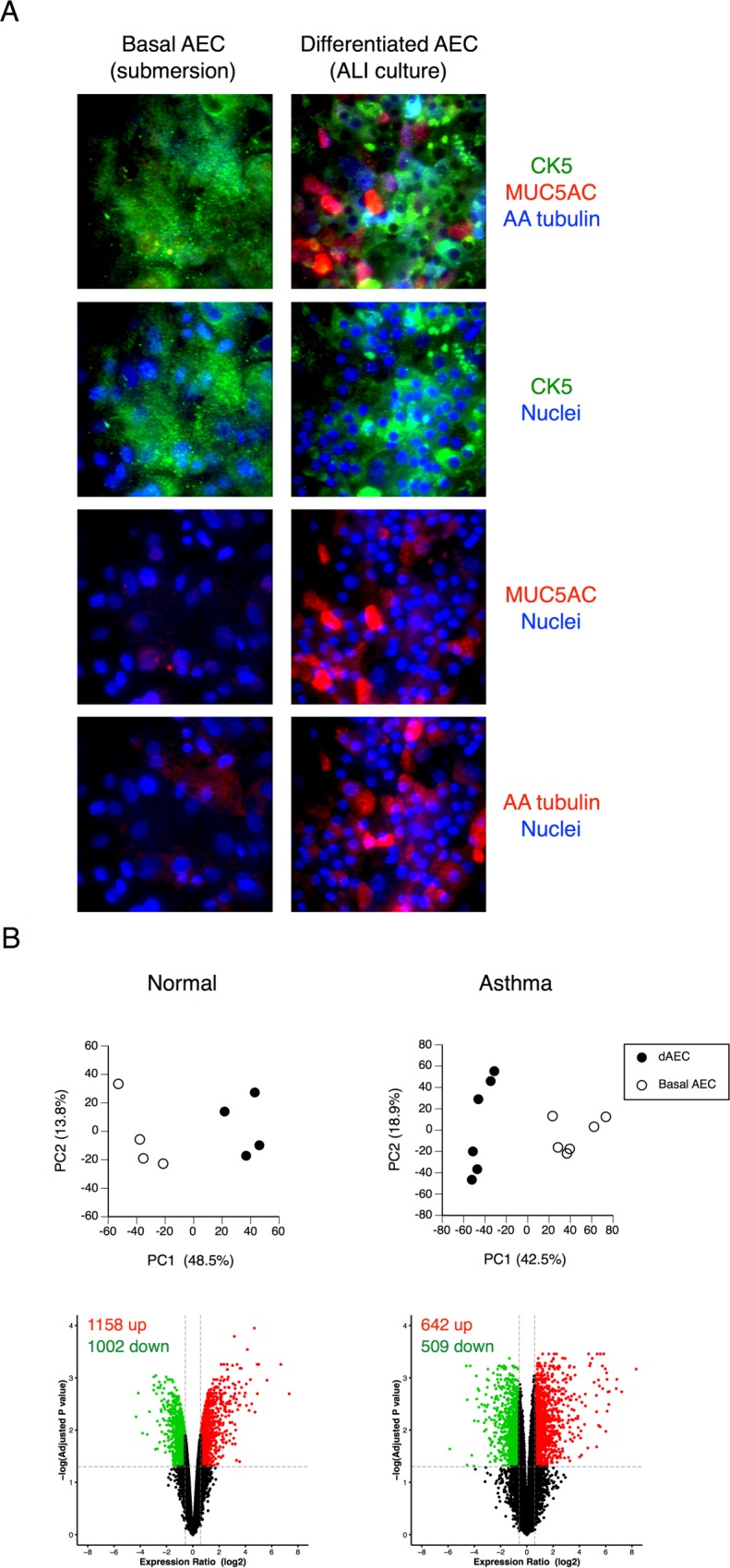
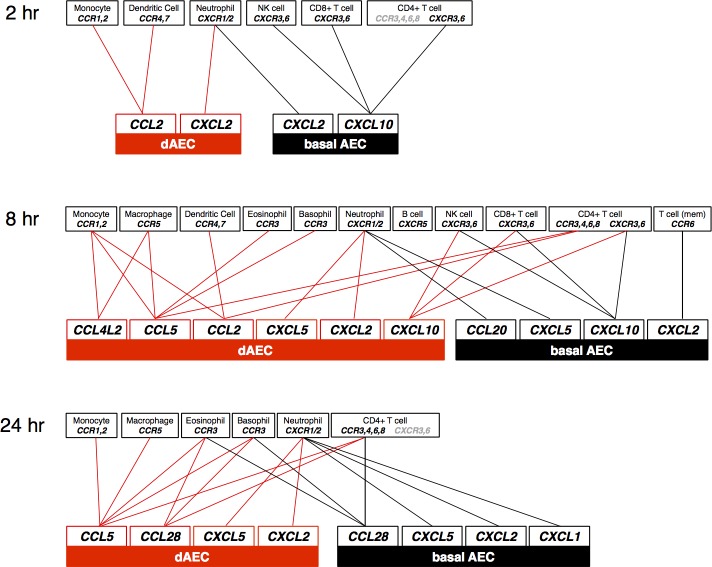
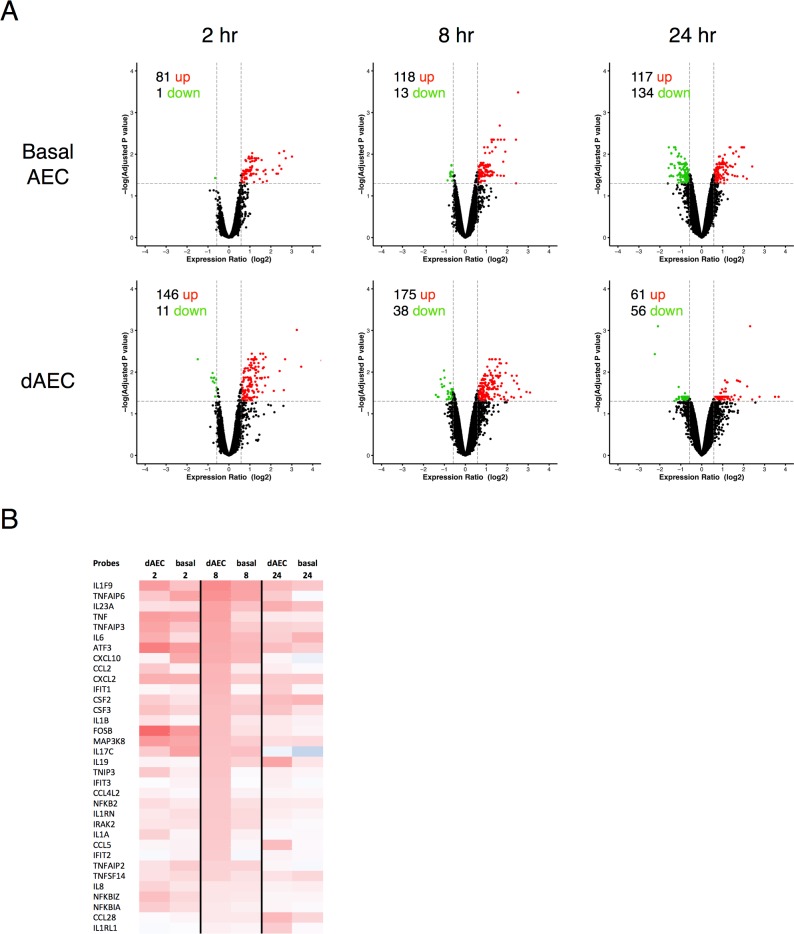
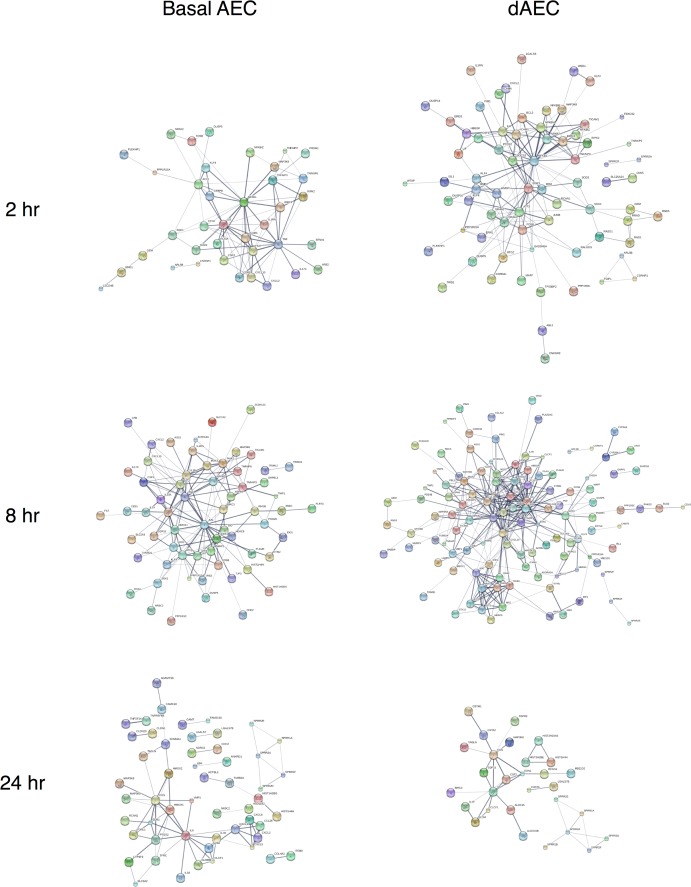
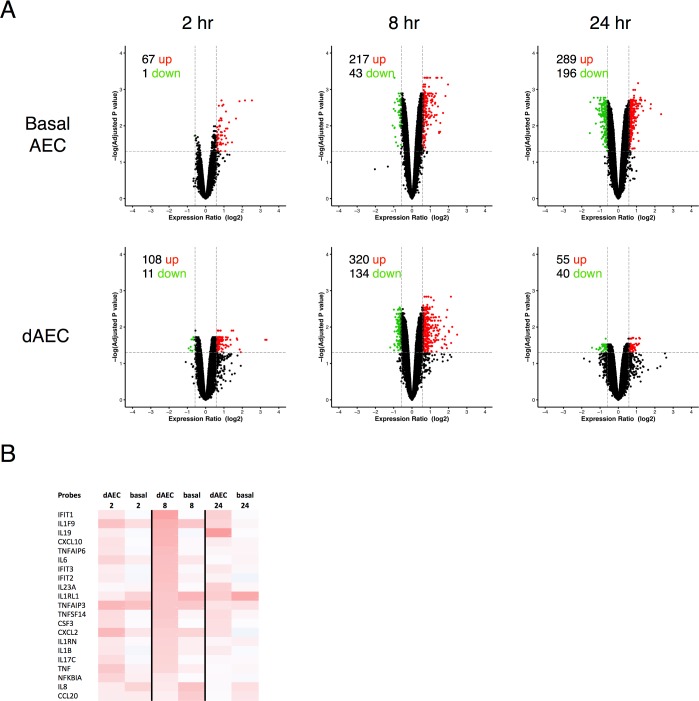
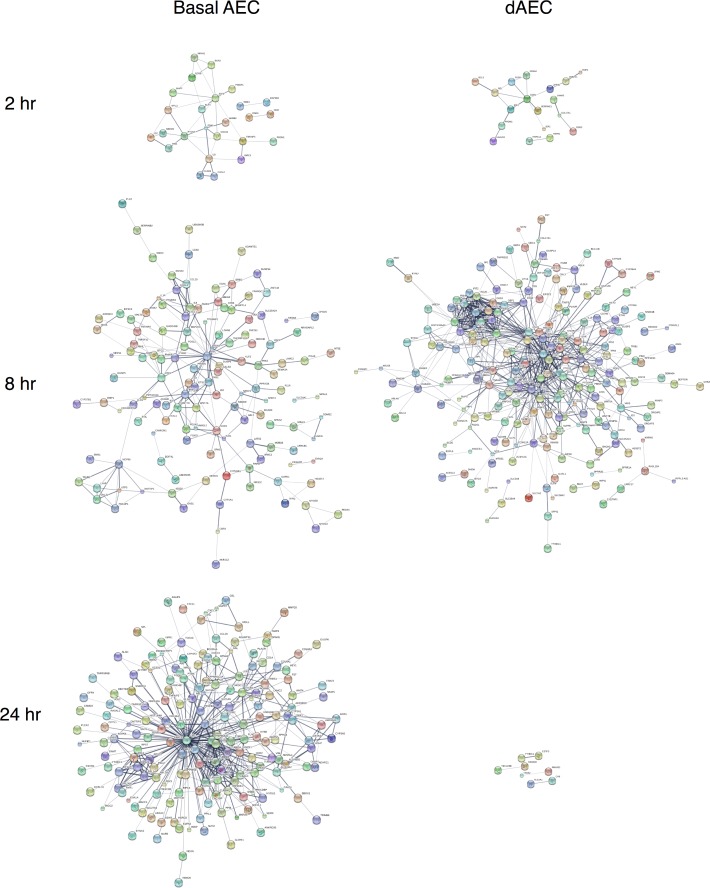
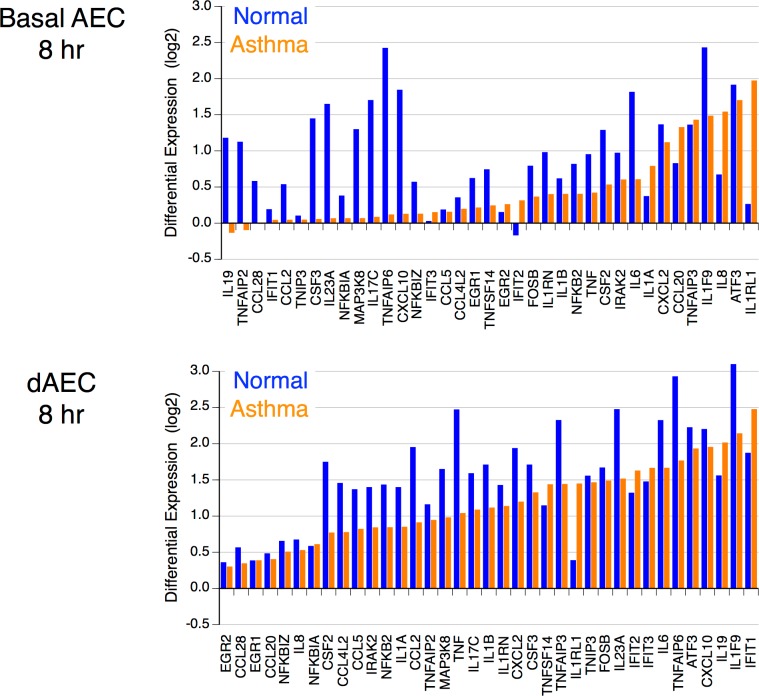
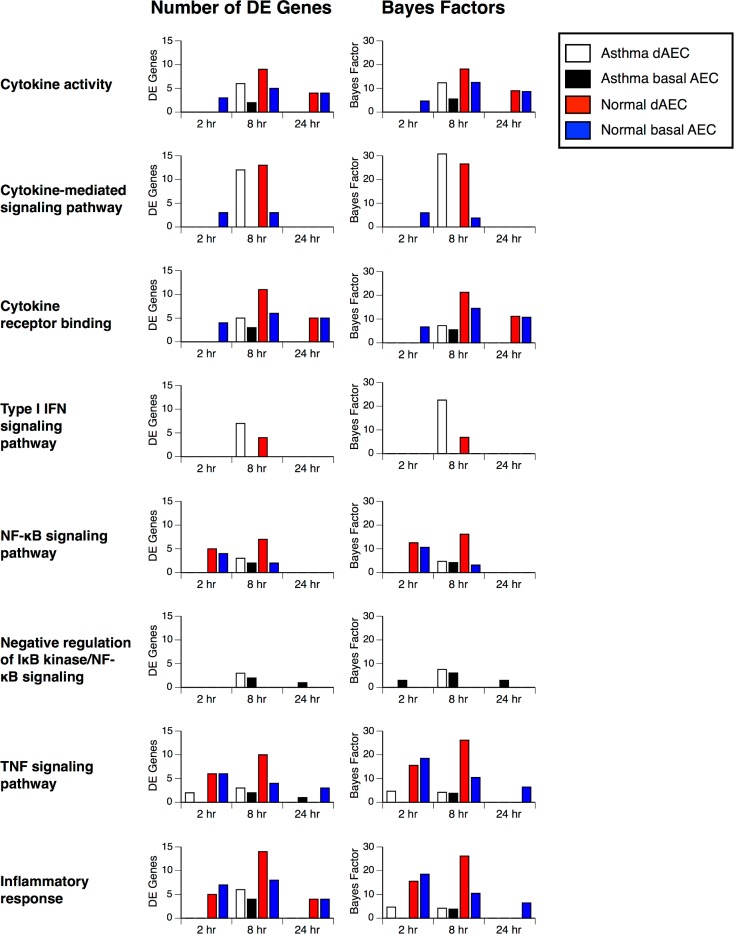
Basal airway epithelial cells (AEC) constitute stem/progenitor cells within the central airways and respond to mucosal injury in an ordered sequence of spreading, migration, proliferation, and differentiation to needed cell types. However, dynamic gene transcription in the early events after mucosal injury has not been studied in AEC. We examined gene expression using microarrays following mechanical injury (MI) in primary human AEC grown in submersion culture to generate basal cells and in the air-liquid interface to generate differentiated AEC (dAEC) that include goblet and ciliated cells. A select group of ~150 genes was in differential expression (DE) within 2-24 hr after MI, and enrichment analysis of these genes showed over-representation of functional categories related to inflammatory cytokines and chemokines. Network-based gene prioritization and network reconstruction using the PINTA heat kernel diffusion algorithm demonstrated highly connected networks that were richer in differentiated AEC compared to basal cells. Similar experiments done in basal AEC collected from asthmatic donor lungs demonstrated substantial changes in DE genes and functional categories related to inflammation compared to basal AEC from normal donors. In dAEC, similar but more modest differences were observed. We demonstrate that the AEC transcription signature after MI identifies genes and pathways that are important to the initiation and perpetuation of airway mucosal inflammation. Gene expression occurs quickly after injury and is more profound in differentiated AEC, and is altered in AEC from asthmatic airways. Our data suggest that the early response to injury is substantially different in asthmatic airways, particularly in basal airway epithelial cells.
基础气道上皮细胞(AEC)构成中央气道中的干细胞/祖细胞,并在黏膜损伤后以有序的扩散、迁移、增殖和分化的顺序对所需细胞类型作出反应。然而,黏膜损伤后早期的动态基因转录在 AEC 中尚未得到研究。我们使用微阵列检查了机械损伤(MI)后在浸没培养中生长的原代人 AEC 中的基因表达,以生成基础细胞,并在气液界面上生成包括杯状细胞和纤毛细胞的分化 AEC(dAEC)。约 150 个基因在 MI 后 2-24 小时内存在差异表达(DE),这些基因的富集分析显示与炎症细胞因子和趋化因子相关的功能类别过度表达。使用 PINTA 热核扩散算法进行基于网络的基因优先级排序和网络重构,显示出与基础细胞相比,高度连接的网络更加丰富。在来自哮喘供体肺的基础 AEC 中进行的类似实验表明,与来自正常供体的基础 AEC 相比,DE 基因和与炎症相关的功能类别发生了实质性变化。在 dAEC 中,观察到类似但更为温和的差异。我们证明,MI 后 AEC 的转录特征可识别与气道黏膜炎症的启动和持续相关的基因和途径。损伤后基因表达迅速发生,在分化的 AEC 中更为明显,并且在哮喘气道中的 AEC 中发生改变。我们的数据表明,哮喘气道中的早期损伤反应与正常气道有很大的不同,尤其是在基础气道上皮细胞中。