Honka Miikka-Juhani, Latva-Rasku Aino, Bucci Marco, Virtanen Kirsi A, Hannukainen Jarna C, Kalliokoski Kari K, Nuutila Pirjo
Turku PET Centre, University of TurkuTurku, Finland.
Turku PET Centre, Åbo Akademi UniversityTurku, Finland.
Eur J Endocrinol. 2018 May;178(5):523-531. doi: 10.1530/EJE-17-0882. Epub 2018 Mar 13.
Insulin resistance is reflected by the rates of reduced glucose uptake (GU) into the key insulin-sensitive tissues, skeletal muscle, liver and adipose tissue. It is unclear whether insulin resistance occurs simultaneously in all these tissues or whether insulin resistance is tissue specific.
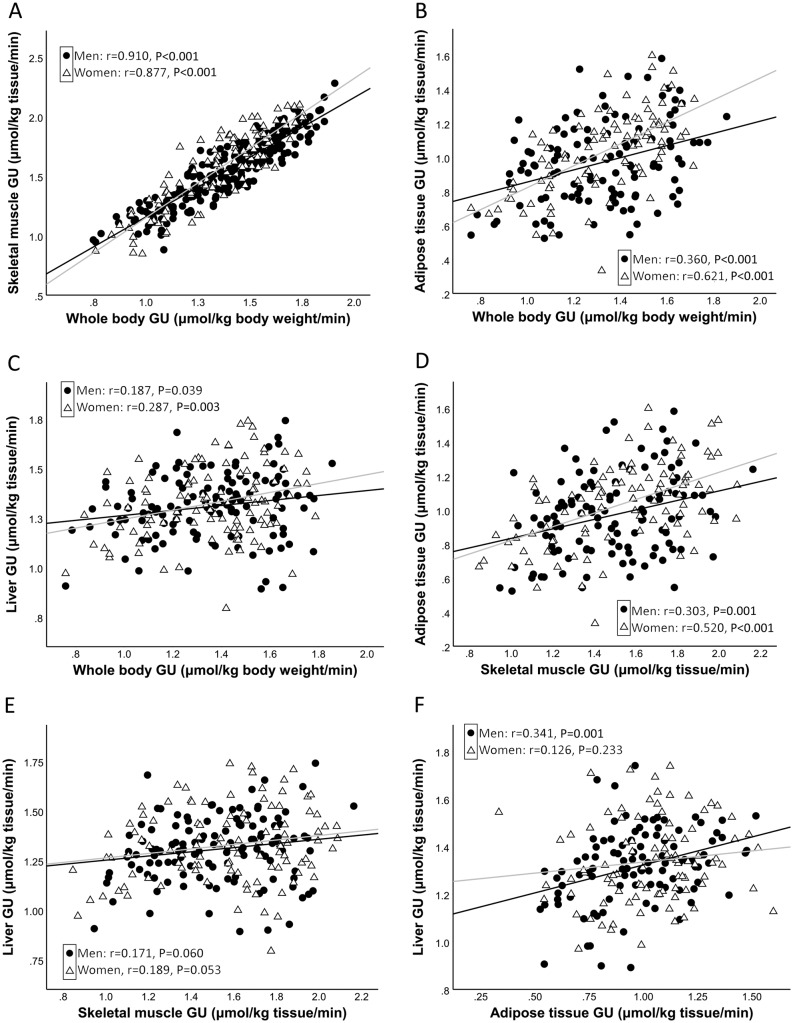
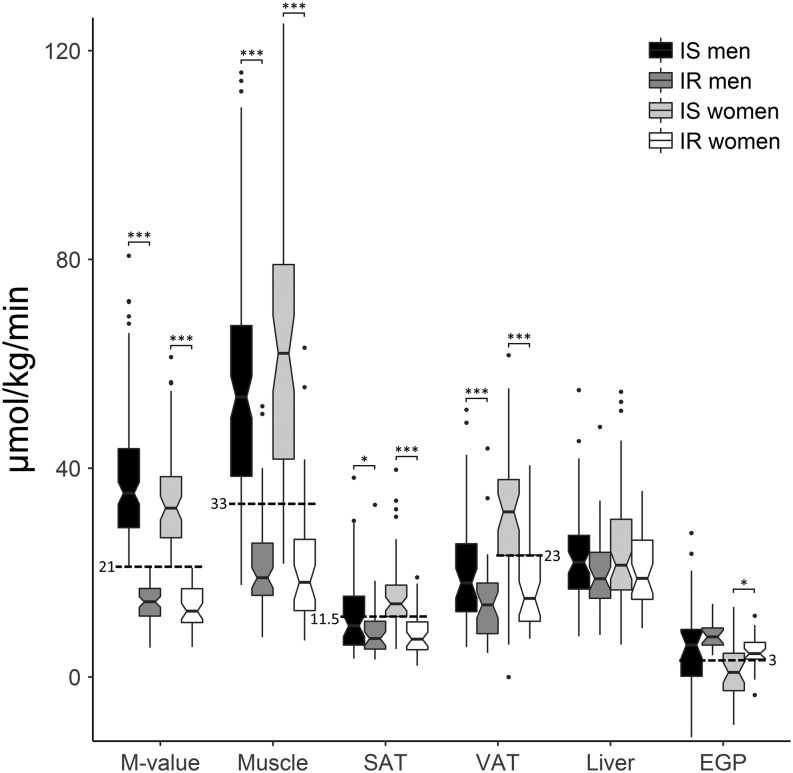
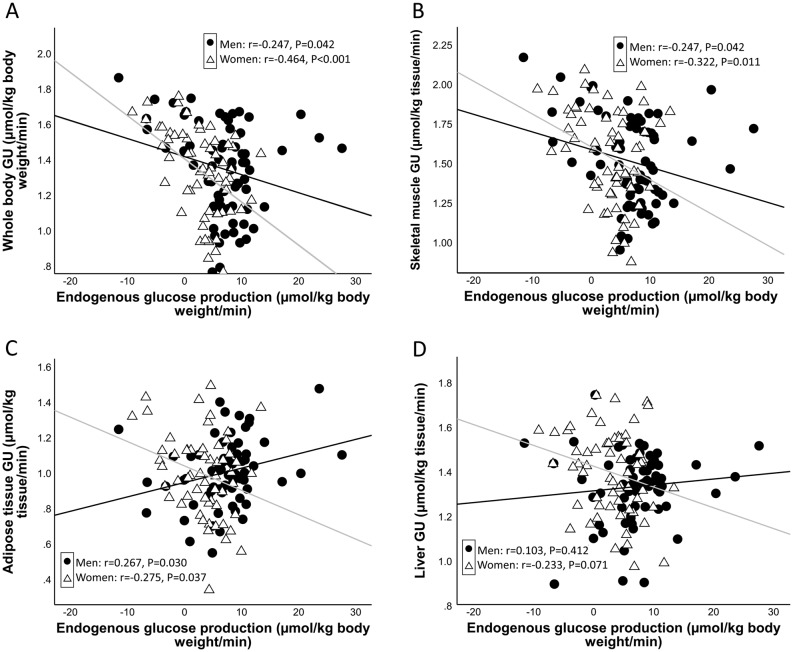
We measured GU in skeletal muscle, adipose tissue and liver and endogenous glucose production (EGP), in a single session using F-fluorodeoxyglucose with positron emission tomography (PET) and euglycemic-hyperinsulinemic clamp. The study population consisted of 326 subjects without diabetes from the CMgene study cohort.
Skeletal muscle GU less than 33 µmol/kg tissue/min and subcutaneous adipose tissue GU less than 11.5 µmol/kg tissue/min characterized insulin-resistant individuals. Men had considerably worse insulin suppression of EGP compared to women. By using principal component analysis (PCA), BMI inversely and skeletal muscle, adipose tissue and liver GU positively loaded on same principal component explaining one-third of the variation in these measures. The results were largely similar when liver GU was replaced by EGP in PCA. Liver GU and EGP were positively associated with aging.
We have provided threshold values, which can be used to identify tissue-specific insulin resistance. In addition, we found that insulin resistance measured by GU was only partially similar across all insulin-sensitive tissues studied, skeletal muscle, adipose tissue and liver and was affected by obesity, aging and gender.
胰岛素抵抗通过关键的胰岛素敏感组织(骨骼肌、肝脏和脂肪组织)中葡萄糖摄取(GU)减少的速率来反映。目前尚不清楚胰岛素抵抗是否在所有这些组织中同时发生,或者胰岛素抵抗是否具有组织特异性。
我们在单次检测中,使用氟脱氧葡萄糖正电子发射断层扫描(PET)和正常血糖高胰岛素钳夹技术,测量了骨骼肌、脂肪组织和肝脏中的GU以及内源性葡萄糖生成(EGP)。研究人群包括来自CMgene研究队列的326名无糖尿病受试者。
胰岛素抵抗个体的特征为骨骼肌GU低于33µmol/kg组织/分钟,皮下脂肪组织GU低于11.5µmol/kg组织/分钟。与女性相比,男性对EGP的胰岛素抑制作用明显更差。通过主成分分析(PCA),BMI呈负相关,而骨骼肌、脂肪组织和肝脏GU呈正相关,均加载在同一主成分上,解释了这些指标中三分之一的变异。在PCA中,当用EGP替代肝脏GU时,结果基本相似。肝脏GU和EGP与衰老呈正相关。
我们提供了阈值,可用于识别组织特异性胰岛素抵抗。此外,我们发现,通过GU测量的胰岛素抵抗在所有研究的胰岛素敏感组织(骨骼肌、脂肪组织和肝脏)中仅部分相似,并且受肥胖、衰老和性别的影响。