Chemical Sciences Division, Lawrence Berkeley National Laboratory, Berkeley, CA, 94720, USA.
Department of Nuclear Engineering, University of California, Berkeley, CA, 94720, USA.
Sci Rep. 2018 Mar 13;8(1):4419. doi: 10.1038/s41598-018-22511-6.
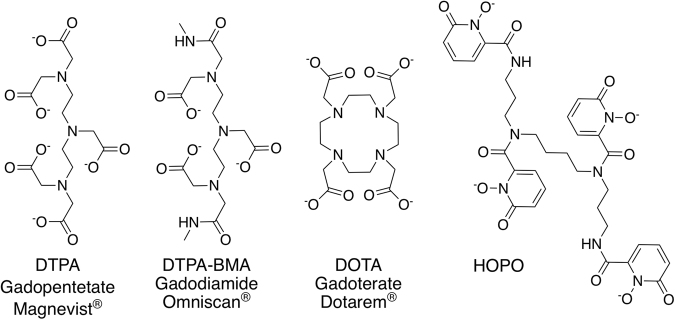
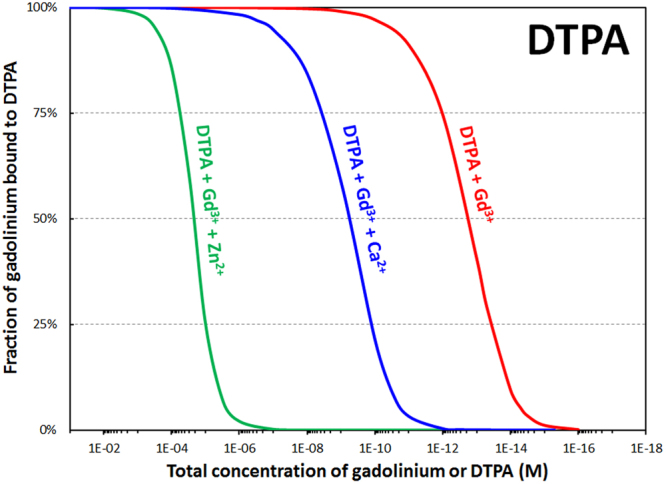
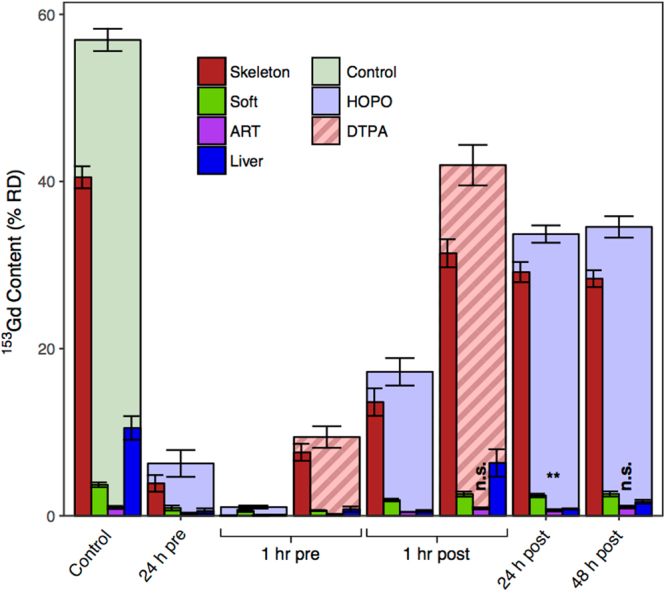
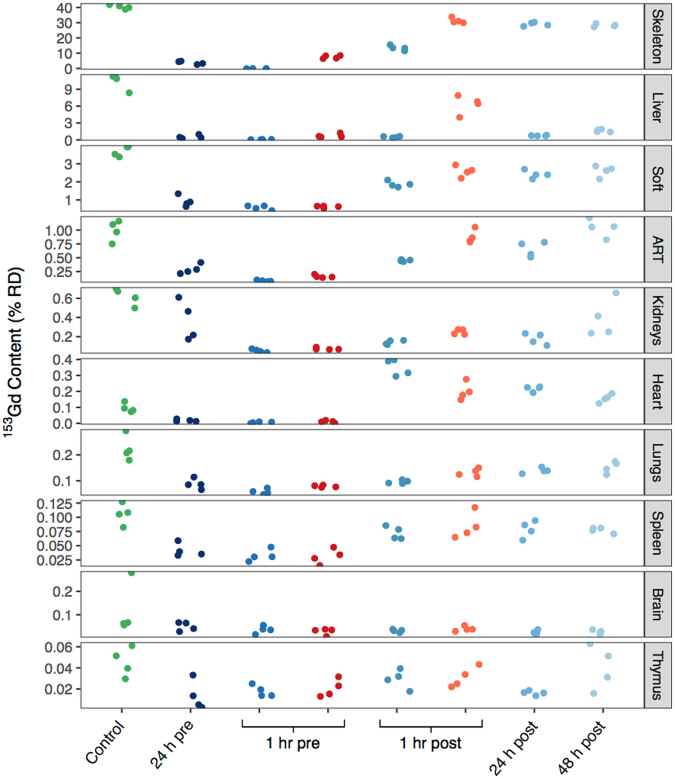
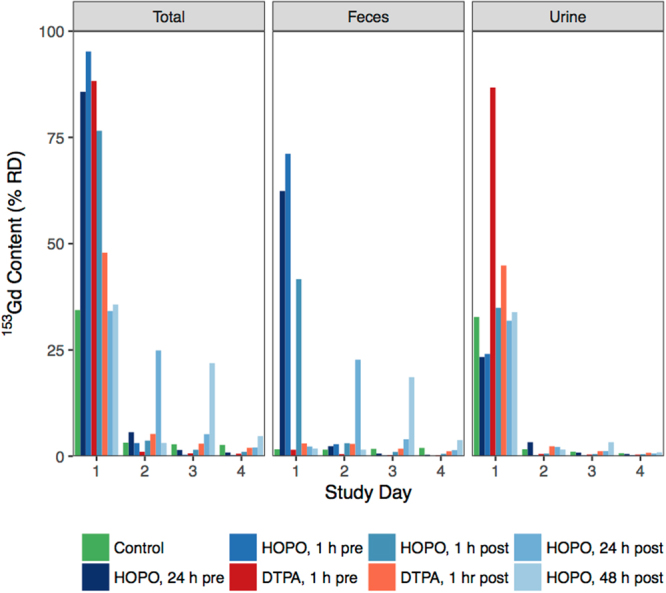
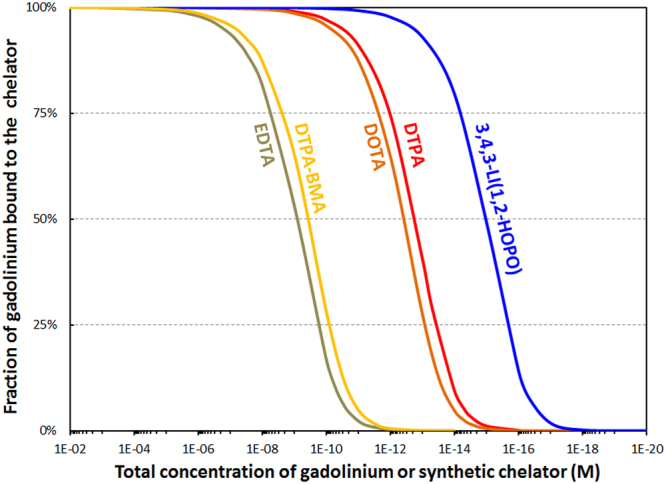
Several MRI contrast agent clinical formulations are now known to leave deposits of the heavy metal gadolinium in the brain, bones, and other organs of patients. This persistent biological accumulation of gadolinium has been recently recognized as a deleterious outcome in patients administered Gd-based contrast agents (GBCAs) for MRI, prompting the European Medicines Agency to recommend discontinuing the use of over half of the GBCAs currently approved for clinical applications. To address this problem, we find that the orally-available metal decorporation agent 3,4,3-LI(1,2-HOPO) demonstrates superior efficacy at chelating and removing Gd from the body compared to diethylenetriaminepentaacetic acid, a ligand commonly used in the United States in the GBCA Gadopentetate (Magnevist). Using the radiotracer Gd to obtain precise biodistribution data, the results herein, supported by speciation simulations, suggest that the prophylactic or post-hoc therapeutic use of 3,4,3-LI(1,2-HOPO) may provide a means to mitigate Gd retention in patients requiring contrast-enhanced MRI.
目前已知几种 MRI 造影剂临床配方会在患者的大脑、骨骼和其他器官中留下重金属钆的沉积物。最近,人们认识到在接受基于钆的造影剂(GBCA)进行 MRI 检查的患者中,这种持续的生物蓄积钆是一种有害的结果,促使欧洲药品管理局建议停止使用目前批准用于临床应用的一半以上的 GBCA。为了解决这个问题,我们发现口服金属解毒剂 3,4,3-LI(1,2-HOPO) 在螯合和从体内去除 Gd 方面比二乙烯三胺五乙酸(在美国常用于 GBCA 钆喷替酸葡甲胺(Magnevist)的配体)更有效。使用放射性示踪剂 Gd 获得精确的生物分布数据,本研究结果得到形态模拟的支持,表明在需要对比增强 MRI 的患者中预防性或事后治疗性使用 3,4,3-LI(1,2-HOPO) 可能提供一种减轻 Gd 蓄积的方法。