Fan Junsheng, Xia Zengfei, Zhang Xiaoli, Chen Yuqing, Qian Ruolan, Liu Sihan, You Danming, Zhang Jian, Luo Peng
Department of Oncology, Zhujiang Hospital of Southern Medical University, Guangzhou, China.
Department of Respiratory Medicine, Shanghai Tenth People's Hospital, Tongji University, Shanghai, China.
Onco Targets Ther. 2018 Mar 1;11:1105-1115. doi: 10.2147/OTT.S156170. eCollection 2018.
Alectinib is a second-generation anaplastic lymphoma kinase (ALK) inhibitor approved by the US Food and Drug Administration to treat crizotinib-refractory non-small cell lung cancer. We performed this meta-analysis to synthesize the results of different clinical trials to evaluate the efficacy and safety of alectinib.
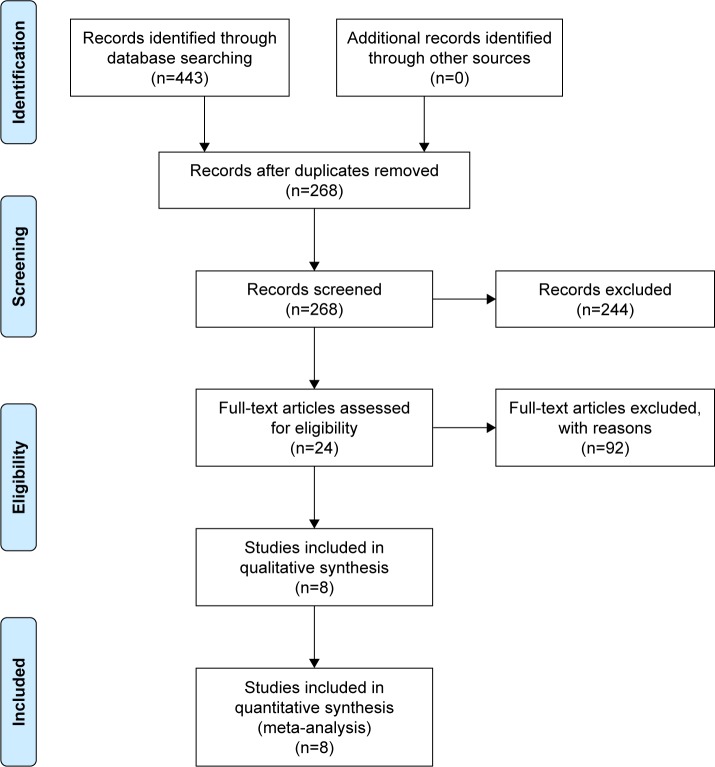
A search of 3 databases, including PubMed, Web of Science, and the Cochrane Library, was performed from the inception of each database through September 5, 2017. We have pooled the overall response rate (ORR), disease control rate, progression-free survival, and intracranial ORR to evaluate the efficacy of alectinib. Discontinuation rate, rate of dose reduction or interruption due to adverse events as well as the incidence of several adverse events were aggregated to evaluate its safety.
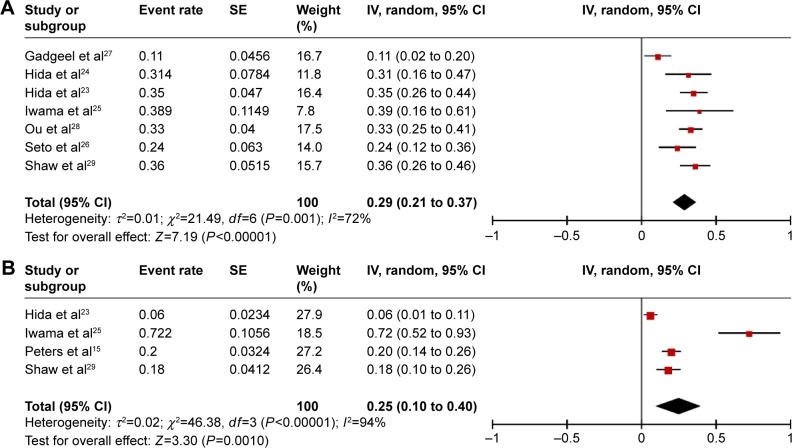
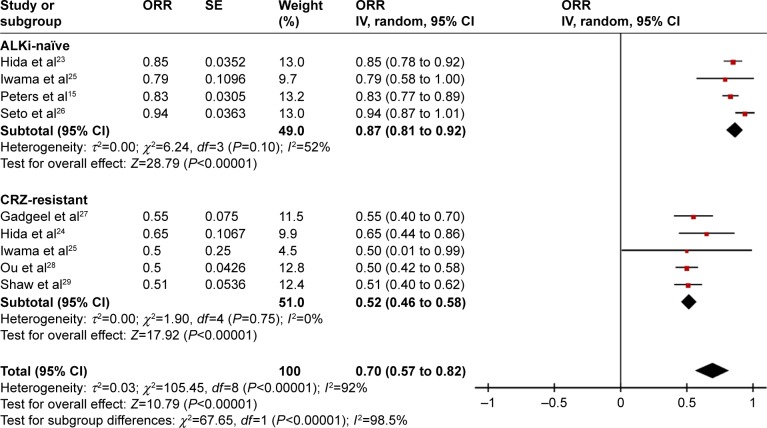
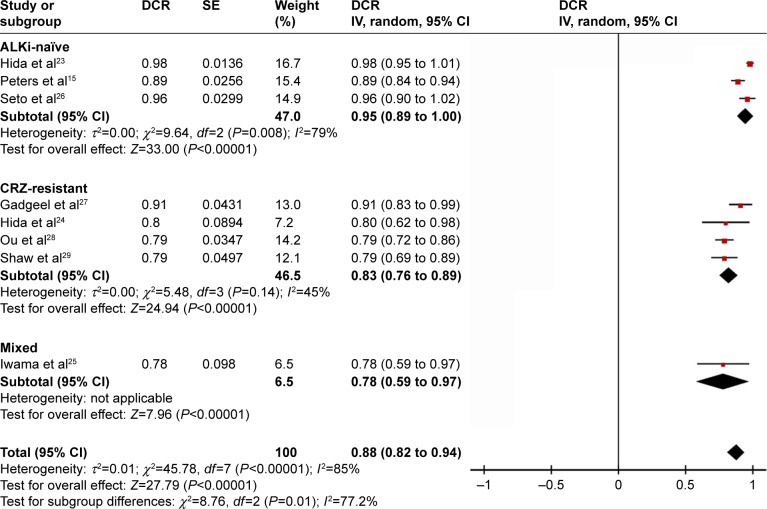
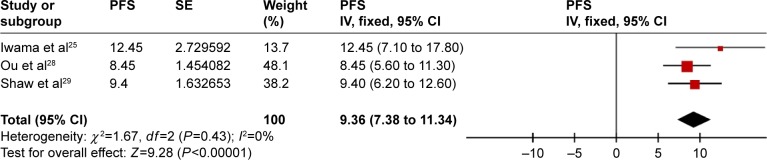
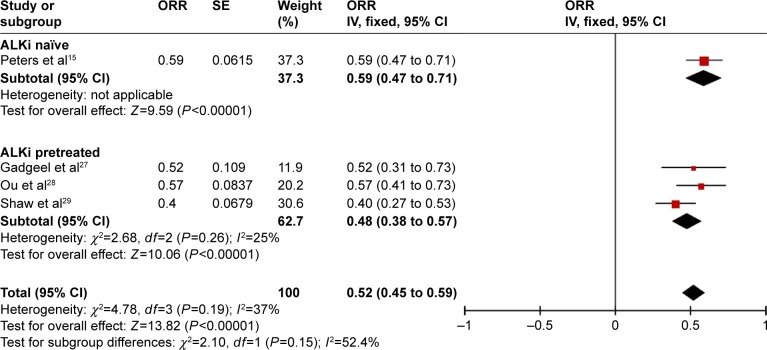
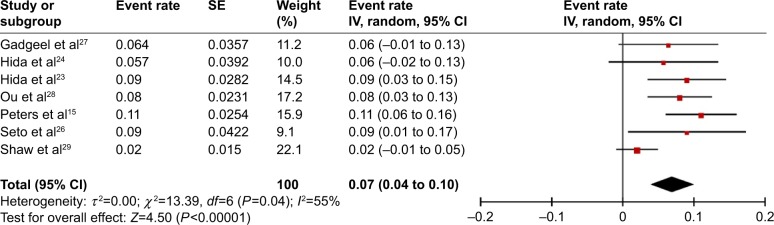
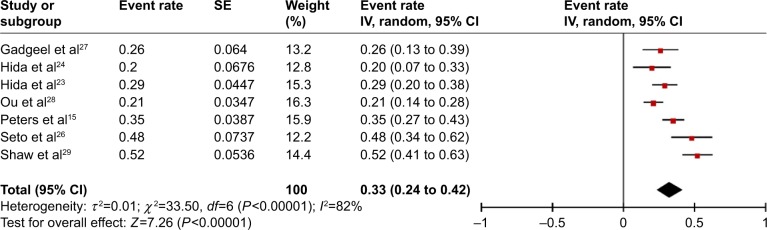
A total of 8 studies with 626 patients have been included in our study. The pooled efficacy parameters are as follows: ORR 70% (95% CI: 57% to 82%), disease control rate 88% (95% CI: 82% to 94%), progression-free survival 9.36 months (95% CI: 7.38% to 11.34%), and intracranial ORR 52% (95% CI: 45% to 59%). ALK inhibitor-naïve patients tend to have better responses than crizotinib-pretreated patients. The aggregate discontinuation rate is 7% (95% CI: 4% to 10%), and the pooled rate of dose reduction or interruption is 33% (95% CI: 24% to 42%). The incidences of most adverse events were relatively low, while the incidences of 2 frequently reported adverse events, myalgia (18%) and anemia (25%), were even higher than with the first-generation ALK inhibitor crizotinib.
Generally, alectinib is a drug with preferable efficacy and tolerable adverse effects, and it is suitable for the treatment of intracranial metastases.
阿来替尼是一种第二代间变性淋巴瘤激酶(ALK)抑制剂,已获美国食品药品监督管理局批准用于治疗对克唑替尼耐药的非小细胞肺癌。我们进行这项荟萃分析以综合不同临床试验的结果,评估阿来替尼的疗效和安全性。
检索了3个数据库,包括PubMed、科学网和考克兰图书馆,检索时间从每个数据库创建至2017年9月5日。我们汇总了总缓解率(ORR)、疾病控制率、无进展生存期和颅内ORR,以评估阿来替尼的疗效。汇总了停药率、因不良事件导致的剂量减少或中断率以及几种不良事件的发生率,以评估其安全性。
我们的研究共纳入8项研究,涉及626例患者。汇总的疗效参数如下:ORR为70%(95%置信区间:57%至82%),疾病控制率为88%(95%置信区间:82%至94%),无进展生存期为9.36个月(95%置信区间:7.38%至11.34%),颅内ORR为52%(95%置信区间:45%至59%)。未接受过ALK抑制剂治疗的患者往往比接受过克唑替尼预处理的患者反应更好。总停药率为7%(95%置信区间:4%至10%),汇总的剂量减少或中断率为33%(95%置信区间:24%至42%)。大多数不良事件的发生率相对较低,而2种经常报告的不良事件,即肌痛(18%)和贫血(25%)的发生率甚至高于第一代ALK抑制剂克唑替尼。
总体而言,阿来替尼是一种疗效较好且不良反应可耐受的药物,适用于治疗颅内转移瘤。