Choe Seon, Cai Mudan, Jerng Ui Min, Lee Jun-Hwan
Clinical Research Division, Korea Institute of Oriental Medicine, Daejeon 34054, Korea.
Korean Medicine Life Science, University of Science & Technology (UST), Campus of Korea Institute of Oriental Medicine, Daejeon 34054, Korea.
Exp Neurobiol. 2018 Feb;27(1):1-15. doi: 10.5607/en.2018.27.1.1. Epub 2018 Feb 13.
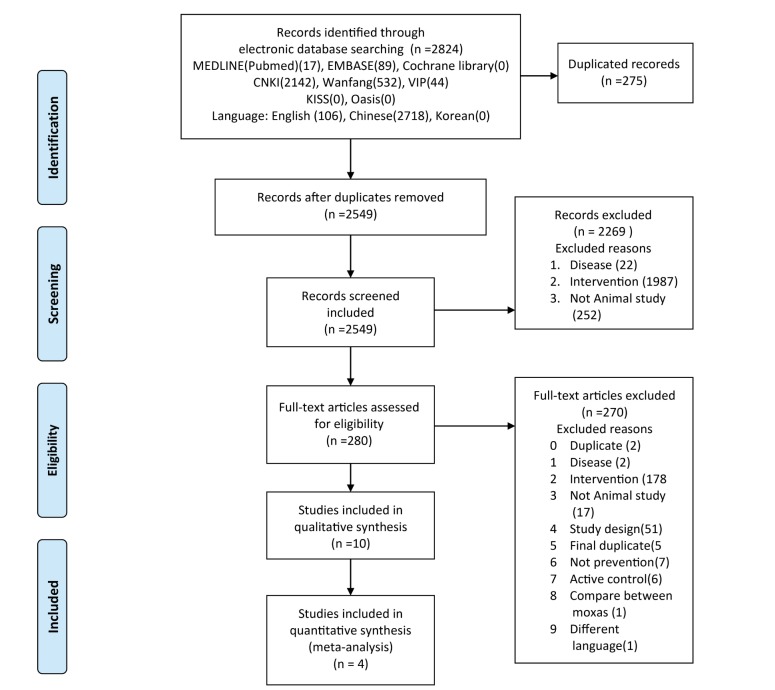
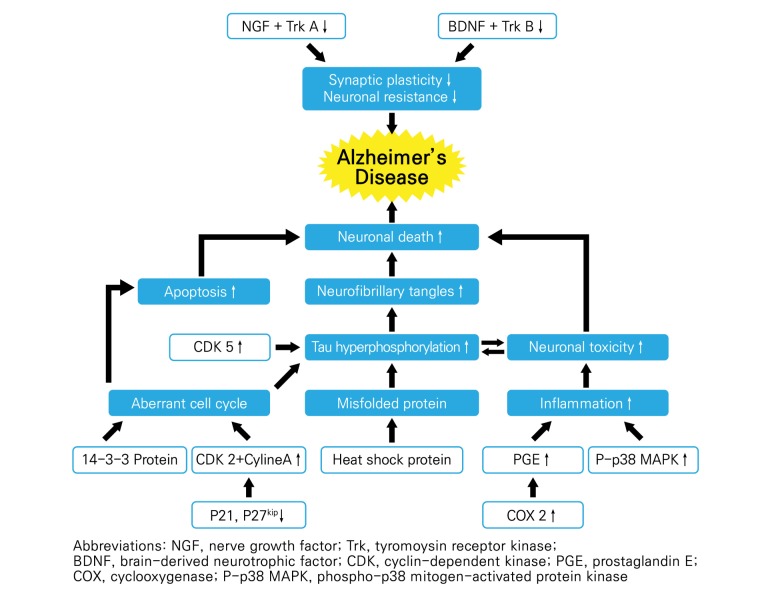
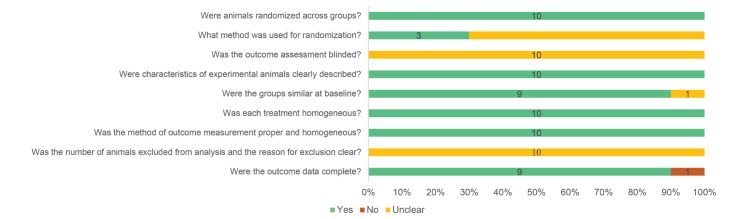
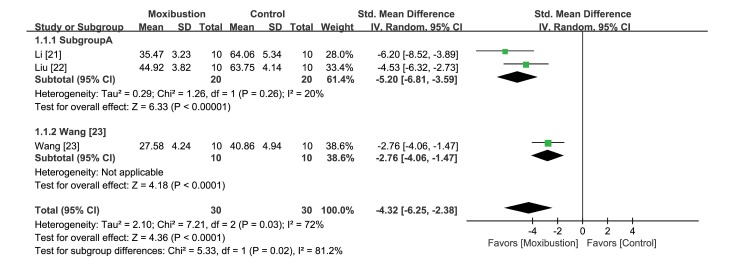
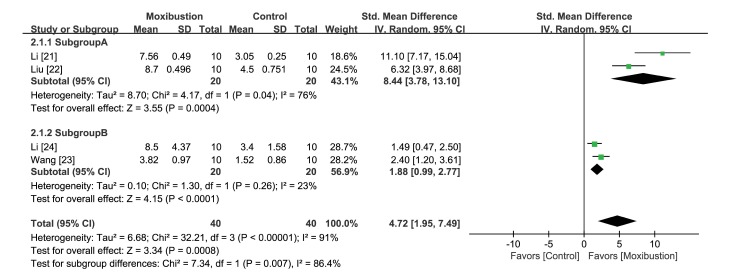
Cognitive impairment is age-related and manageable only with early diagnosis and prevention. Moxibustion is widely accepted in East Asia as useful for preventing cognitive impairment. This systematic review of animal studies was conducted to verify the efficacy of moxibustion in preventing cognitive impairment and to elucidate the underlying mechanism. Randomized controlled animal trials that established the efficacy of moxibustion in preventing cognitive impairment were included in the analysis. Results of behavioral tests and the signaling pathways elucidated were extracted and a meta-analysis was conducted with the behavioral test results. The risk of bias was evaluated using 9 items, and reporting quality was evaluated using the ARRIVE (Animal Research: Reporting In Vivo Experiments) Guidelines Checklist. Ten trials involving 410 animals met the inclusion criteria. All studies reported the benefit of moxibustion in preventing cognitive deficits caused by Alzheimer's disease (AD). Among five studies using the Morris water maze test, a significant effect of moxibustion in decreasing the escape time was reported in three studies, increasing the crossing times in four studies, and prolonging the dwelling time in two studies. The effects of moxibustion were demonstrated to be mediated by an increase in the activity of neurotrophins and heat shock protein, modulation of the cell cycle, and suppression of apoptosis and inflammation. However, considering the small number of included studies, the lack of studies investigating entire signaling pathways, and a high risk of bias and low reporting quality, our results need to be confirmed through more detailed studies.
认知障碍与年龄相关,只有通过早期诊断和预防才能得到控制。艾灸在东亚被广泛认为对预防认知障碍有益。本系统综述动物研究旨在验证艾灸预防认知障碍的疗效并阐明其潜在机制。分析纳入了证实艾灸预防认知障碍疗效的随机对照动物试验。提取行为测试结果和阐明的信号通路,并对行为测试结果进行荟萃分析。使用9项指标评估偏倚风险,并使用ARRIVE(动物研究:体内实验报告)指南清单评估报告质量。涉及410只动物的10项试验符合纳入标准。所有研究均报告了艾灸对预防阿尔茨海默病(AD)所致认知缺陷的益处。在五项使用莫里斯水迷宫试验的研究中,三项研究报告了艾灸在缩短逃避时间方面有显著效果,四项研究报告了艾灸在增加穿越次数方面有显著效果,两项研究报告了艾灸在延长停留时间方面有显著效果。艾灸的作用被证明是通过神经营养因子和热休克蛋白活性增加、细胞周期调节以及细胞凋亡和炎症抑制来介导的。然而,考虑到纳入研究数量较少、缺乏对整个信号通路的研究以及偏倚风险高和报告质量低,我们的结果需要通过更详细的研究来证实。