Aebersold Mathias J, Thompson-Steckel Greta, Joutang Adriane, Schneider Moritz, Burchert Conrad, Forró Csaba, Weydert Serge, Han Hana, Vörös János
Laboratory of Biosensors and Bioelectronics, Institute for Biomedical Engineering, ETH Zürich, Zurich, Switzerland.
Front Neurosci. 2018 Feb 27;12:94. doi: 10.3389/fnins.2018.00094. eCollection 2018.
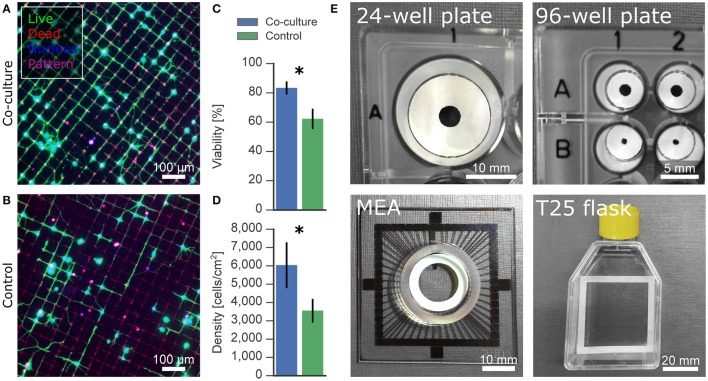
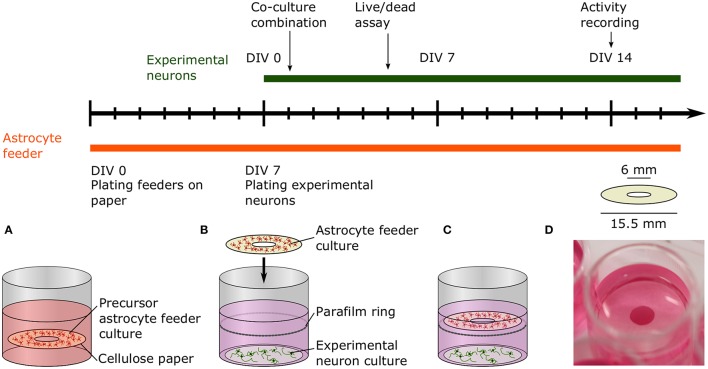
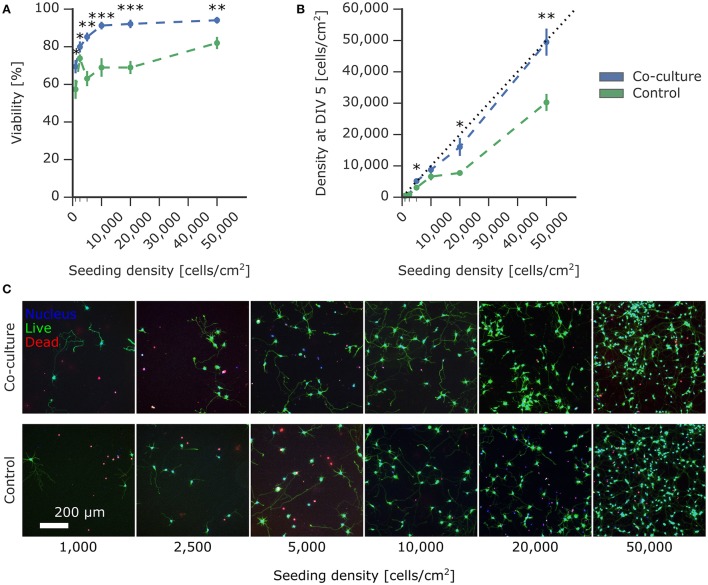
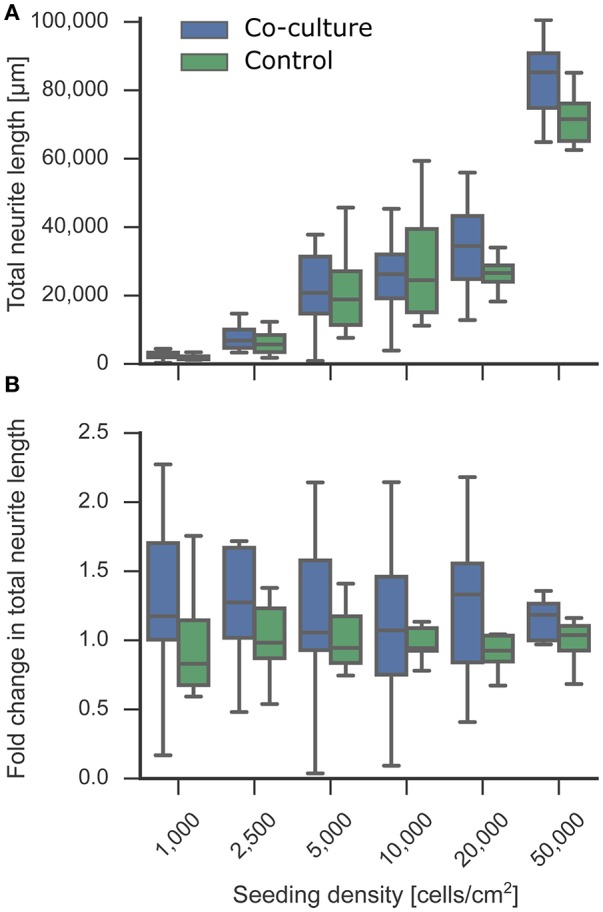
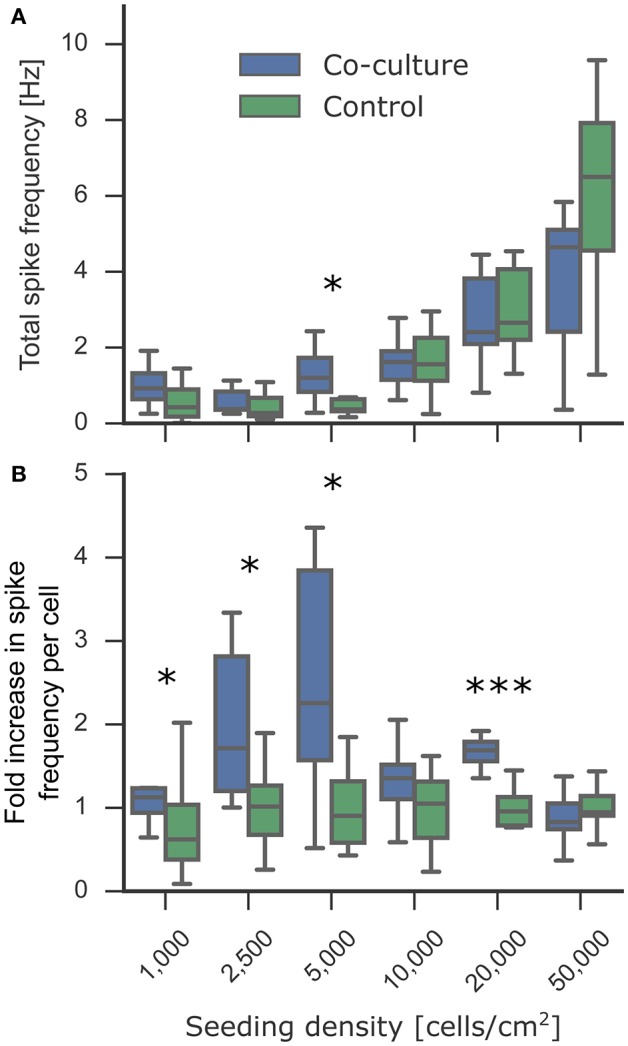
Bottom-up neuroscience aims to engineer well-defined networks of neurons to investigate the functions of the brain. By reducing the complexity of the brain to achievable target questions, such bioassays better control experimental variables and can serve as a versatile tool for fundamental and pharmacological research. Astrocytes are a cell type critical to neuronal function, and the addition of astrocytes to neuron cultures can improve the quality of assays. Here, we present cellulose as an astrocyte culture substrate. Astrocytes cultured on the cellulose fiber matrix thrived and formed a dense 3D network. We devised a novel co-culture platform by suspending the easy-to-handle astrocytic paper cultures above neuronal networks of low densities typically needed for bottom-up neuroscience. There was significant improvement in neuronal viability after 5 days at densities ranging from 50,000 cells/cm down to isolated cells at 1,000 cells/cm. Cultures exhibited spontaneous spiking even at the very low densities, with a significantly greater spike frequency per cell compared to control mono-cultures. Applying the co-culture platform to an engineered network of neurons on a patterned substrate resulted in significantly improved viability and almost doubled the density of live cells. Lastly, the shape of the cellulose substrate can easily be customized to a wide range of culture vessels, making the platform versatile for different applications that will further enable research in bottom-up neuroscience and drug development.
自下而上的神经科学旨在构建定义明确的神经元网络,以研究大脑的功能。通过将大脑的复杂性简化为可实现的目标问题,此类生物测定法能更好地控制实验变量,并可作为基础研究和药理学研究的通用工具。星形胶质细胞是对神经元功能至关重要的一种细胞类型,在神经元培养物中添加星形胶质细胞可提高测定的质量。在此,我们展示了纤维素作为星形胶质细胞的培养底物。在纤维素纤维基质上培养的星形胶质细胞茁壮成长,并形成了密集的三维网络。我们设计了一种新型的共培养平台,将易于操作的星形胶质细胞纸质培养物悬浮在自下而上的神经科学通常所需的低密度神经元网络上方。在密度范围从50,000个细胞/平方厘米到1,000个细胞/平方厘米的分离细胞的情况下,5天后神经元活力有显著提高。即使在非常低的密度下,培养物也表现出自发放电,与对照单培养物相比,每个细胞的放电频率显著更高。将共培养平台应用于图案化底物上的工程化神经元网络,可显著提高活力,使活细胞密度几乎翻倍。最后,纤维素底物的形状可以很容易地定制成各种培养容器,使该平台适用于不同的应用,这将进一步推动自下而上的神经科学研究和药物开发。