Zhang Xiang, Mardinoglu Adil, Joosten Leo A B, Kuivenhoven Jan A, Li Yang, Netea Mihai G, Groen Albert K
Department of Experimental Vascular Medicine, Academic Medical Center, University of Amsterdam, Amsterdam, Netherlands.
Department of Chemical and Biological Engineering, Chalmers University of Technology, Gothenburg, Sweden.
Front Physiol. 2018 Feb 27;9:139. doi: 10.3389/fphys.2018.00139. eCollection 2018.
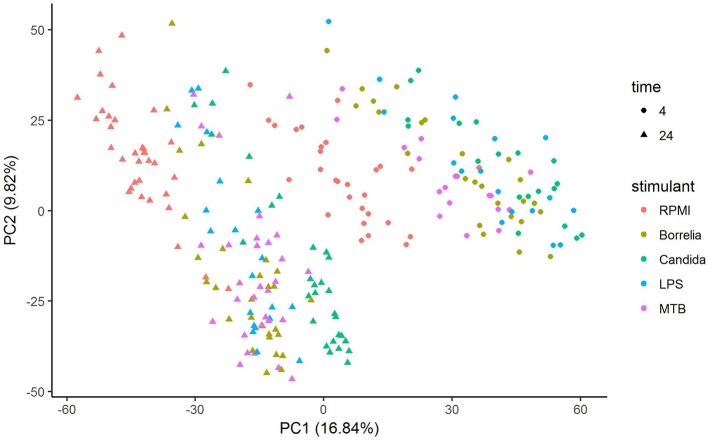
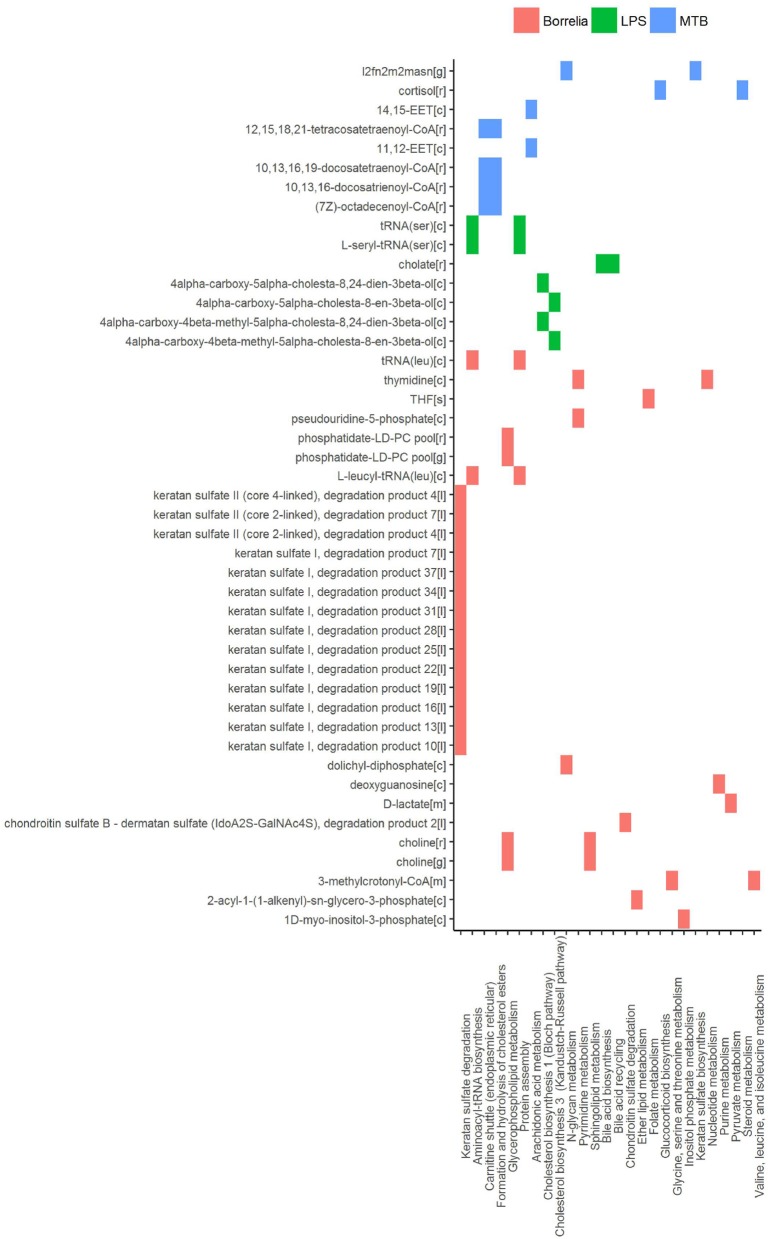
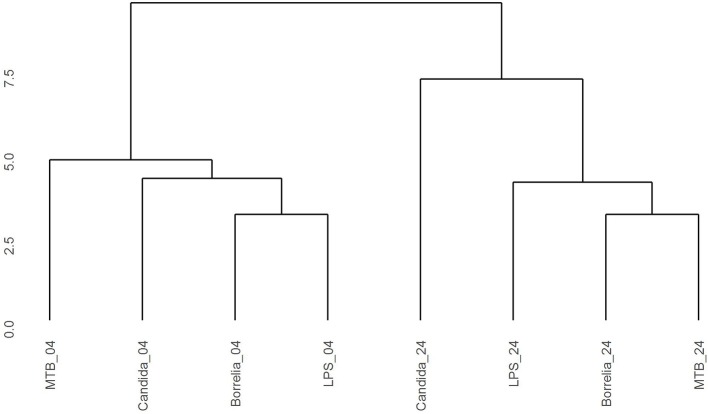
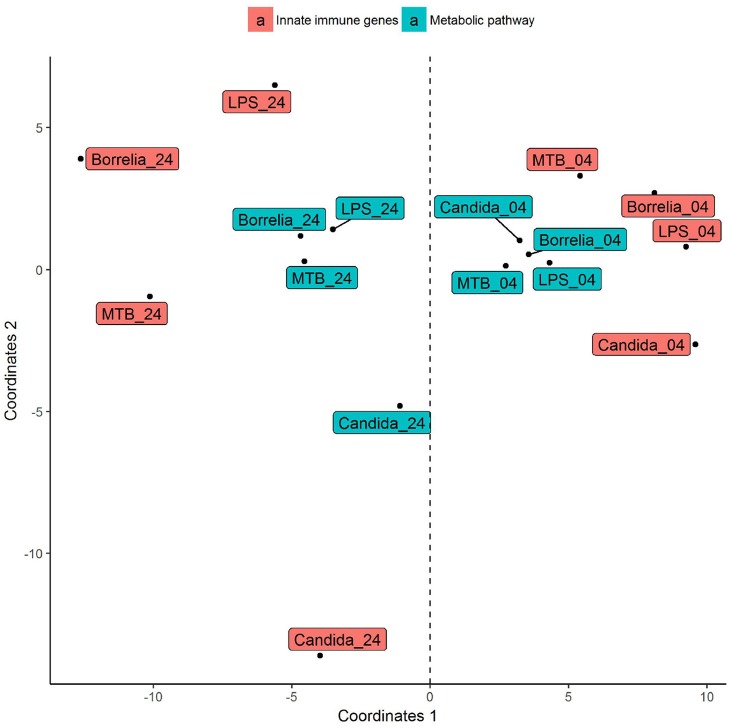
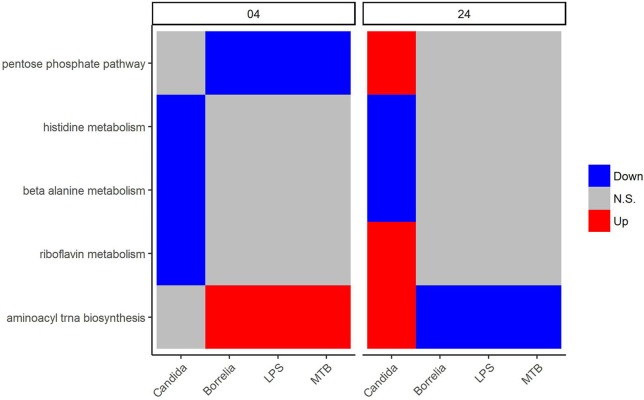
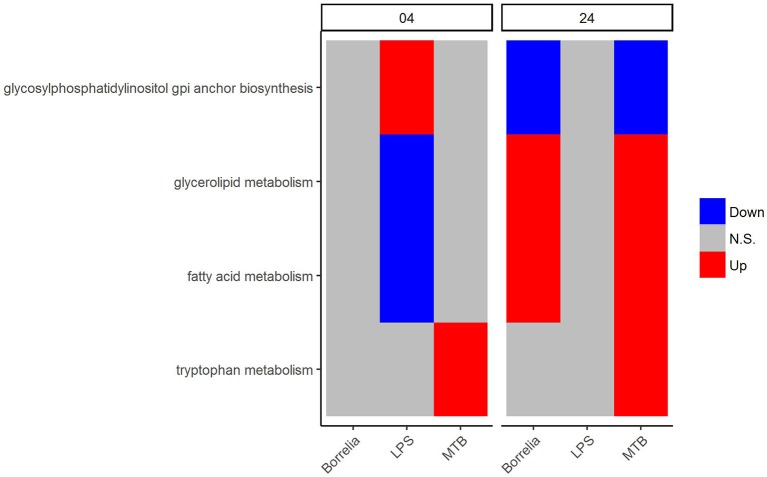
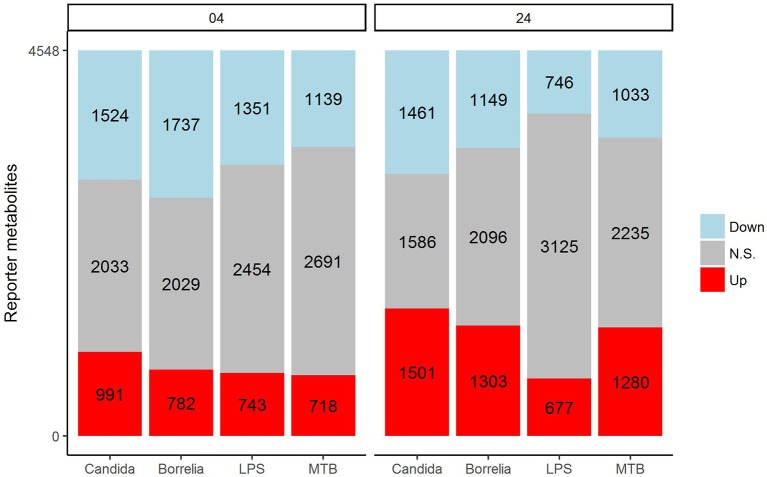
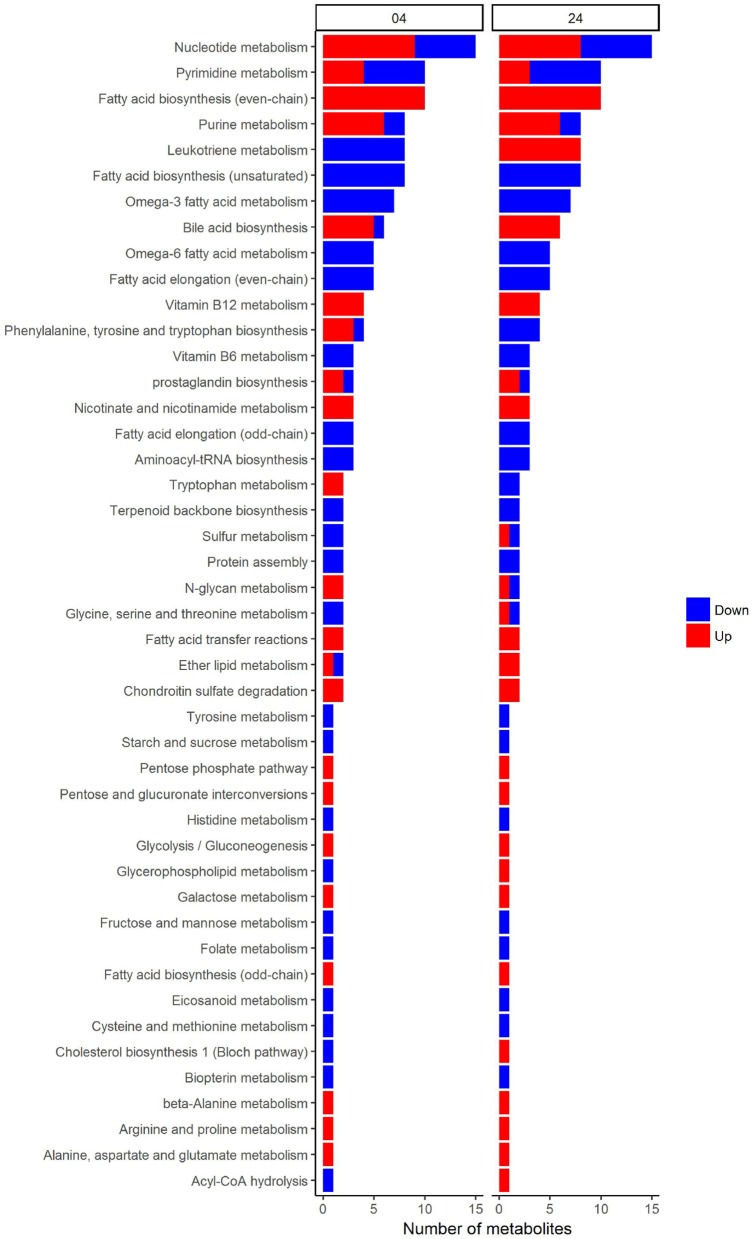
Immunity and cellular metabolism are tightly interconnected but it is not clear whether different pathogens elicit specific metabolic responses. To address this issue, we studied differential metabolic regulation in peripheral blood mononuclear cells (PBMCs) of healthy volunteers challenged by , lipopolysaccharide, and . By integrating gene expression data of stimulated PBMCs of healthy individuals with the KEGG pathways, we identified both common and pathogen-specific regulated pathways depending on the time of incubation. At 4 h of incubation, pathogenic agents inhibited expression of genes involved in both the glycolysis and oxidative phosphorylation pathways. In contrast, at 24 h of incubation, particularly glycolysis was enhanced while genes involved in oxidative phosphorylation remained unaltered in the PBMCs. In general, differential gene expression was less pronounced at 4 h compared to 24 h of incubation. KEGG pathway analysis allowed differentiation between effects induced by and bacterial stimuli. Application of genome-scale metabolic model further generated a -specific set of 103 reporter metabolites (e.g., desmosterol) that might serve as biomarkers discriminating -stimulated PBMCs from bacteria-stimuated PBMCs. Our analysis also identified a set of 49 metabolites that allowed discrimination between the effects of , lipopolysaccharide and . We conclude that analysis of pathogen-induced effects on PBMCs by a combination of KEGG pathways and genome-scale metabolic model provides deep insight in the metabolic changes coupled to host defense.
免疫与细胞代谢紧密相连,但尚不清楚不同病原体是否会引发特定的代谢反应。为解决这一问题,我们研究了健康志愿者外周血单核细胞(PBMCs)在受到[具体病原体1]、脂多糖和[具体病原体2]刺激后的差异代谢调控。通过将健康个体受刺激的PBMCs的基因表达数据与KEGG通路整合,我们根据孵育时间确定了共同调控和病原体特异性调控的通路。在孵育4小时时,病原体抑制了参与糖酵解和氧化磷酸化途径的基因表达。相比之下,在孵育24小时时,PBMCs中糖酵解尤其增强,而参与氧化磷酸化的基因保持不变。总体而言,与孵育24小时相比,孵育4小时时差异基因表达不太明显。KEGG通路分析能够区分[具体病原体1]和细菌刺激所诱导的效应。应用基因组规模代谢模型进一步生成了一组特定于[具体病原体1]的103种报告代谢物(如羊毛甾醇),这些代谢物可能作为区分受[具体病原体1]刺激的PBMCs和受细菌刺激的PBMCs的生物标志物。我们的分析还确定了一组49种代谢物,可用于区分[具体病原体1]、脂多糖和[具体病原体2]的效应。我们得出结论,通过KEGG通路和基因组规模代谢模型相结合来分析病原体对PBMCs的诱导效应,能够深入了解与宿主防御相关的代谢变化。