Albalushi Halima, Kurek Magdalena, Karlsson Leif, Landreh Luise, Kjartansdóttir Kristín Rós, Söder Olle, Hovatta Outi, Stukenborg Jan-Bernd
Nordfertil Research Lab Stockholm, Department of Women's and Children's Health, Karolinska Institutet and University Hospital Karolinska Institutet, Stockholm, Sweden.
Paediatric Endocrinology Unit, Department of Women's and Children's Health, Karolinska Institutet and University Hospital Karolinska Institutet, Stockholm, Sweden.
Stem Cells Int. 2018 Feb 18;2018:7127042. doi: 10.1155/2018/7127042. eCollection 2018.
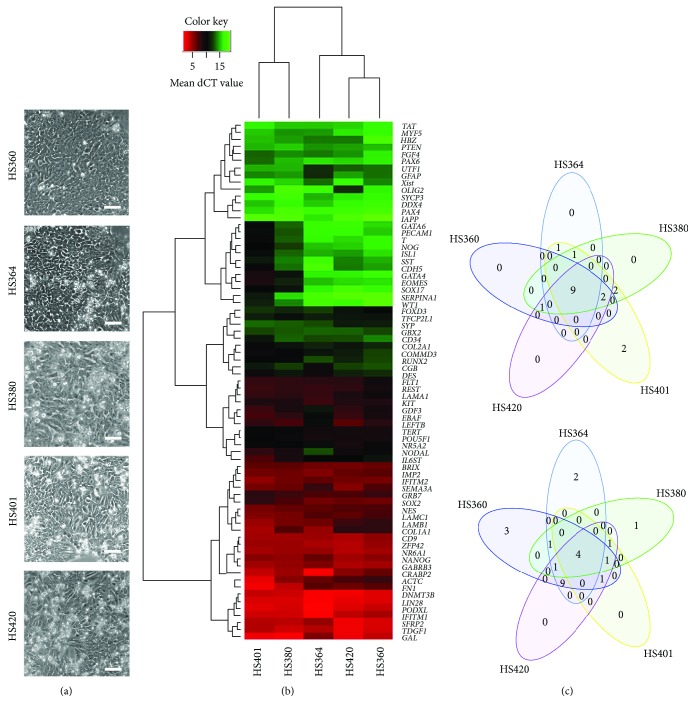
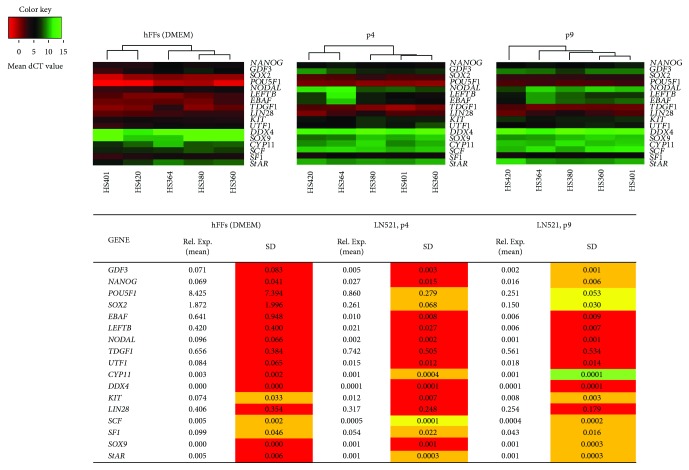
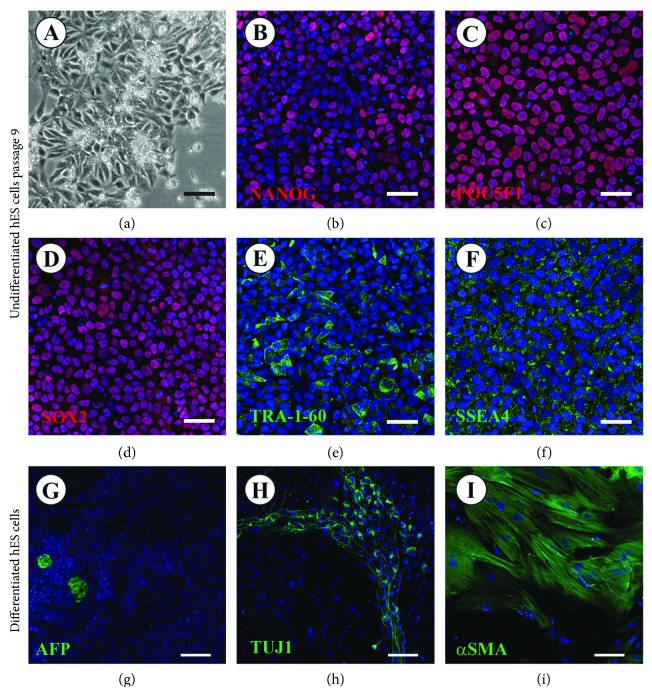
Human embryonic stem (hES) cells represent an important tool to study early cell development. The previously described use of human recombinant laminin (LN) 521 represented a step forward in generating clinically safe culture conditions. To test the short-term effect of LN521 on cultured hES cells, five male hES cell lines were cultured on human foreskin fibroblasts (hFFs), Matrigel, LN521, and LN121 and characterized by qPCR, immunofluorescence analysis, as well as their potential for three-germ layer differentiation. Variations in gene expression related to pluripotency, stemness, and testicular cells at different passages and culture conditions were evaluated by qPCR. All cell lines expressed pluripotency markers at protein and RNA level and were able to differentiate into cell types of the three germ layers after being cultured on LN521 for nine passages. Reduction in variation of pluripotency marker expression could be observed after culturing the cells on LN521 for nine passages. hES cells cultured on LN521 exhibited less differentiation, faster cell growth, and attachment when compared to hES cells cultured on LN121 or Matrigel. Our results indicate a positive effect of LN521 in stabilizing pluripotency gene expression and might be the first step towards more controllable and robust culture conditions for hES cells.
人胚胎干细胞(hES)是研究早期细胞发育的重要工具。先前描述的使用人重组层粘连蛋白(LN)521代表了在生成临床安全培养条件方面的一个进步。为了测试LN521对培养的hES细胞的短期影响,将五种雄性hES细胞系培养在人包皮成纤维细胞(hFFs)、基质胶、LN521和LN121上,并通过qPCR、免疫荧光分析以及它们的三胚层分化潜能进行表征。通过qPCR评估在不同传代和培养条件下与多能性、干性和睾丸细胞相关的基因表达变化。所有细胞系在蛋白质和RNA水平上均表达多能性标志物,并且在LN521上培养九代后能够分化为三个胚层的细胞类型。在LN521上培养细胞九代后,可以观察到多能性标志物表达的变化减少。与在LN121或基质胶上培养的hES细胞相比,在LN521上培养的hES细胞表现出较少的分化、更快的细胞生长和附着。我们的结果表明LN521在稳定多能性基因表达方面具有积极作用,并且可能是朝着为hES细胞建立更可控、更稳定的培养条件迈出的第一步。