Miki Hirokazu, Nakamura Shingen, Oda Asuka, Tenshin Hirofumi, Teramachi Jumpei, Hiasa Masahiro, Bat-Erdene Ariunzaya, Maeda Yusaku, Oura Masahiro, Takahashi Mamiko, Iwasa Masami, Harada Takeshi, Fujii Shiro, Kurahashi Kiyoe, Yoshida Sumiko, Kagawa Kumiko, Endo Itsuro, Aihara Kenichi, Ikuo Mariko, Itoh Kohji, Hayashi Koichiro, Nakamura Michihiro, Abe Masahiro
Division of Transfusion Medicine and Cell Therapy, Tokushima University Hospital, Tokushima, Japan.
Department of Hematology, Endocrinology and Metabolism, Institute of Biomedical Sciences, Tokushima University Graduate School, Tokushima, Japan.
Oncotarget. 2017 Dec 7;9(12):10307-10316. doi: 10.18632/oncotarget.23121. eCollection 2018 Feb 13.
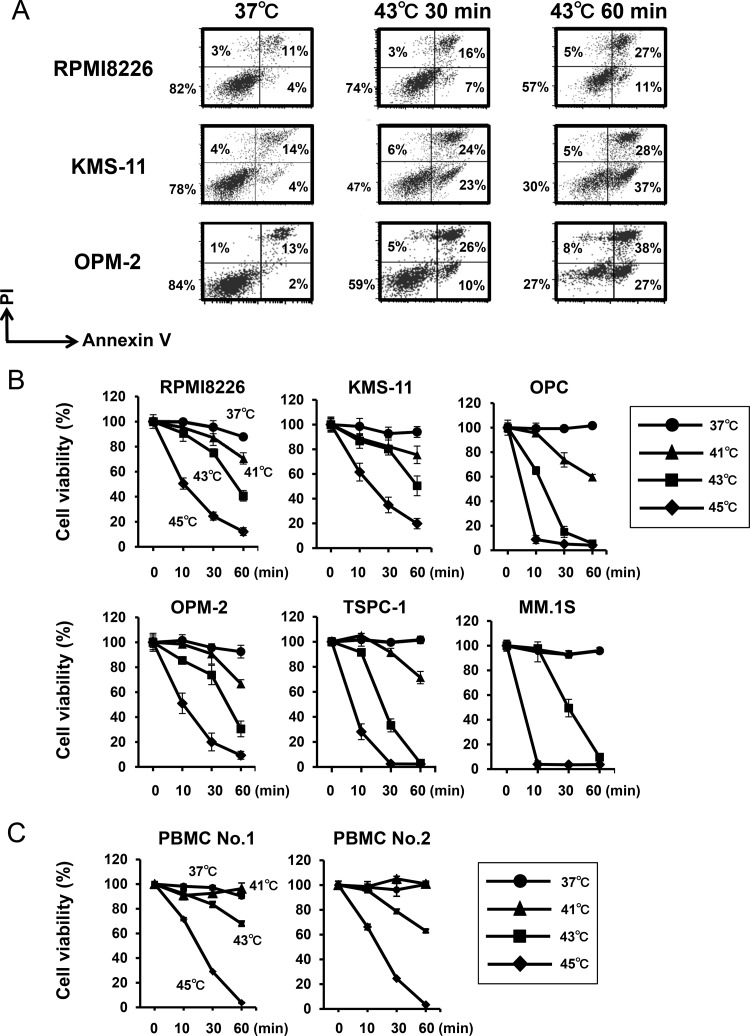
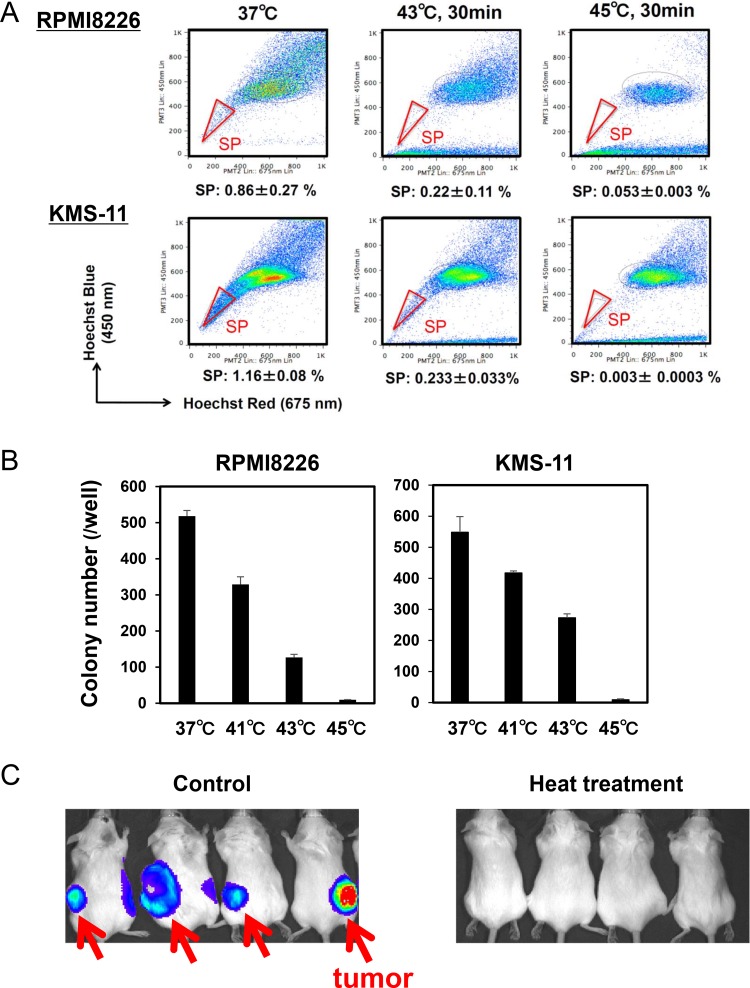
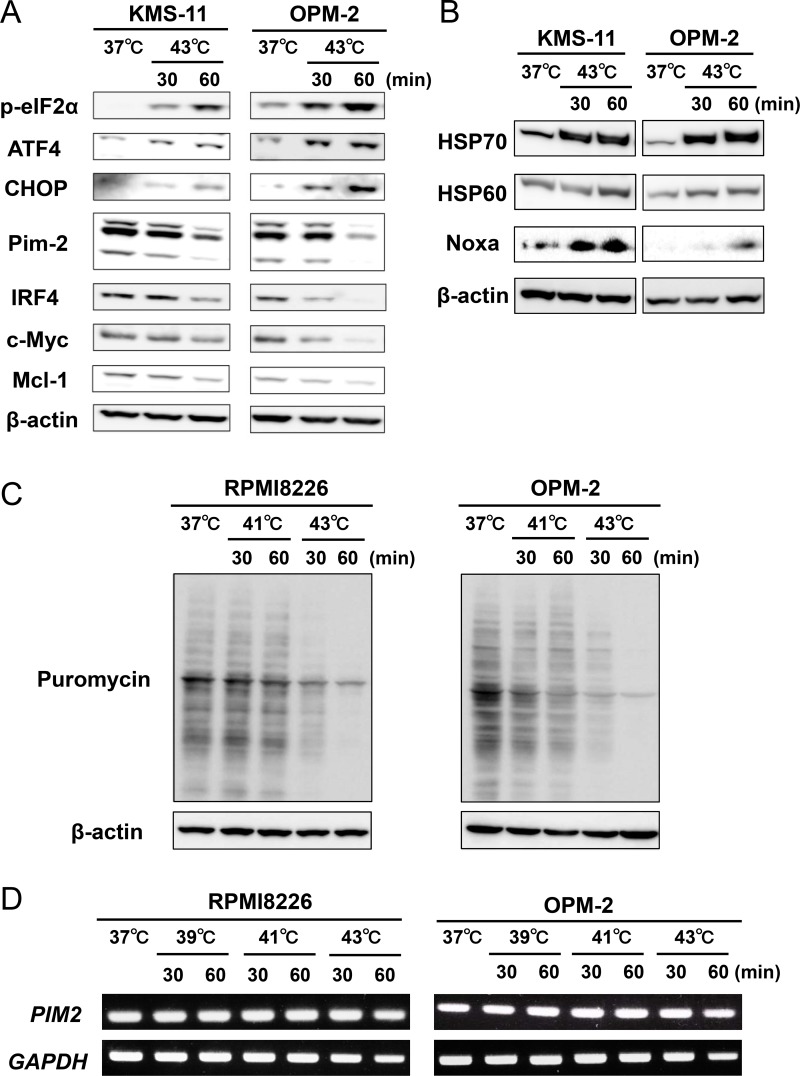
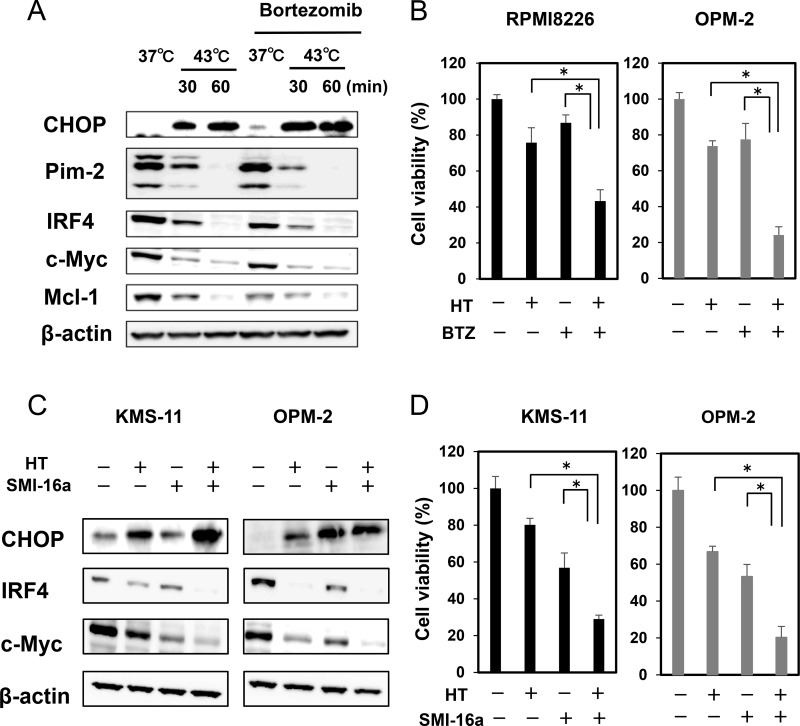
Multiple myeloma (MM) remains incurable, and MM-initiating cells or MM progenitors are considered to contribute to disease relapse through their drug-resistant nature. In order to improve the therapeutic efficacy for MM, we recently developed novel superparamagnetic nanoparticles which selectively accumulate in MM tumors and extirpate them by heat generated with magnetic resonance. We here aimed to clarify the therapeutic effects on MM cells and their progenitors by hyperthermia. Heat treatment at 43°C time-dependently induced MM cell death. The treatment upregulated endoplasmic reticulum (ER) stress mediators, ATF4 and CHOP, while reducing the protein levels of Pim-2, IRF4, c-Myc and Mcl-1. Combination with the proteasome inhibitor bortezomib further enhanced ER stress to potentiate MM cell death. The Pim inhibitor SMI-16a also enhanced the reduction of the Pim-2-driven survival factors, IRF4 and c-Myc, in combination with the heat treatment. The heat treatment almost completely eradicated "side population" fractions in RPMI8226 and KMS-11 cells and suppressed their clonogenic capacity as determined by colony formation and tumorigenic capacity in SCID mice. These results collectively demonstrated that hyperthermia is able to impair clonogenic drug-resistant fractions of MM cells and enhance their susceptibility to chemotherapeutic drugs.
多发性骨髓瘤(MM)仍然无法治愈,而MM起始细胞或MM祖细胞被认为因其耐药性导致疾病复发。为了提高MM的治疗效果,我们最近开发了新型超顺磁性纳米颗粒,其可选择性地在MM肿瘤中积聚,并通过磁共振产生的热量将肿瘤切除。我们在此旨在阐明热疗对MM细胞及其祖细胞的治疗效果。43°C的热处理可时间依赖性地诱导MM细胞死亡。该处理上调了内质网(ER)应激介质ATF4和CHOP,同时降低了Pim-2、IRF4、c-Myc和Mcl-1的蛋白水平。与蛋白酶体抑制剂硼替佐米联合使用可进一步增强ER应激,从而增强MM细胞死亡。Pim抑制剂SMI-16a与热处理联合使用时,也增强了由Pim-2驱动的生存因子IRF4和c-Myc的减少。热处理几乎完全消除了RPMI8226和KMS-11细胞中的“侧群”部分,并抑制了它们的克隆形成能力,这通过集落形成和SCID小鼠中的致瘤能力得以确定。这些结果共同表明,热疗能够损害MM细胞的克隆耐药部分,并增强它们对化疗药物的敏感性。