Departamento de Zoologia e Botânica, Instituto de Biociências, Letras e Ciências Exatas, Universidade Estadual Paulista "Júlio de Mesquita Filho", São José do Rio Preto, São Paulo, Brazil.
Departamento de Biologia Aplicada à Agropecuária, Faculdade de Ciências Agrárias e Veterinárias, Universidade Estadual Paulista "Júlio de Mesquita Filho", Jaboticabal, São Paulo, Brazil.
PLoS One. 2018 Mar 14;13(3):e0194424. doi: 10.1371/journal.pone.0194424. eCollection 2018.
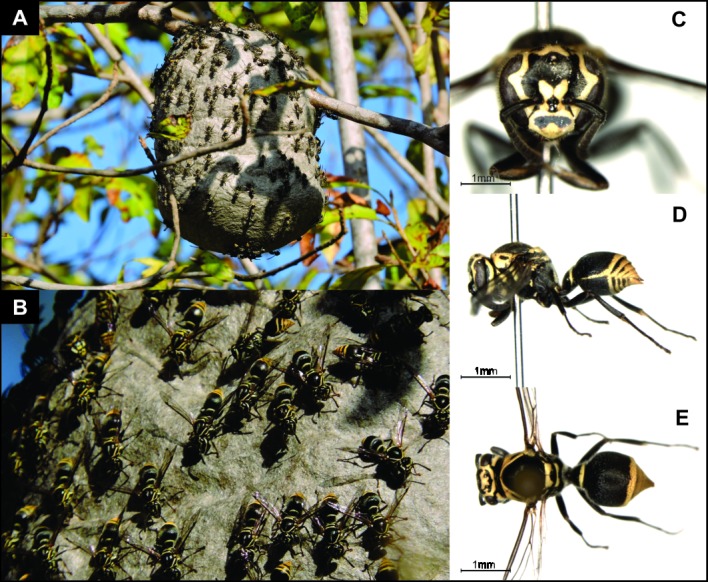
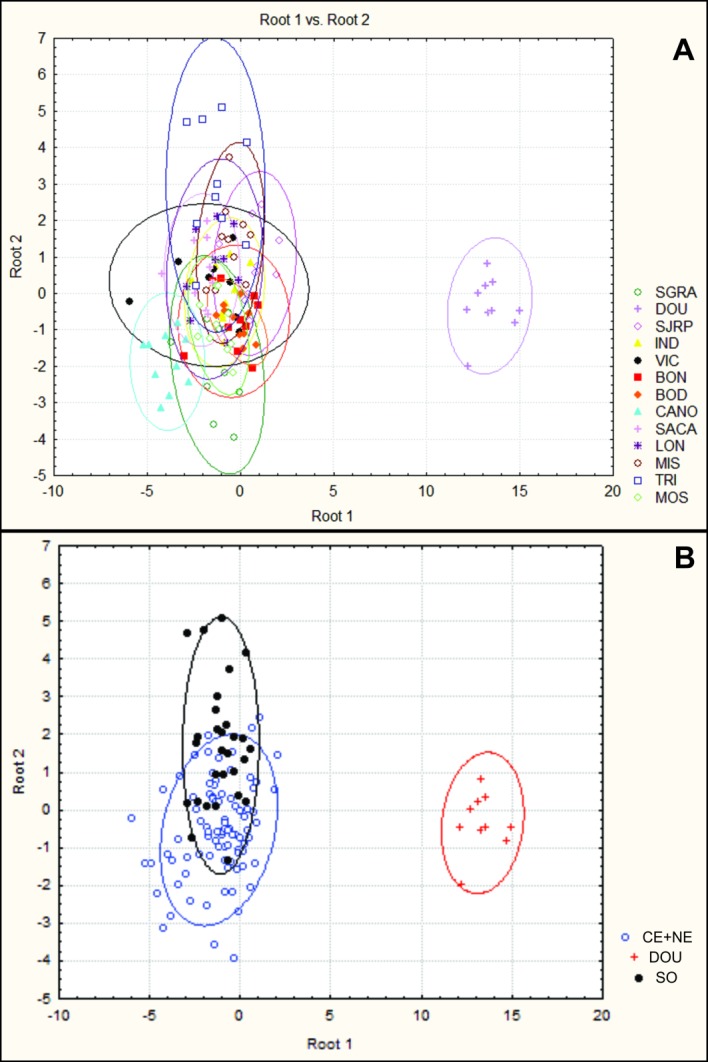
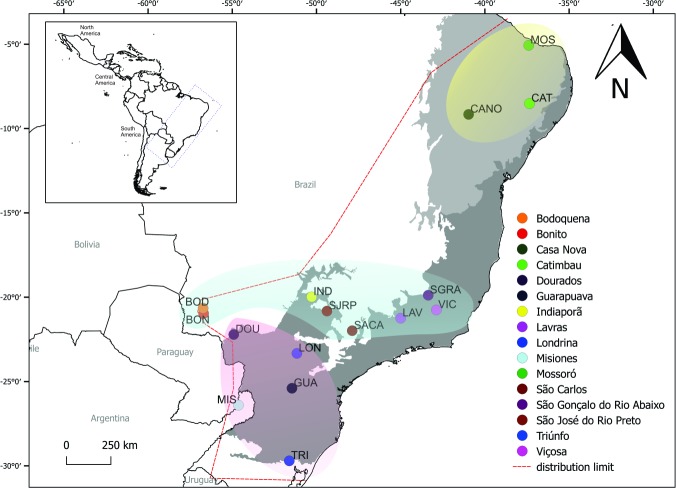
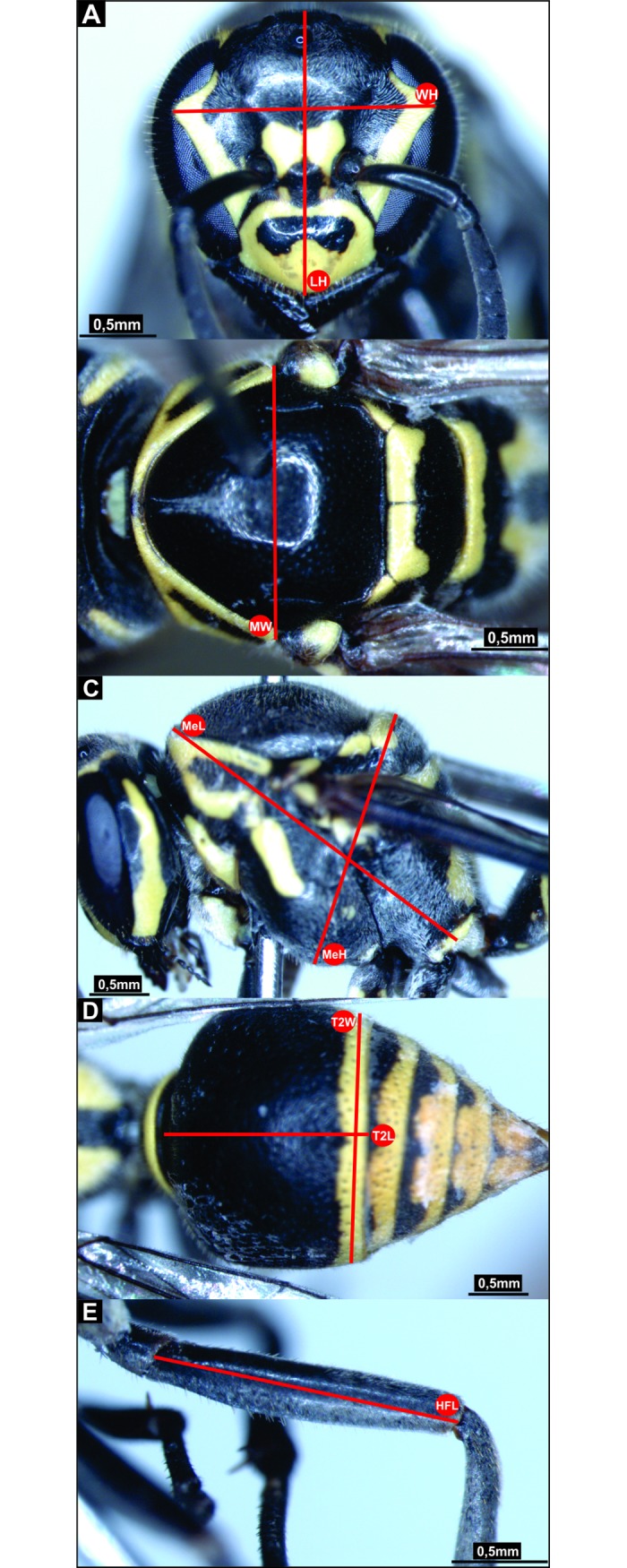
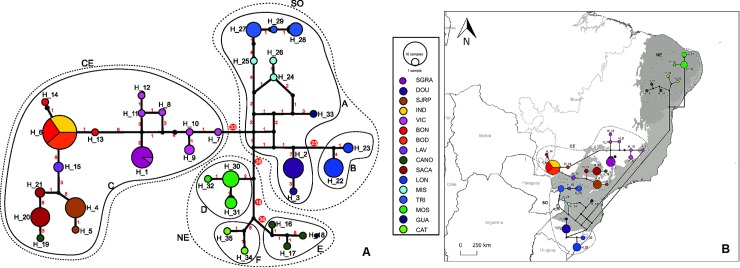
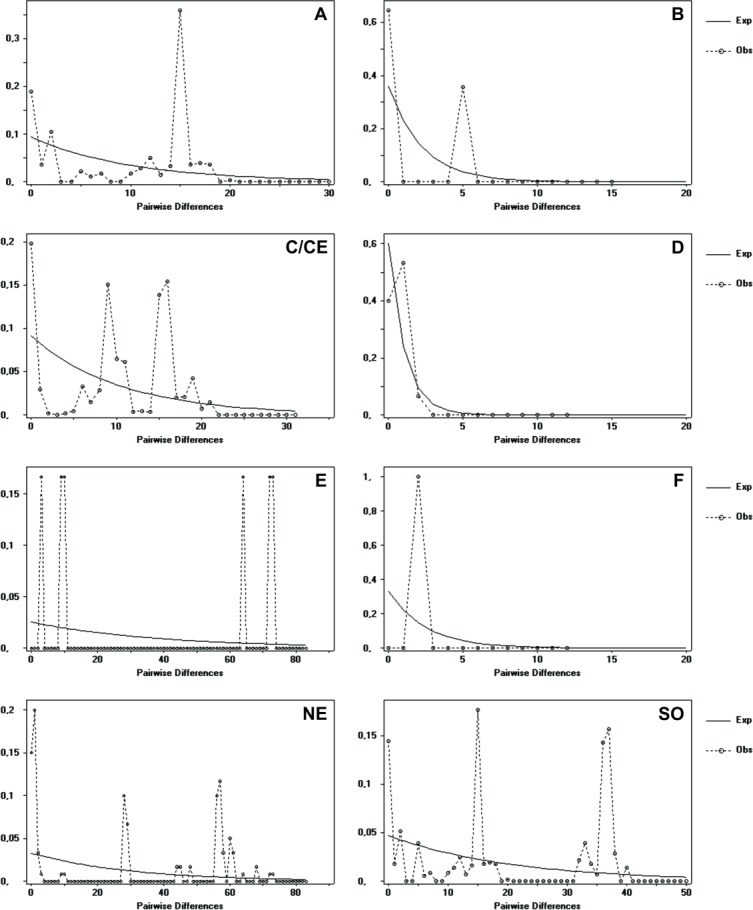
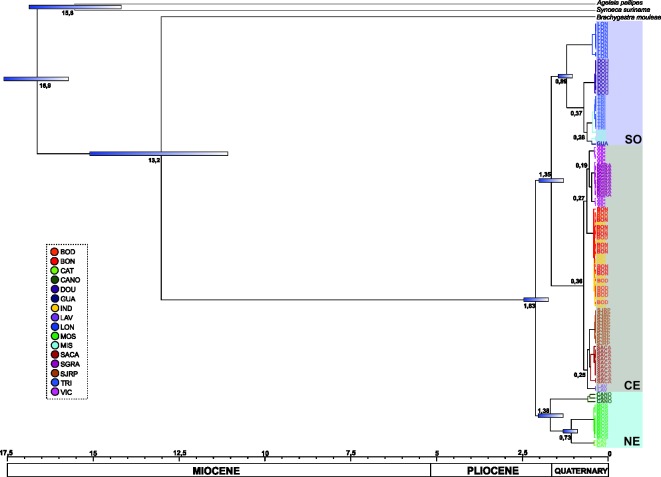
Swarm-founding wasps are endemic and common representatives of neotropical fauna and compose an interesting social tribe of vespids, presenting both complex social characteristics and uncommon traits for a eusocial group, such as the absence of castes with distinct morphology. The paper wasp Protonectarina sylveirae (Saussure) presents a broad distribution from Brazil, Argentina and Paraguay, occurring widespread in the Atlantic rainforest and arboreal Caatinga, being absent in the Amazon region. Given the peculiar distribution among swarm-founding wasps, an integrative approach to reconstruct the evolutionary history of P. sylveirae in a spatial-temporal framework was performed to investigate: the presence of genetic structure and its relationship with the geography, the evolution of distinct morphologic lineages and the possible historical event(s) in Neotropical region, which could explain the observed phylogeographic pattern. Individuals of P. sylveirae were obtained from populations of 16 areas throughout its distribution for DNA extraction and amplification of mitochondrial genes 12S, 16S and COI. Analysis of genetic diversity, construction of haplotype net, analysis of population structure and dating analysis of divergence time were performed. A morphometric analysis was also performed using 8 measures of the body of the adult (workers) to test if there are morphological distinction among populations. Thirty-five haplotypes were identified, most of them exclusively of a group and a high population structure was found. The possibility of genetic divergence because of isolation by distance was rejected. Morphological analysis pointed to a great uniformity in phenotypes, with only a small degree of differentiation between populations of south and the remaining. Divergence time analysis showed a Middle/Late Miocene origin, a period where an extensive marine ingression occurred in South America. Divergence of haplogroups began from the Plio/Pleistocene boundary and the last glacial maximum most likely modeled the current distribution of species, even though it was not the cause of genetic breaks.
群体繁殖的胡蜂是新热带动物群中的特有且常见的代表,它们构成了一个有趣的膜翅目社会部落,具有复杂的社会特征和不常见的社会性群体特征,例如没有形态明显不同的等级。纸胡蜂 Protonectarina sylveirae (Saussure) 分布广泛,从巴西、阿根廷和巴拉圭都有分布,广泛存在于大西洋雨林和树木繁茂的 Caatinga 中,而在亚马逊地区则不存在。鉴于群体繁殖的胡蜂的特殊分布情况,我们采用综合方法,在时空框架内重建 P. sylveirae 的进化历史,以调查:遗传结构的存在及其与地理的关系、不同形态谱系的进化以及新热带地区可能的历史事件(多个),这些都可以解释观察到的系统地理学模式。从其分布的 16 个地区的种群中获得 P. sylveirae 的个体,用于 DNA 提取和线粒体基因 12S、16S 和 COI 的扩增。进行了遗传多样性分析、单倍型网络图构建、种群结构分析和分化时间的约会分析。还进行了形态测量分析,使用成年(工蜂)的 8 个体长测量值来测试种群之间是否存在形态差异。鉴定了 35 个单倍型,其中大多数是一个群体的特有单倍型,发现种群结构很高。由于距离隔离而产生遗传分化的可能性被拒绝。形态分析表明表型非常统一,只有南部分布的种群和其余种群之间存在很小的分化程度。分化时间分析表明起源于中新世晚期,这一时期南美洲发生了广泛的海洋入侵。单倍群的分化始于上新世/更新世边界和末次冰盛期,最有可能塑造了物种的当前分布,尽管它不是遗传断裂的原因。