Institute for Infection and Immunity, St George's, University of London, London, UK.
Faculty of Biology, Medicine and Health, University of Manchester, Manchester, UK.
Immun Inflamm Dis. 2018 Jun;6(2):276-296. doi: 10.1002/iid3.216. Epub 2018 Mar 15.
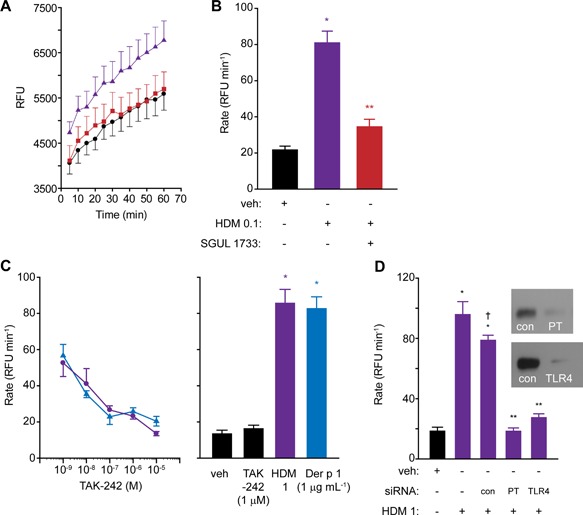
Intracellular reactive oxidant species (ROS) are generated in human airway epithelial cells by the prothrombinase action of Group 1 house dust mite (HDM) allergens and by ligation of viral RNA sensor Toll-like receptors (TLRs). We explored signaling convergence between HDM allergens and TLRs in ROS generation because epithelial cells form the primary barrier against inhaled substances and dictate host responses to allergens and viruses.
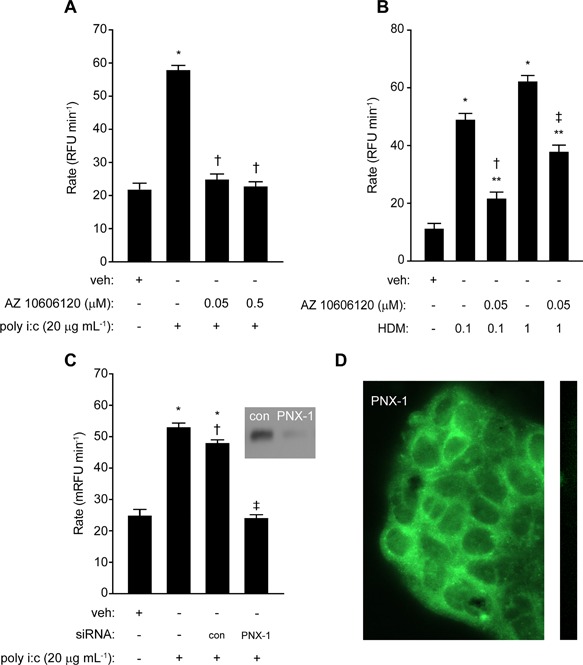
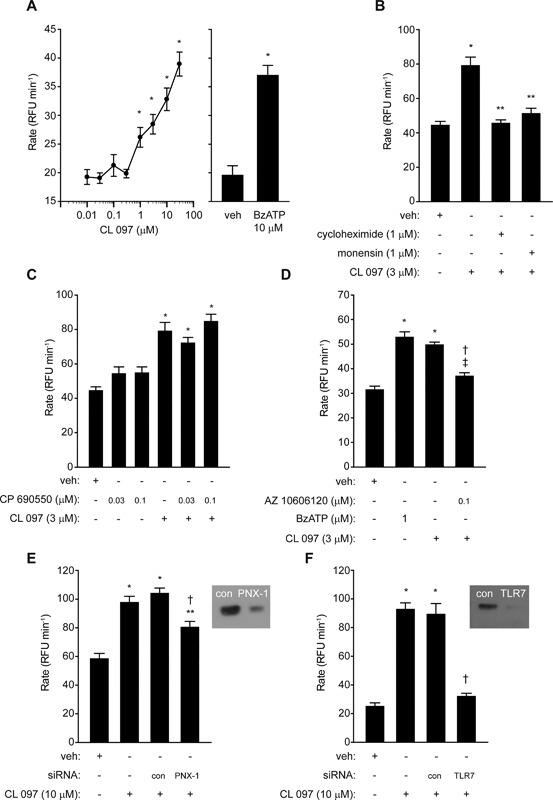
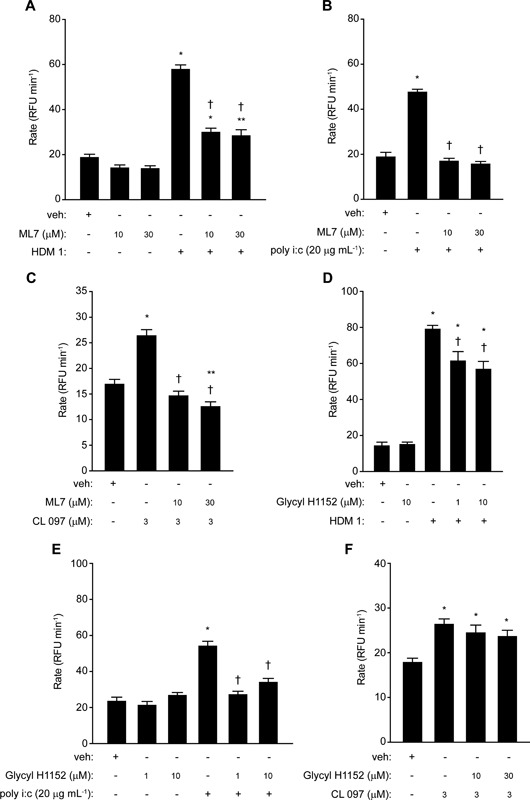
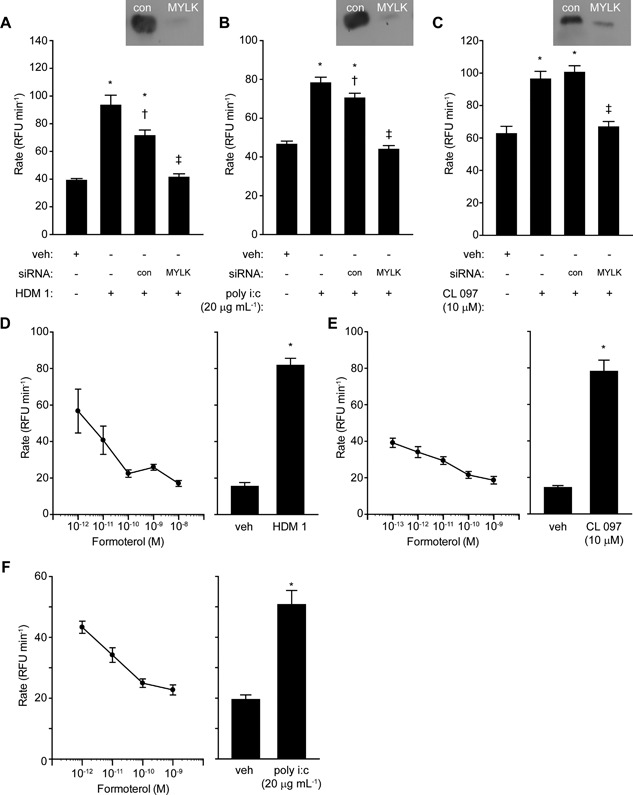
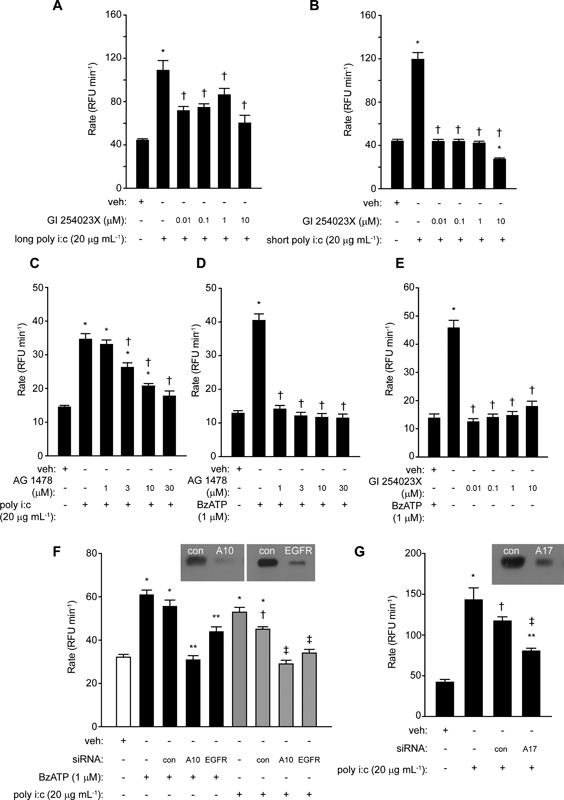
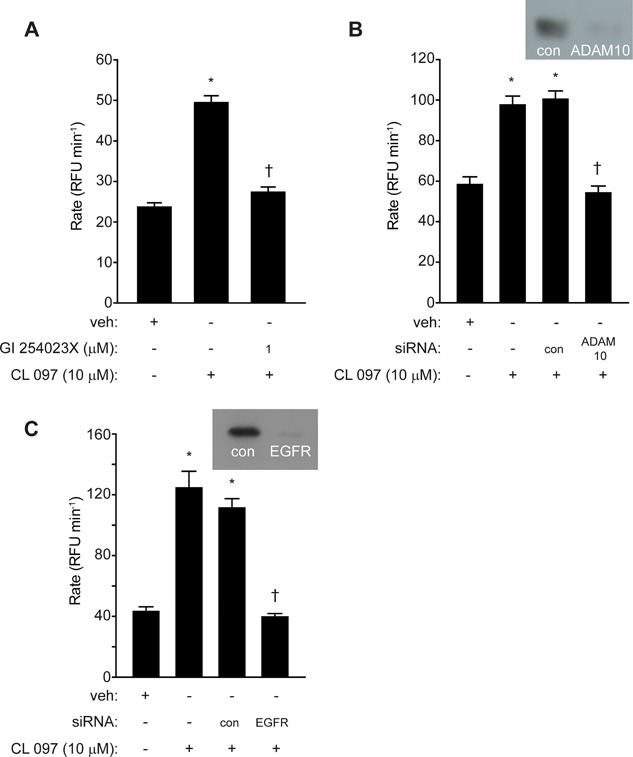
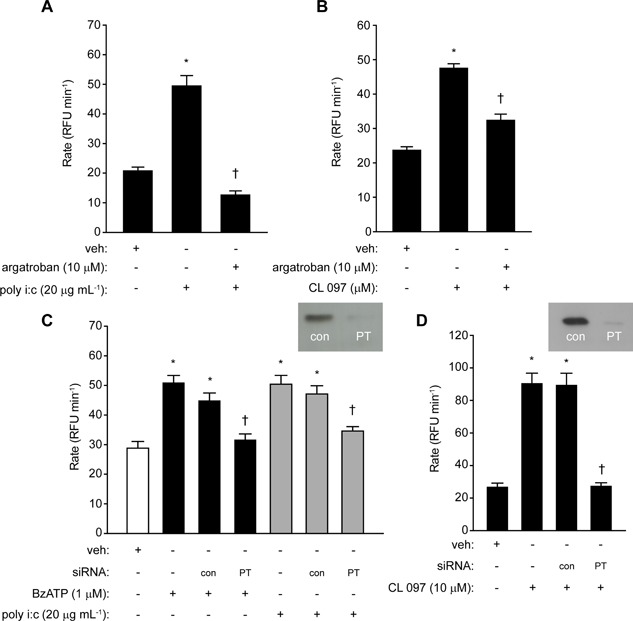
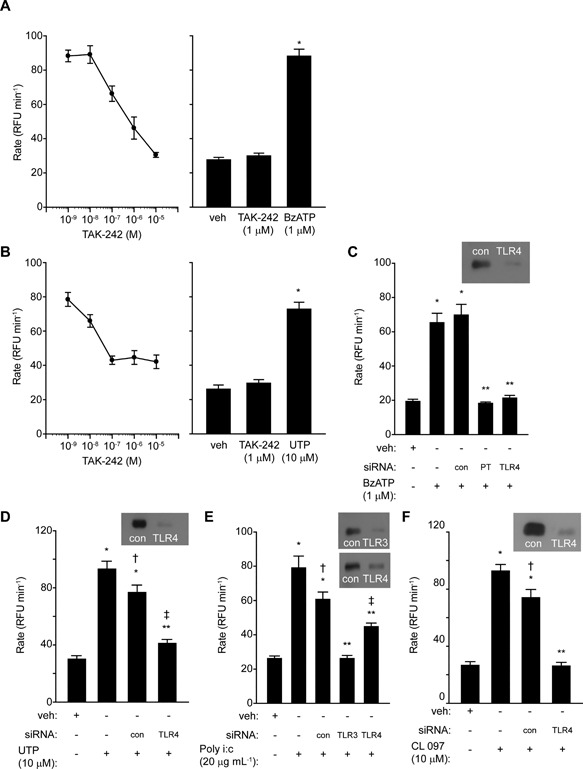
ROS formation by Calu-3 human airway cells was studied by measuring dihydrorhodamine 123 oxidation after activation by polyinosinic:polycytidylic acid (to activate TLR3), CL097 (to activate TLR7), a natural mixture of HDM allergens, or BzATP.
TLR4 activation was identified as an indispensable response element for all stimuli, operating downstream from myosin motor activation, pannexon gating for ATP release and the endogenous activation of prothrombin. Exogenous prothrombin activation by HDM allergens was prevented by SGUL 1733, a novel inhibitor of the proteolytic activity of Group 1 HDM allergens, which thus prevented TLR4 from being activated at source.
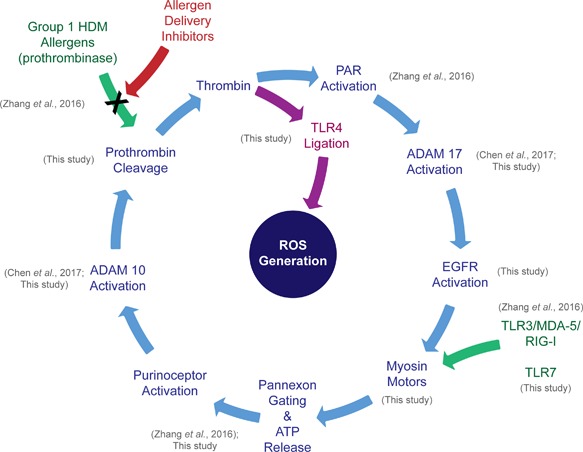
Our data identify for the first time that endogenously-generated prothrombin and TLR4 form a shared effector mechanism essential to intracellular ROS generation activated by a group 1 HDM allergen (itself a prothrombinase) or by ligation of viral RNA-sensing TLRs. These stimuli operate a confluent signaling pathway in which myosin motors, gating of pannexons, and ADAM 10 lead to prothrombin-dependent activation of TLR4 with a recycling activation of pannexons.
人呼吸道上皮细胞内的活性氧化还原物质(ROS)是由凝血酶原酶作用的第 1 组屋尘螨(HDM)过敏原和病毒 RNA 传感器 Toll 样受体(TLR)的连接产生的。我们探索了 HDM 过敏原和 TLR 之间在 ROS 产生方面的信号转导融合,因为上皮细胞构成了对抗吸入物质的第一道屏障,并决定了宿主对过敏原和病毒的反应。
通过测量多聚肌苷酸:多聚胞苷酸(激活 TLR3)、CL097(激活 TLR7)、天然 HDM 过敏原混合物或 BzATP 激活后二氢罗丹明 123 的氧化来研究 Calu-3 人呼吸道细胞中 ROS 的形成。
TLR4 激活被确定为所有刺激物的必需反应元件,作用于肌球蛋白运动激活、潘尼酮门控用于 ATP 释放以及凝血酶原的内源性激活的下游。新型 Group 1 HDM 过敏原蛋白水解活性抑制剂 SGUL 1733 可防止 HDM 过敏原对凝血酶原的外源激活,从而阻止 TLR4 从源头上被激活。
我们的数据首次确定,内源性产生的凝血酶原和 TLR4 形成了一个共享的效应机制,对于由 Group 1 HDM 过敏原(本身是凝血酶原酶)或病毒 RNA 感应 TLR 的连接激活的细胞内 ROS 产生是必不可少的。这些刺激物作用于一个汇合的信号通路,其中肌球蛋白运动、潘尼酮门控和 ADAM 10 导致凝血酶原依赖性 TLR4 激活,并导致潘尼酮门控的循环激活。