Department of Clinical Sciences Lund, Infection Medicine, Lund University, Lund, Sweden.
Skåne University Hospital, Department of Clinical Sciences Lund, Dermatology and Venereology, Lund University, Lund, Sweden.
Front Immunol. 2018 Mar 1;9:396. doi: 10.3389/fimmu.2018.00396. eCollection 2018.
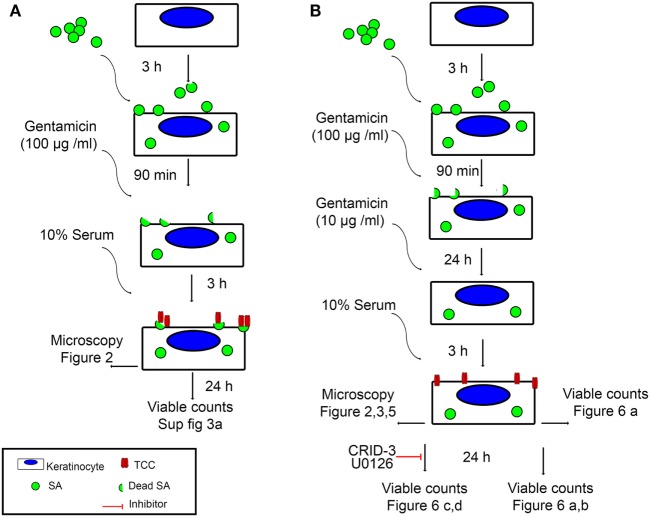
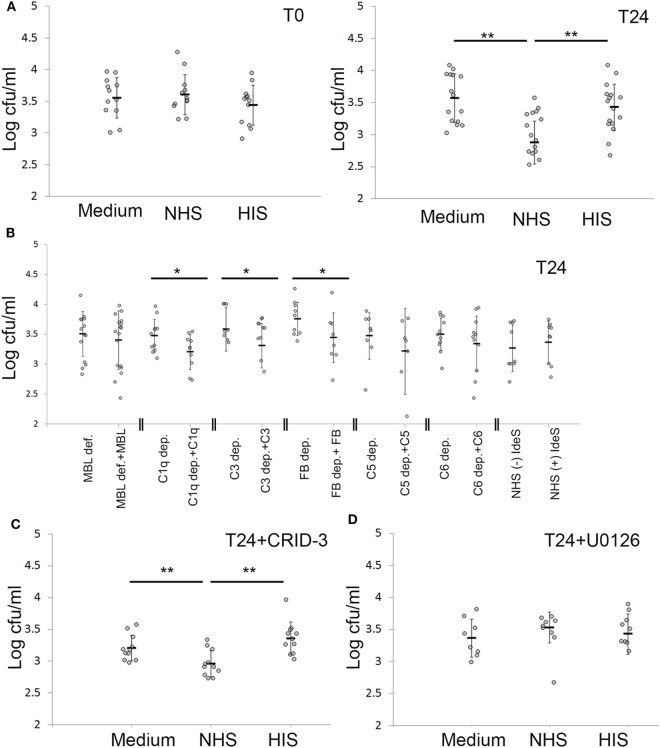
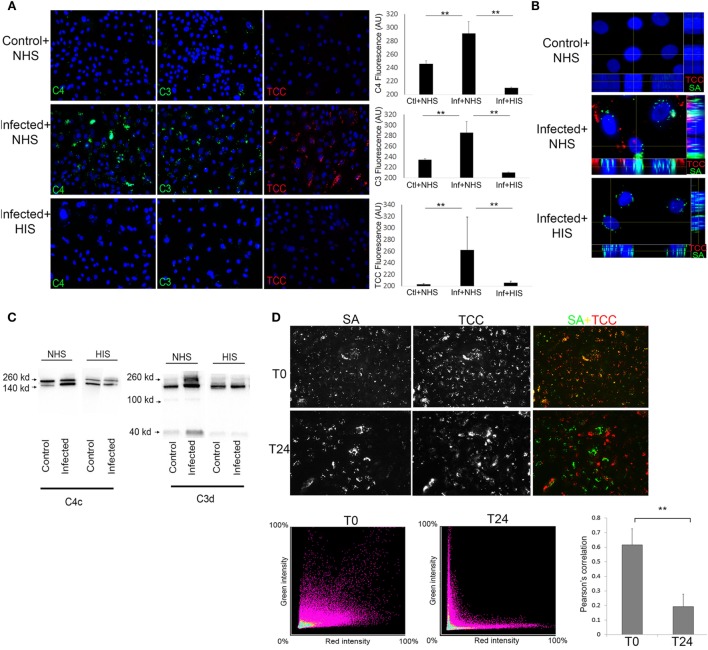
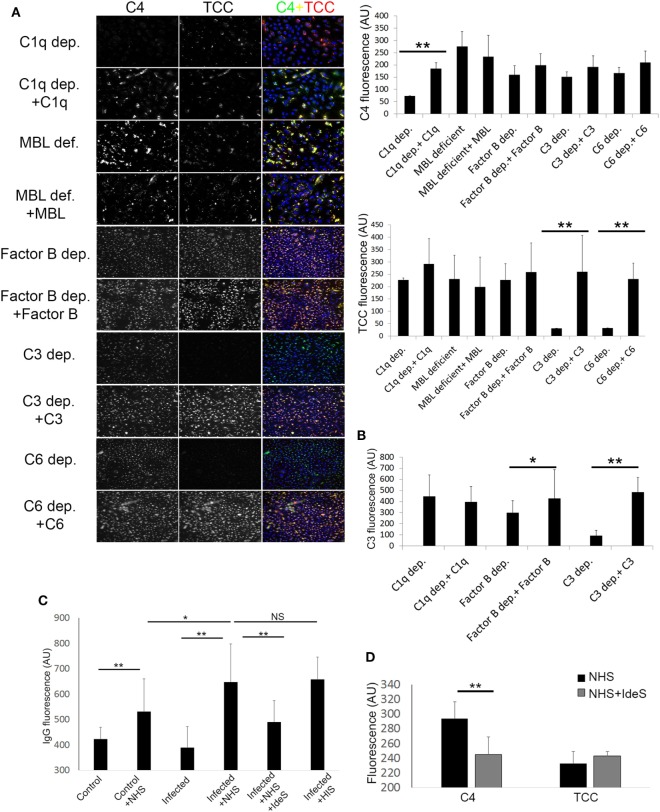
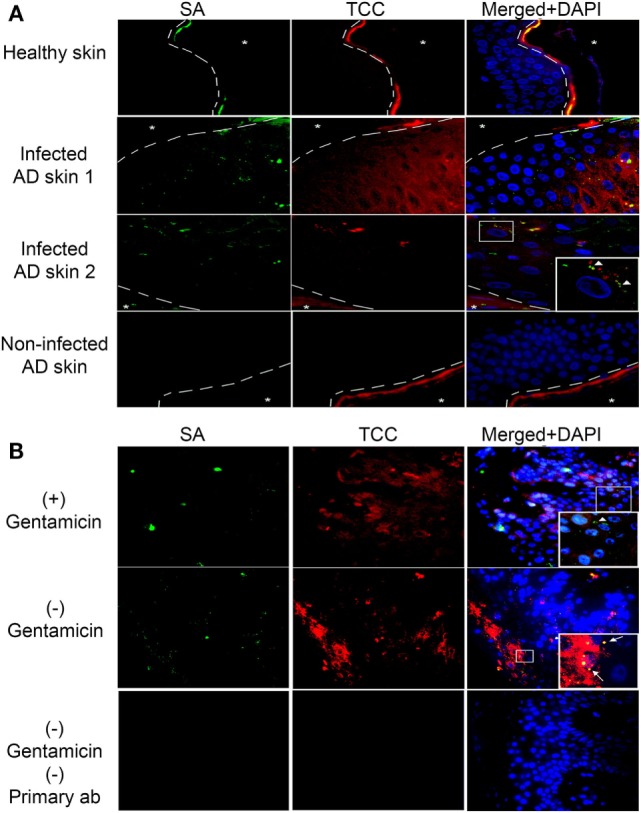
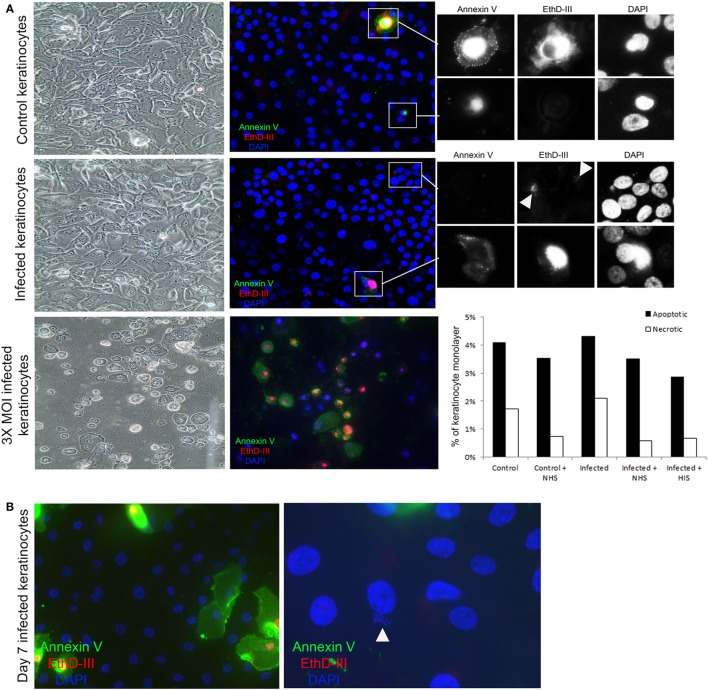
The complement system is an ancient part of the innate immune system important for both tissue homeostasis and host defense. However, bacteria like (SA) possess elaborative mechanisms for evading both the complement system and other parts of the immune system. One of these evasive mechanisms-important in causing chronic and therapy resistant infections-is the intracellular persistence in non-immune cells. The objective of our study was to investigate whether persistent intracellular SA infection of epidermal keratinocytes resulted in complement activation. Using fluorescence microscopy, we found that persistent SA, surviving intracellularly in keratinocytes, caused activation of the complement system with formation of the terminal complement complex (TCC) at the cell surface. Skin samples from atopic dermatitis patients analyzed by bacterial culture and microscopy, demonstrated that SA colonization was associated with the presence of intracellular bacteria and deposition of the TCC in epidermis . Complement activation on keratinocytes with persistent intracellular bacteria was found with sera deficient/depleted of the complement components C1q, Mannan-binding lectin, or complement factor B, demonstrating involvement of more than one complement activation pathway. Viable bacterial counts showed that complement activation at the cell surface initiated cellular responses that significantly reduced the intracellular bacterial burden. The use of an inhibitor of the extracellular signal-regulated kinase (ERK) abrogated the complement-induced reduction in intracellular bacterial load. These data bridge the roles of the complement system in tissue homeostasis and innate immunity and illustrate a novel mechanism by which the complement system combats persistent intracellular bacteria in epithelial cells.
补体系统是先天免疫系统的一个古老组成部分,对于组织稳态和宿主防御都很重要。然而,像金黄色葡萄球菌 (SA) 这样的细菌拥有复杂的机制来逃避补体系统和免疫系统的其他部分。其中一种逃避机制——在引起慢性和治疗抵抗性感染方面非常重要——是在非免疫细胞中的细胞内持续存在。我们的研究目的是调查表皮角质形成细胞中持续的细胞内 SA 感染是否会导致补体激活。通过荧光显微镜观察,我们发现,在角质形成细胞中存活的持续存在的 SA 导致补体系统激活,在细胞表面形成末端补体复合物 (TCC)。通过细菌培养和显微镜分析特应性皮炎患者的皮肤样本,表明 SA 定植与细胞内细菌的存在以及 TCC 在表皮中的沉积有关。用缺乏/耗尽补体成分 C1q、甘露聚糖结合凝集素或补体因子 B 的血清对持续存在细胞内细菌的角质形成细胞进行补体激活研究,表明涉及不止一种补体激活途径。活菌计数表明,细胞表面的补体激活引发了细胞反应,显著降低了细胞内细菌负荷。使用细胞外信号调节激酶 (ERK) 的抑制剂可消除补体诱导的细胞内细菌载量减少。这些数据弥合了补体系统在组织稳态和先天免疫中的作用,并说明了补体系统在对抗上皮细胞中持续存在的细胞内细菌的新机制。