Wang Xiulin, Zhang Xiaxiang, Chen Jing, Wang Xiao, Cai Jian, Zhou Qin, Dai Tingbo, Cao Weixing, Jiang Dong
National Technique Innovation Center for Regional Wheat Production, Key Laboratory of Crop Physiology and Ecology in Southern China, Ministry of Agriculture, National Engineering and Technology Center for Information Agriculture, Nanjing Agricultural University, Nanjing, China.
Front Plant Sci. 2018 Mar 1;9:261. doi: 10.3389/fpls.2018.00261. eCollection 2018.
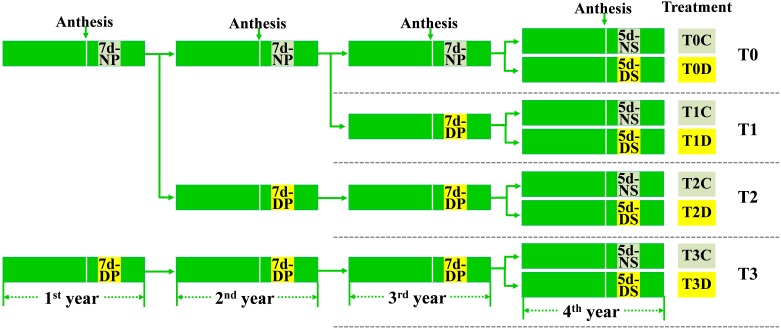
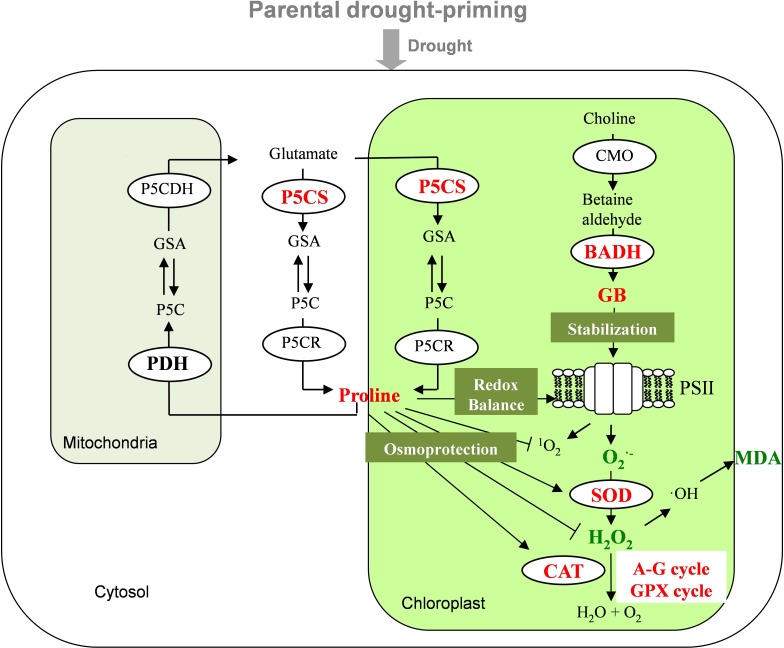
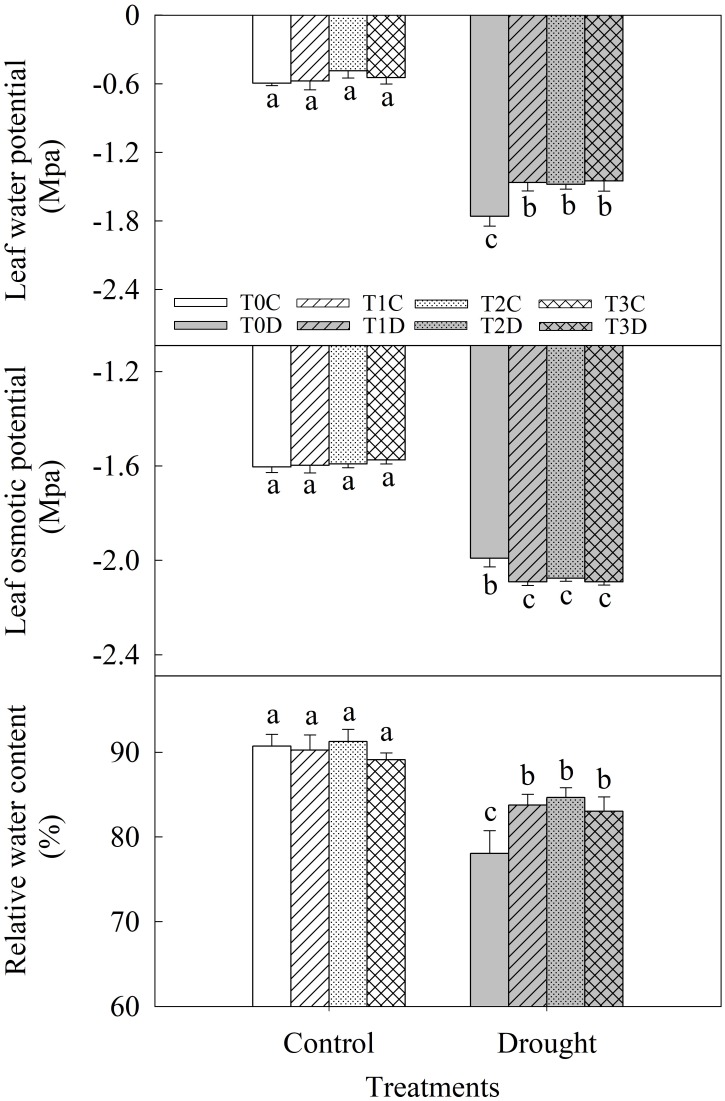
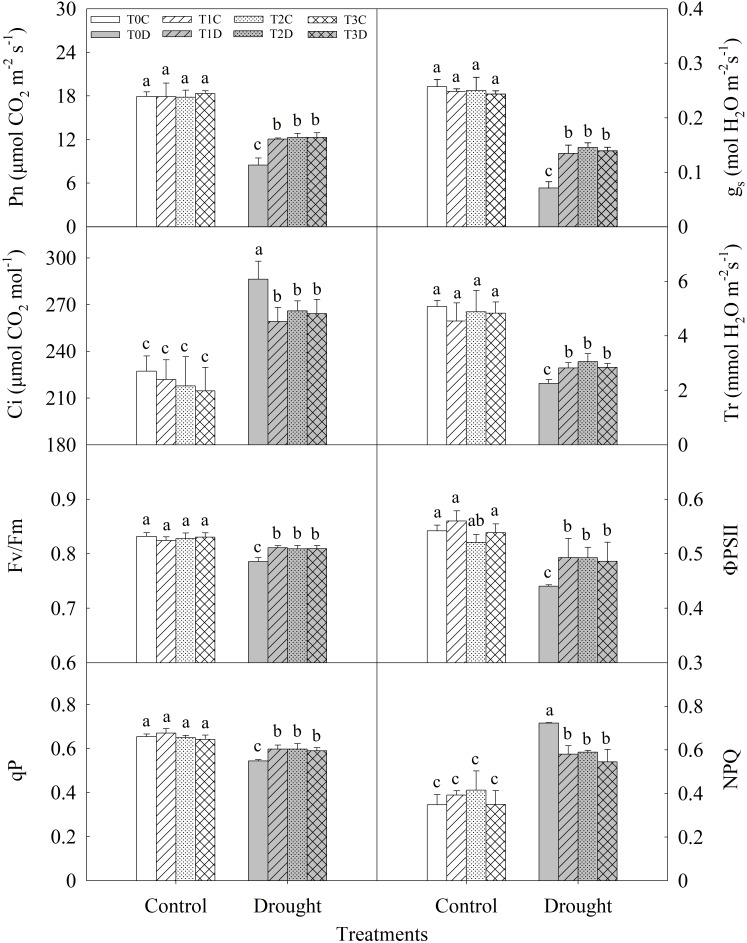
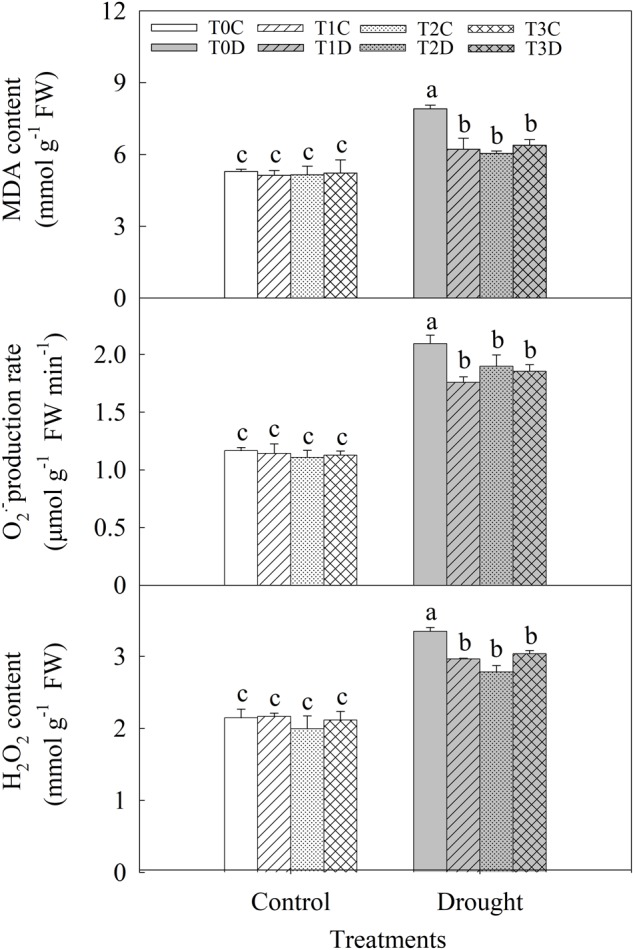
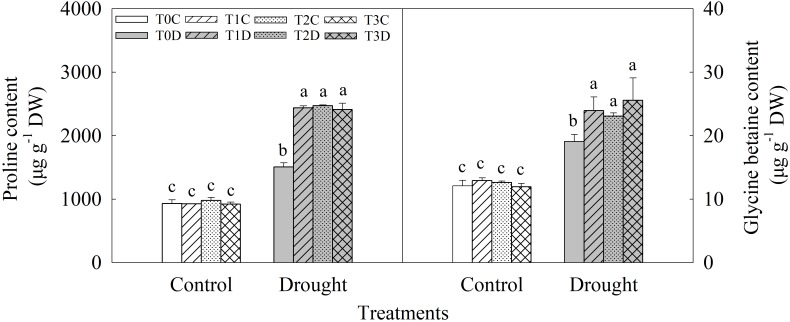
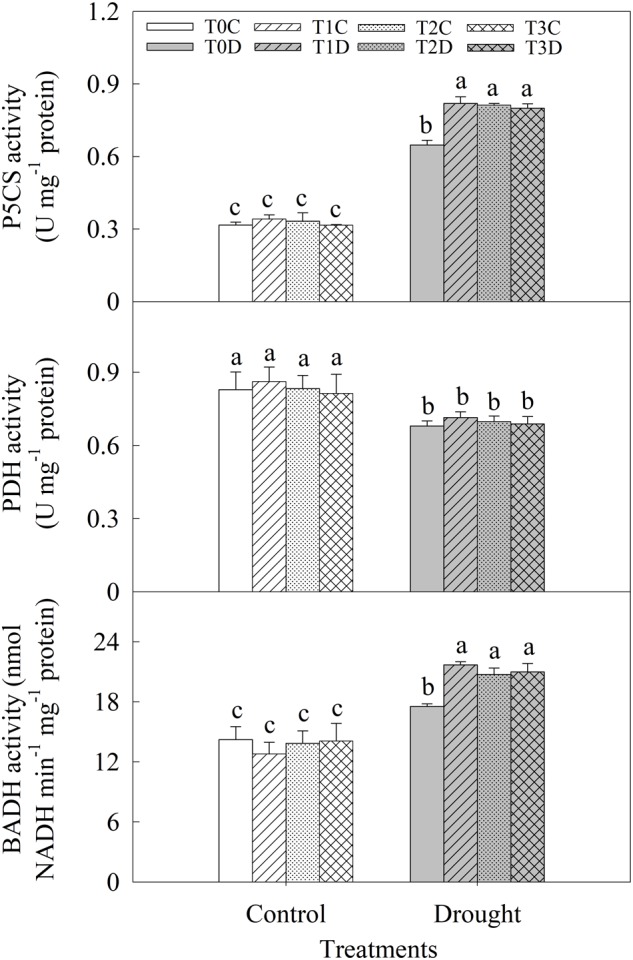
Drought is the major abiotic stress that decreases plant water status, inhibits photosynthesis, induces oxidative stress, restricts growth and finally lead to the reduction of wheat yield. It has been proven that drought priming during vegetative growth stage could enhance tolerance to drought stress at grain filling in wheat. However, whether drought priming imposed at grain filling in parental plants could induce drought tolerance in the offspring is not known. In this study, drought priming was successively applied in the first, the second and the third generation of wheat to obtain the plants of T1 (primed for one generation), T2 (primed for two generations), T3 (primed for three generations). The differently primed plants were then subjected to drought stress during grain filling in the fourth generation. Under drought stress, the parentally primed (T1D, T2D, T3D) plants, disregarding the number of generations, showed higher grain yield, leaf photosynthetic rate and antioxidant capacity as well as lower [Formula: see text] release rate and contents of HO and MDA than the non-primed (T0D) plants, suggesting that drought priming induced the transgenerational stress tolerance to drought stress. Moreover, the parentally primed plants showed higher leaf water status, which may result from the higher contents of proline and glycine betaine, and higher activities of Δ1-pyrroline-5-carboxylate synthetase (P5CS) and betaine aldehyde dehydrogenase (BADH), compared with the non-primed plants under drought stress. In addition, there was no significant difference among three generations under drought, and the drought priming in parental generations did not affect the grain yield of the offspring plants under control condition. Collectively, the enhanced accumulation of proline and glycine betaine in the parentally primed plants could have played critical roles in parental priming induced tolerance to drought stress. This research provided a potential approach to improve drought tolerance of offspring plants by priming parental plants.
干旱是主要的非生物胁迫因素,它会降低植物的水分状况,抑制光合作用,引发氧化应激,限制生长,最终导致小麦产量下降。已有研究证明,营养生长阶段进行干旱预处理可增强小麦灌浆期对干旱胁迫的耐受性。然而,亲本植株在灌浆期进行干旱预处理是否能诱导其后代产生耐旱性尚不清楚。在本研究中,对小麦的第一代、第二代和第三代连续进行干旱预处理,以获得经一代预处理的T1植株、经两代预处理的T2植株和经三代预处理的T3植株。然后,对不同预处理的植株在第四代灌浆期进行干旱胁迫处理。在干旱胁迫下,无论预处理代数多少,经亲本预处理的(T1D、T2D、T3D)植株比未经预处理的(T0D)植株表现出更高的籽粒产量、叶片光合速率和抗氧化能力,以及更低的[公式:见原文]释放速率和H₂O₂及丙二醛含量,这表明干旱预处理诱导了对干旱胁迫的跨代胁迫耐受性。此外,与干旱胁迫下未经预处理的植株相比,经亲本预处理的植株叶片水分状况更高,这可能是由于脯氨酸和甘氨酸甜菜碱含量更高,以及Δ¹-吡咯啉-5-羧酸合成酶(P5CS)和甜菜碱醛脱氢酶(BADH)的活性更高。此外,干旱条件下三代之间没有显著差异,亲本世代的干旱预处理在对照条件下不影响后代植株的籽粒产量。总体而言,经亲本预处理的植株中脯氨酸和甘氨酸甜菜碱积累的增加可能在亲本预处理诱导的干旱胁迫耐受性中发挥了关键作用。本研究为通过对亲本植株进行预处理来提高后代植株的耐旱性提供了一种潜在方法。