Yuge Ryo, Kitadai Yasuhiko, Takigawa Hidehiko, Naito Toshikatsu, Oue Naohide, Yasui Wataru, Tanaka Shinji, Chayama Kazuaki
Department of Endoscopy, Hiroshima University Hospital, Hiroshima, Japan.
Department of Health Sciences, Prefectural University of Hiroshima.
Transl Oncol. 2018 Jun;11(3):575-584. doi: 10.1016/j.tranon.2018.02.003. Epub 2018 Mar 13.
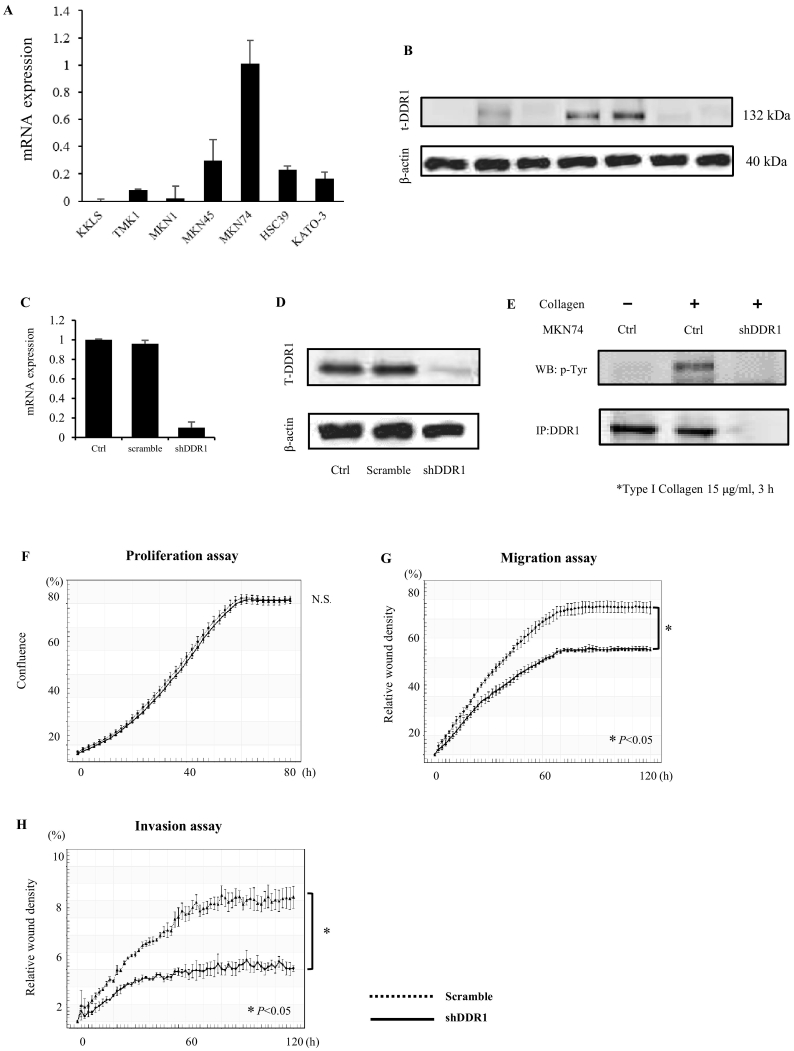
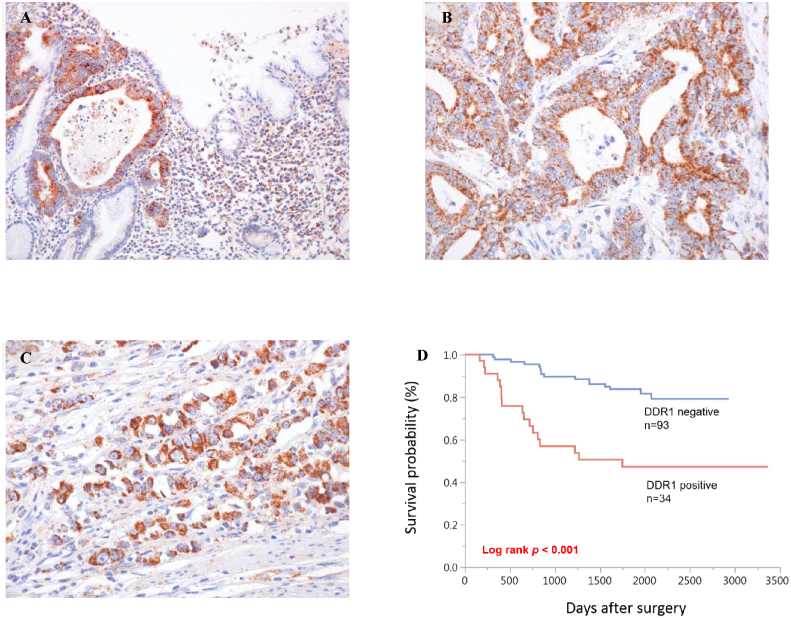
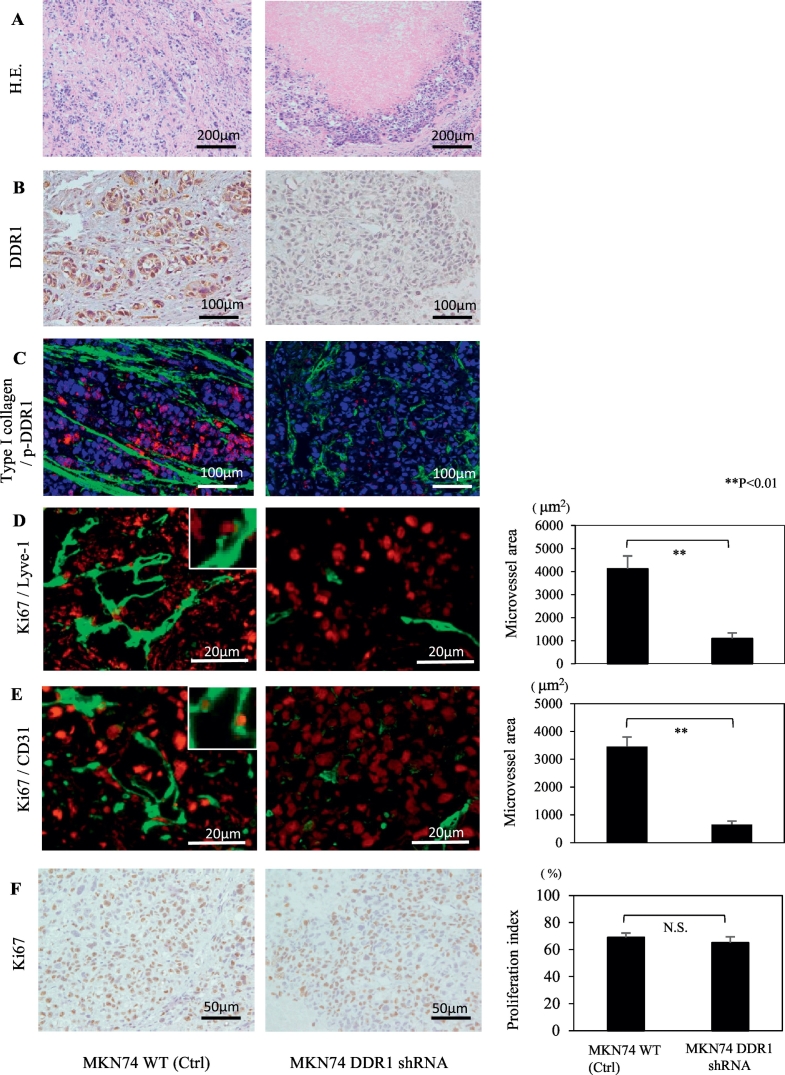
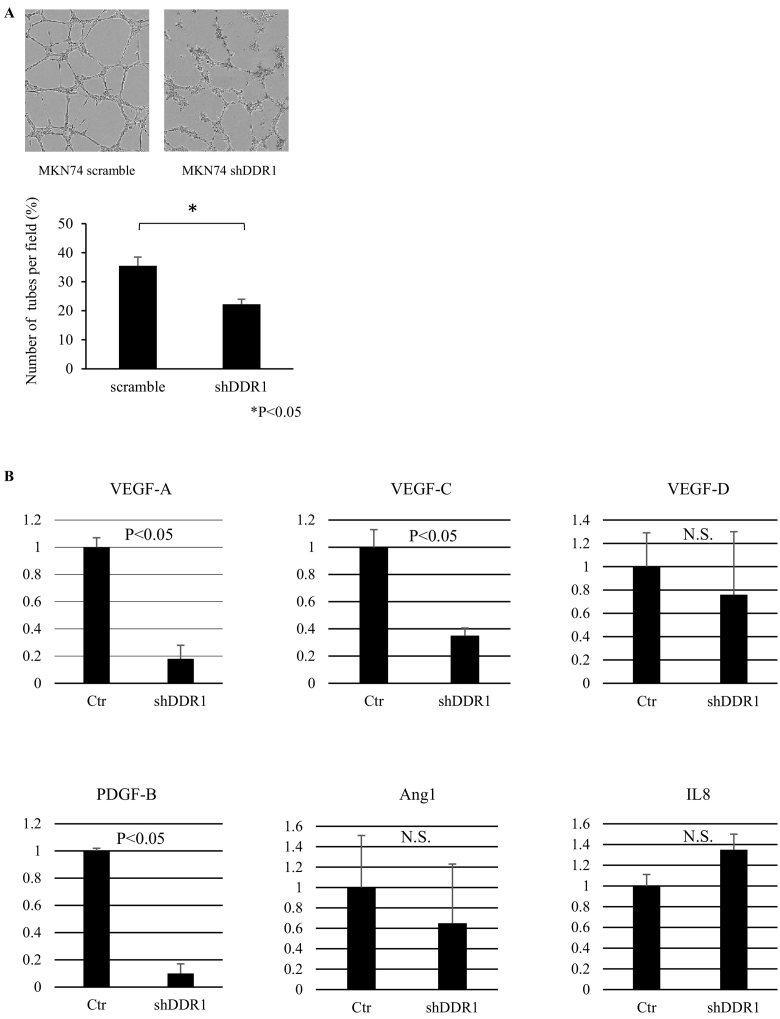
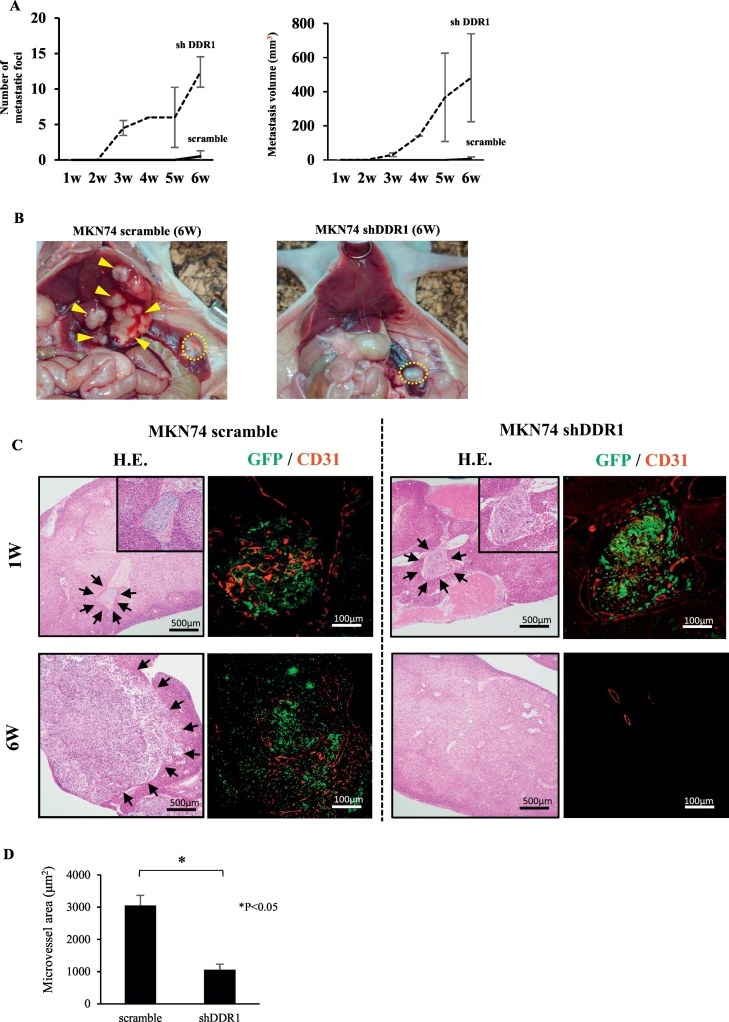
Accumulating evidence suggests that a unique set of receptor tyrosine kinases, known as discoidin domain receptors (DDRs), plays a role in cancer progression by interacting with the surrounding collagen matrix. In this study, we investigated the expression and role of DDR1 in human gastric cancer metastasis. Proliferation, migration, invasion, and tube formation assays were conducted in DDR1-expressing MKN74 gastric cancer cells and corresponding DDR1-silenced cells. The effects of DDR1 on tumor growth and metastasis were examined in orthotopically implanted and experimental liver metastasis models in nude mice. The expression of DDR1 in surgical specimens was analyzed by immunohistochemistry. DDR1 was expressed in human gastric cancer cell lines, and its expression in human gastric tumors was associated with poor prognosis. Among seven gastric cancer cell lines, MKN74 expressed the highest levels of DDR1. DDR1-silenced MKN74 cells showed unaltered proliferation activity. In contrast, migration, invasion, and tube formation were significantly reduced. When examined in an orthotopic nude mouse model, DDR1-silenced implanted tumors significantly reduced angiogenesis and lymphangiogenesis, thereby leading to reductions in lymph node metastasis and liver metastasis. In a model of experimental liver metastasis, DDR1-silenced cells almost completely inhibited liver colonization and metastasis. DDR1 deficiency led to reduced expression of the genes encoding vascular endothelial growth factor (VEGF)-A, VEGF-C, and platelet-derived growth factor-B. These results suggest that DDR1 is involved in gastric cancer tumor progression and that silencing of DDR1 inhibits multiple steps of the gastric cancer metastasis process.
越来越多的证据表明,一组独特的受体酪氨酸激酶,即盘状结构域受体(DDRs),通过与周围的胶原蛋白基质相互作用,在癌症进展中发挥作用。在本研究中,我们调查了DDR1在人胃癌转移中的表达及作用。在表达DDR1的MKN74胃癌细胞和相应的DDR1沉默细胞中进行了增殖、迁移、侵袭和管形成实验。在裸鼠原位植入和实验性肝转移模型中检测了DDR1对肿瘤生长和转移的影响。通过免疫组织化学分析手术标本中DDR1的表达。DDR1在人胃癌细胞系中表达,其在人胃肿瘤中的表达与不良预后相关。在七种胃癌细胞系中,MKN74表达的DDR1水平最高。DDR1沉默的MKN74细胞增殖活性未改变。相比之下,迁移、侵袭和管形成显著减少。在原位裸鼠模型中检测时,DDR1沉默的植入肿瘤显著减少血管生成和淋巴管生成,从而导致淋巴结转移和肝转移减少。在实验性肝转移模型中,DDR1沉默的细胞几乎完全抑制肝定植和转移。DDR1缺乏导致编码血管内皮生长因子(VEGF)-A、VEGF-C和血小板衍生生长因子-B的基因表达降低。这些结果表明,DDR1参与胃癌肿瘤进展,DDR1沉默可抑制胃癌转移过程的多个步骤。