Lee Mark A
Natural Capital and Plant Health, Royal Botanic Gardens Kew, Richmond, TW9 3AB, UK.
J Plant Res. 2018 Jul;131(4):641-654. doi: 10.1007/s10265-018-1024-y. Epub 2018 Mar 17.
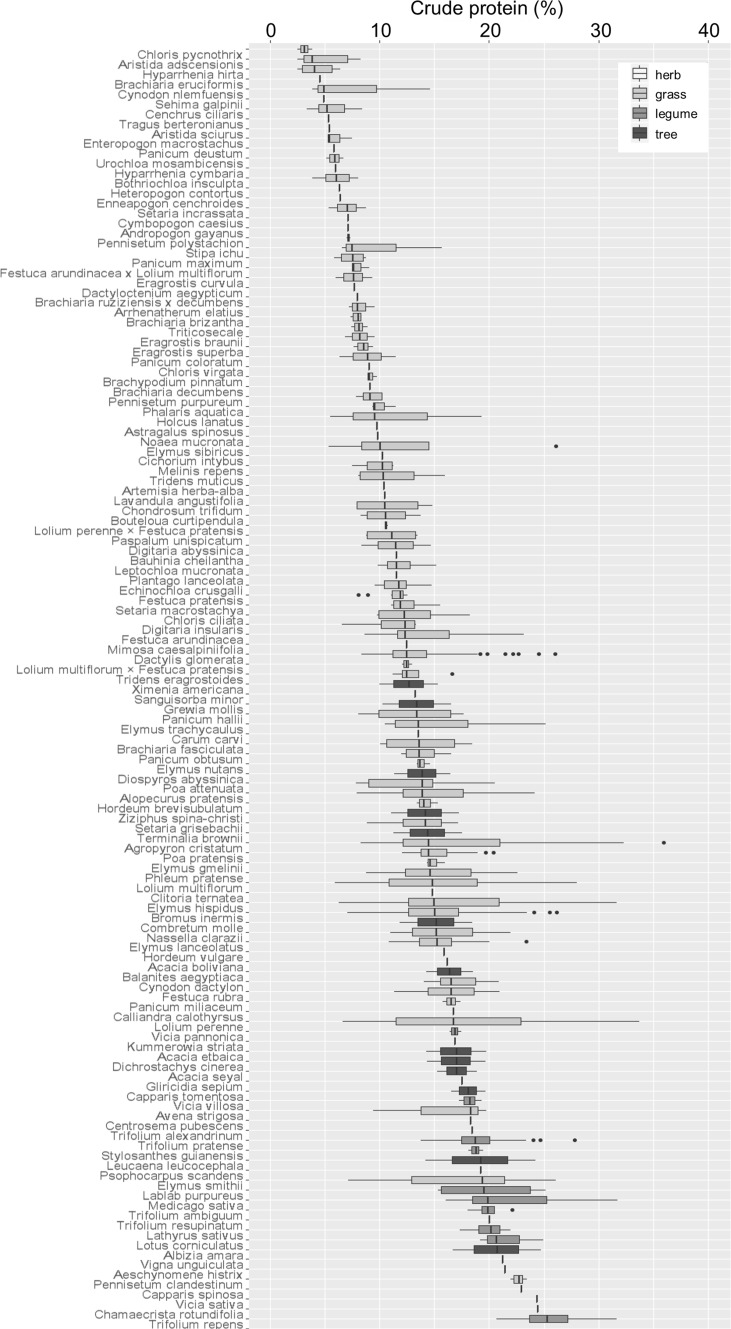
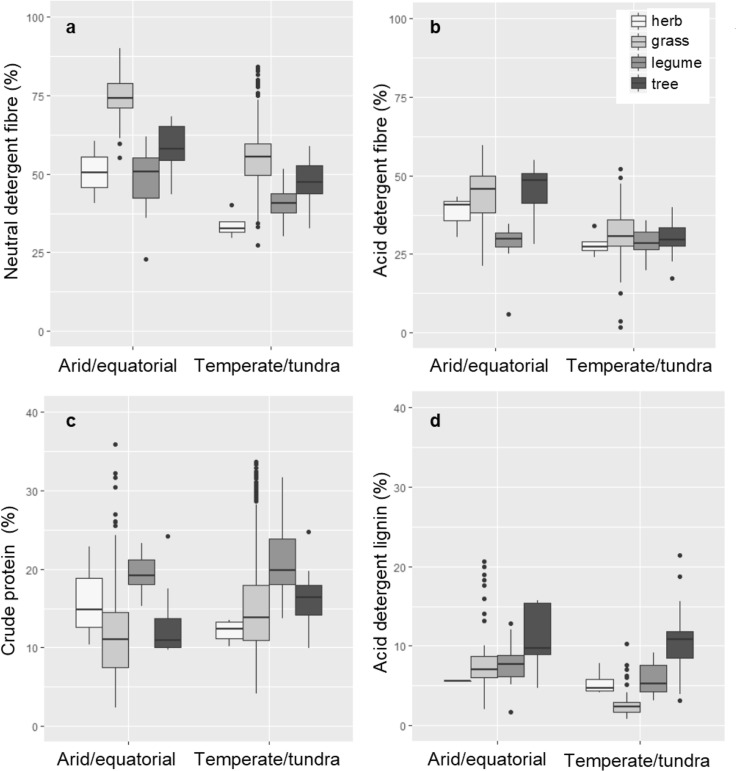
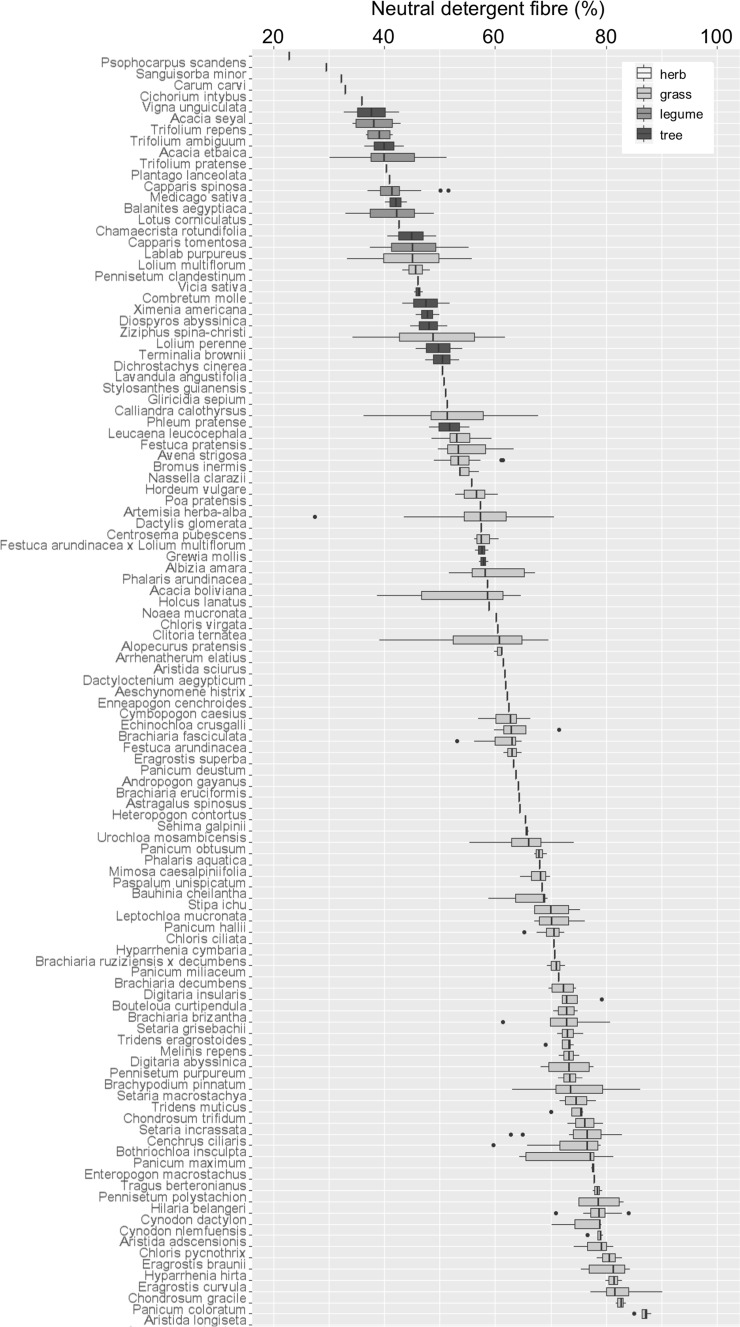
Forage plants are valuable because they maintain wild and domesticated herbivores, and sustain the delivery of meat, milk and other commodities. Forage plants contain different quantities of fibre, lignin, minerals and protein, and vary in the proportion of their tissue that can be digested by herbivores. These nutritive components are important determinants of consumer growth rates, reproductive success and behaviour. A dataset was compiled to quantify variation in forage plant nutritive values within- and between-plant species, and to assess variation between plant functional groups and bioclimatic zones. 1255 geo-located records containing 3774 measurements of nutritive values for 136 forage plant species grown in 30 countries were obtained from published articles. Spatial variability in forage nutritive values indicated that climate modified plant nutritive values. Forage plants grown in arid and equatorial regions generally contained less digestible material than those grown in temperate and tundra regions; containing more fibre and lignin, and less protein. These patterns may reveal why herbivore body sizes, digestion and migration strategies are different in warmer and drier regions. This dataset also revealed the capacity for variation in the nutrition provided by forage plants, which may drive consumer species coexistence. The proportion of the plant tissue that was digestible ranged between species from 2 to 91%. The amount of fibre contained within plant material ranged by 23-90%, protein by 2-36%, lignin by 1-21% and minerals by 2-22%. On average, grasses and tree foliage contained the most fibre, whilst herbaceous legumes contained the most protein and tree foliage contained the most lignin. However, there were individual species within each functional group that were highly nutritious. This dataset may be used to identify forage plant species or mixtures of species from different functional groups with useful nutritional traits which can be cultivated to enhance livestock productivity and inform wild herbivore conservation strategies.
饲用植物很有价值,因为它们维持着野生和家养食草动物的生存,并保障了肉类、奶类及其他商品的供应。饲用植物含有不同数量的纤维、木质素、矿物质和蛋白质,其可被食草动物消化的组织比例也各不相同。这些营养成分是决定消费者生长速度、繁殖成功率和行为的重要因素。我们汇编了一个数据集,以量化植物物种内部和之间饲用植物营养价值的差异,并评估植物功能组和生物气候带之间的差异。我们从已发表的文章中获取了1255条地理位置记录,这些记录包含了30个国家种植的136种饲用植物的3774个营养价值测量数据。饲用植物营养价值的空间变异性表明气候改变了植物的营养价值。生长在干旱和赤道地区的饲用植物通常比生长在温带和苔原地区的植物含有更少的可消化物质;含有更多的纤维和木质素,以及更少的蛋白质。这些模式可能揭示了为什么在温暖和干燥地区食草动物的体型、消化和迁徙策略会有所不同。这个数据集还揭示了饲用植物提供的营养存在差异的可能性,这可能推动消费者物种的共存。不同物种间可消化的植物组织比例在2%至91%之间。植物材料中所含纤维量的范围为23%至90%,蛋白质为2%至36%,木质素为1%至21%,矿物质为2%至22%。平均而言,禾本科植物和树叶含纤维最多,而草本豆科植物含蛋白质最多,树叶含木质素最多。然而每个功能组中都有个别物种营养丰富。这个数据集可用于识别具有有益营养特性的饲用植物物种或来自不同功能组的物种混合物,这些物种可以种植以提高牲畜生产力,并为野生食草动物保护策略提供参考。