Department of Surgery, Chang Gung Children's Hospital, College of Medicine, Chang Gung University, Taoyuan, Taiwan.
Division of Allergy, Asthma and Rheumatology, Department of Pediatrics, Chang Gung Children's Hospital, College of Medicine, Chang Gung University, Taoyuan, Taiwan.
Front Immunol. 2018 Mar 2;9:418. doi: 10.3389/fimmu.2018.00418. eCollection 2018.
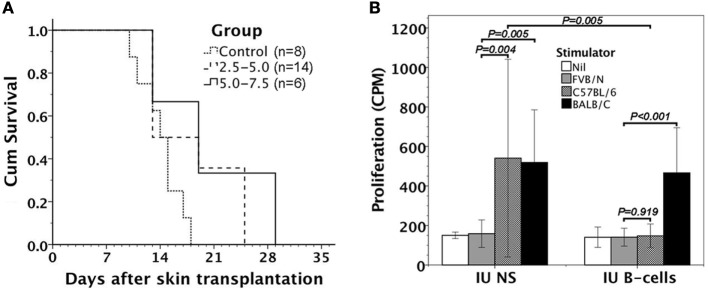
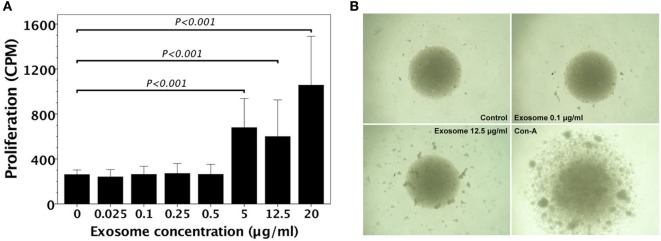
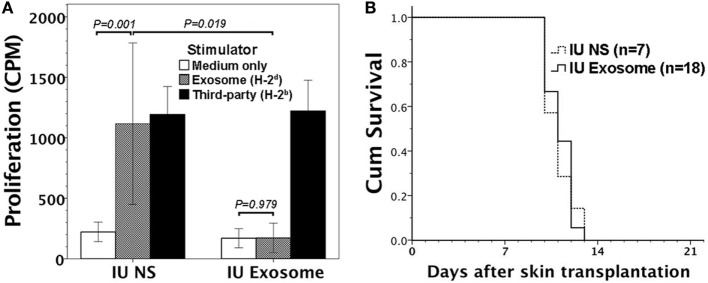
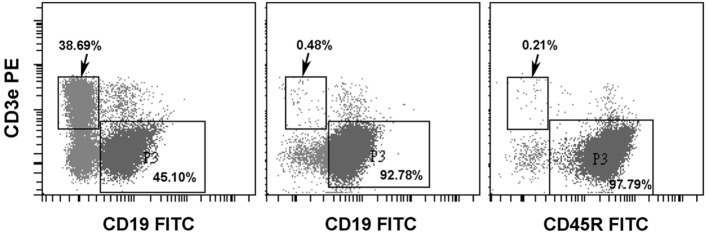
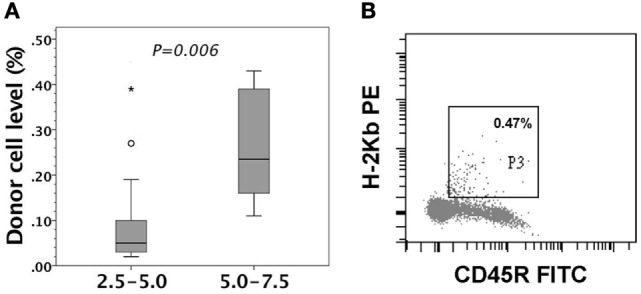
According to actively acquired tolerance, antigen exposure before full immune development in fetal or early neonatal life will cause tolerance to this specific antigen. In this study, we aimed to examine whether allogeneic tolerance could be elicited by exposure to surface MHC antigens of allogenic cells or soluble form of MHC exosomes. Gestational day 14 FVB/N fetuses were subjected to intraperitoneal injection of allogeneic major histocompatibility complex (MHC) exosomes or highly enriched B-cells. Postnatally, the recipients were examined for the immune responses to donor alloantigens by lymphocyte proliferative reactions and skin transplantation. exposure to allogeneic MHC exosomes abolished the alloreactivity of recipients' lymphocytes to the alloantigens, but could not confer skin allograft tolerance. transplantation of highly enriched allogeneic B-cells generated low-level B-cell chimerism in the recipients. However, it only extended the survivals of skin allograft by a few days despite the lack of donor-specific alloreactivity of recipients' lymphocyte. Thus, an early contact with exosomal or B-cell alloantigens did not lead to full skin tolerance but rather, at best, only to delayed skin rejection in the presence of microchimerism made by B-cell inocula. These results argued against the theory of actively acquired tolerance, and implicated that exposure to marrow cells in previous studies was a unique model of allo-tolerance induction that involved the establishment of significant hematopoietic chimerism. Taken together with the discovery of sensitization to ovalbumin in our previous studies, the immunological consequences of fetal exposure to foreign antigens might vary according to the type or nature of antigens introduced.
根据主动获得的耐受,在胎儿或新生儿生命早期的完全免疫发育之前暴露于抗原会导致对该特定抗原的耐受。在这项研究中,我们旨在研究通过暴露于同种异体细胞的表面 MHC 抗原或 MHC 外体的可溶性形式是否可以引发同种异体耐受。妊娠第 14 天的 FVB/N 胎儿接受同种异体主要组织相容性复合物(MHC)外体或高度富集的 B 细胞的腹腔内注射。出生后,通过淋巴细胞增殖反应和皮肤移植检查受体对供体同种抗原的免疫反应。暴露于同种异体 MHC 外体可消除受体淋巴细胞对同种抗原的反应性,但不能赋予皮肤同种异体移植物耐受。高度富集的同种异体 B 细胞的移植在受体中产生低水平的 B 细胞嵌合体。然而,尽管受体淋巴细胞缺乏供体特异性同种反应性,但它仅使皮肤同种异体移植物的存活期延长了几天。因此,早期接触外体或 B 细胞同种抗原不会导致完全的皮肤耐受,而只是在 B 细胞接种物产生的微嵌合体存在的情况下延迟皮肤排斥。这些结果反对主动获得的耐受理论,并暗示以前研究中骨髓细胞的暴露是诱导同种耐受的独特模型,涉及到显著的造血嵌合体的建立。结合我们以前的研究中对卵清蛋白的致敏发现,胎儿暴露于外源抗原的免疫后果可能根据引入的抗原的类型或性质而有所不同。