Chesner Lisa N, Campbell Colin
Department of Pharmacology, University of Minnesota.
Department of Pharmacology, University of Minnesota;
J Vis Exp. 2018 Mar 5(133):57413. doi: 10.3791/57413.
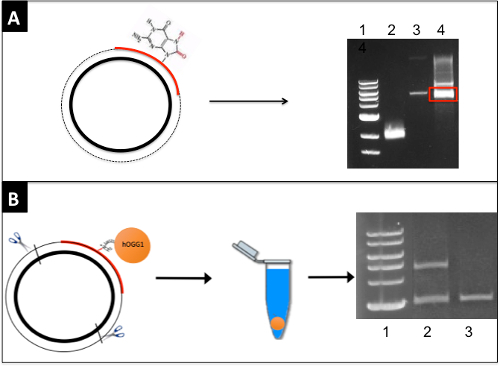
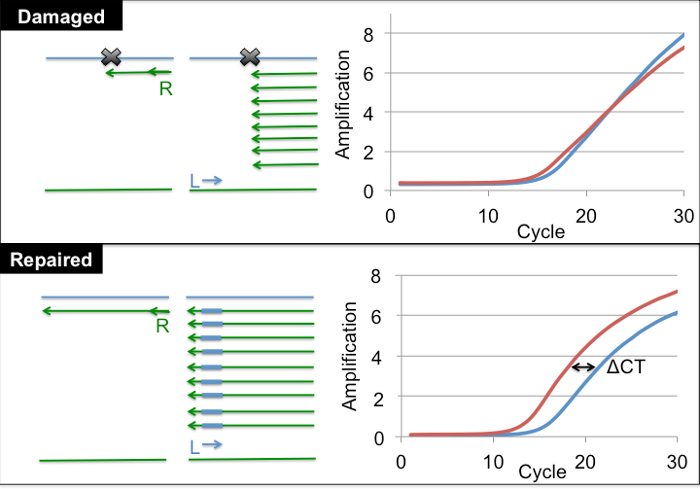
The purpose of this method is to provide a flexible, rapid, and quantitative technique to examine the kinetics of DNA-protein crosslink (DPC) repair in mammalian cell lines. Rather than globally assaying removal of xenobiotic-induced or spontaneous chromosomal DPC removal, this assay examines the repair of a homogeneous, chemically defined lesion specifically introduced at one site within a plasmid DNA substrate. Importantly, this approach avoids the use of radioactive materials and is not dependent on expensive or highly-specialized technology. Instead, it relies on standard recombinant DNA procedures and widely available real-time, quantitative polymerase chain reaction (qPCR) instrumentation. Given the inherent flexibility of the strategy utilized, the size of the crosslinked protein, as well as the nature of the chemical linkage and the precise DNA sequence context of the attachment site can be varied to address the respective contributions of these parameters to the overall efficiency of DPC repair. Using this method, plasmids containing a site-specific DPC were transfected into cells and low molecular weight DNA recovered at various times post-transfection. Recovered DNA is then subjected to strand-specific primer extension (SSPE) using a primer complementary to the damaged strand of the plasmid. Since the DPC lesion blocks Taq DNA polymerase, the ratio of repaired to un-repaired DNA can be quantitatively assessed using qPCR. Cycle threshold (CT) values are used to calculate percent repair at various time points in the respective cell lines. This SSPE-qPCR method can also be used to quantitatively assess the repair kinetics of any DNA adduct that blocks Taq polymerase.
该方法的目的是提供一种灵活、快速且定量的技术,用于检测哺乳动物细胞系中DNA-蛋白质交联(DPC)修复的动力学。该检测方法并非全面检测外源性诱导或自发的染色体DPC去除情况,而是检测在质粒DNA底物内一个特定位点专门引入的均匀、化学定义明确的损伤的修复情况。重要的是,这种方法避免使用放射性材料,且不依赖于昂贵或高度专业化的技术。相反,它依赖于标准的重组DNA程序和广泛可用的实时定量聚合酶链反应(qPCR)仪器。鉴于所采用策略的固有灵活性,可以改变交联蛋白的大小、化学连接的性质以及附着位点的精确DNA序列背景,以探讨这些参数对DPC修复总体效率的各自贡献。使用该方法,将含有位点特异性DPC的质粒转染到细胞中,并在转染后不同时间回收低分子量DNA。然后使用与质粒受损链互补的引物对回收的DNA进行链特异性引物延伸(SSPE)。由于DPC损伤会阻断Taq DNA聚合酶,因此可以使用qPCR定量评估修复与未修复DNA的比例。循环阈值(CT)值用于计算各个细胞系在不同时间点的修复百分比。这种SSPE-qPCR方法还可用于定量评估任何阻断Taq聚合酶的DNA加合物的修复动力学。