Regeneron Pharmaceuticals, Inc., Tarrytown, NY 10591.
Regeneron Pharmaceuticals, Inc., Tarrytown, NY 10591
Proc Natl Acad Sci U S A. 2018 Apr 24;115(17):E4111-E4119. doi: 10.1073/pnas.1721403115. Epub 2018 Mar 19.
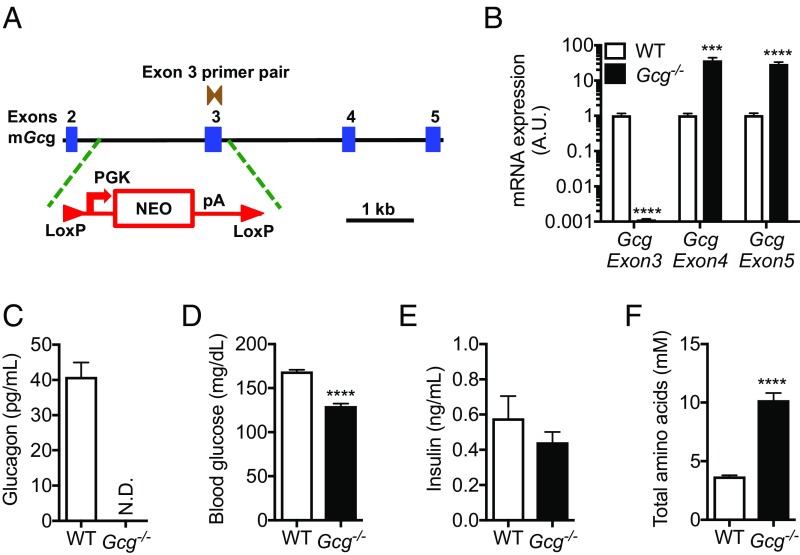
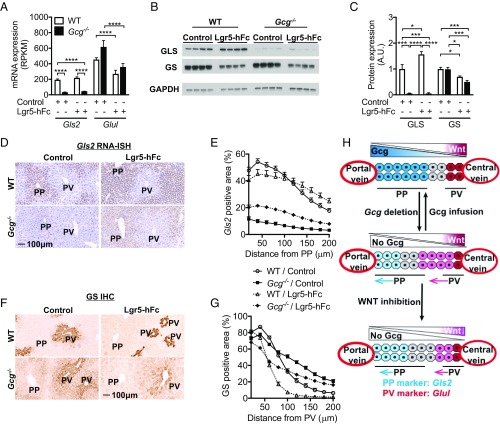
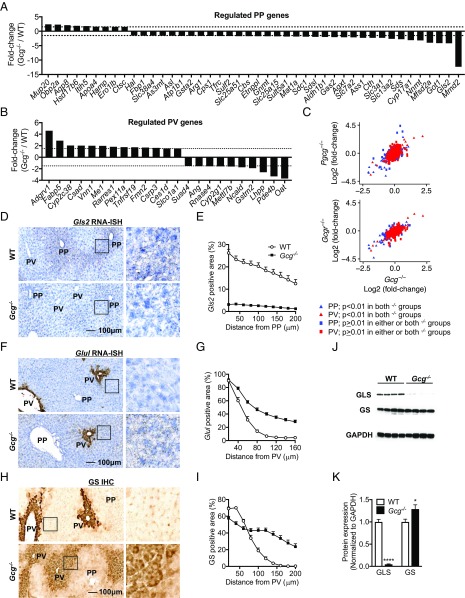
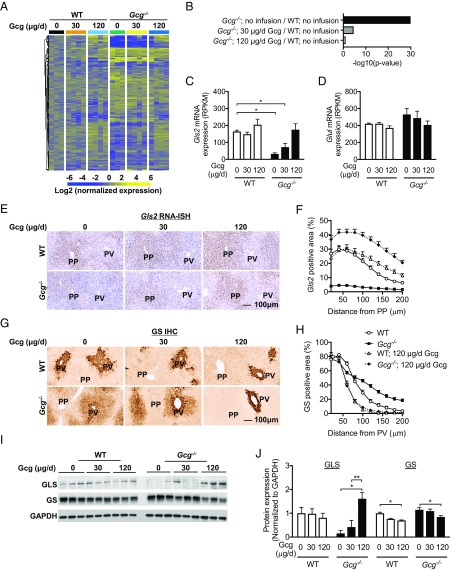
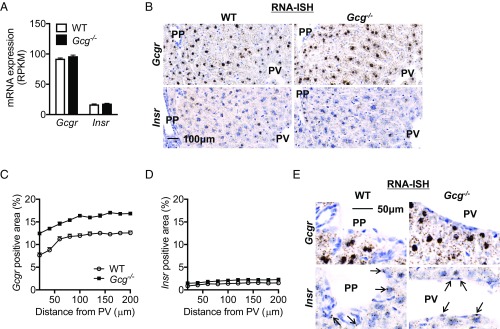
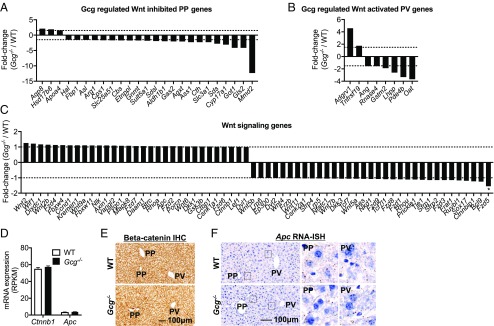
Liver zonation characterizes the separation of metabolic pathways along the lobules and is required for optimal function. Wnt/β-catenin signaling controls metabolic zonation by activating genes in the perivenous hepatocytes, while suppressing genes in the periportal counterparts. We now demonstrate that glucagon opposes the actions of Wnt/β-catenin signaling on gene expression and metabolic zonation pattern. The effects were more pronounced in the periportal hepatocytes where 28% of all genes were activated by glucagon and inhibited by Wnt/β-catenin. The glucagon and Wnt/β-catenin receptors and their signaling pathways are uniformly distributed in periportal and perivenous hepatocytes and the expression is not regulated by the opposing signal. Collectively, our results show that glucagon controls gene expression and metabolic zonation in the liver through a counterplay with the Wnt/β-catenin signaling pathway.
肝脏分区特征是沿着肝小叶分离代谢途径,这对于最佳功能是必需的。Wnt/β-连环蛋白信号通过激活门静脉周围肝细胞中的基因,同时抑制门脉周围对应物中的基因,来控制代谢分区。我们现在证明,胰高血糖素对抗 Wnt/β-连环蛋白信号对基因表达和代谢分区模式的作用。在门脉周围肝细胞中,这种作用更为明显,其中 28%的所有基因被胰高血糖素激活,而被 Wnt/β-连环蛋白抑制。胰高血糖素和 Wnt/β-连环蛋白受体及其信号通路在门脉周围和门静脉周围肝细胞中均匀分布,其表达不受相反信号的调节。总的来说,我们的结果表明,胰高血糖素通过与 Wnt/β-连环蛋白信号通路的相互作用来控制肝脏中的基因表达和代谢分区。