Department of Geography, Instute of Ecology and Earth Sciences, University of Tartu, Tartu, 51014, Estonia.
School of Geography, Geology and the Environment, Keele University, Newcastle, ST5 5BG, UK.
Nat Commun. 2018 Mar 19;9(1):1135. doi: 10.1038/s41467-018-03540-1.
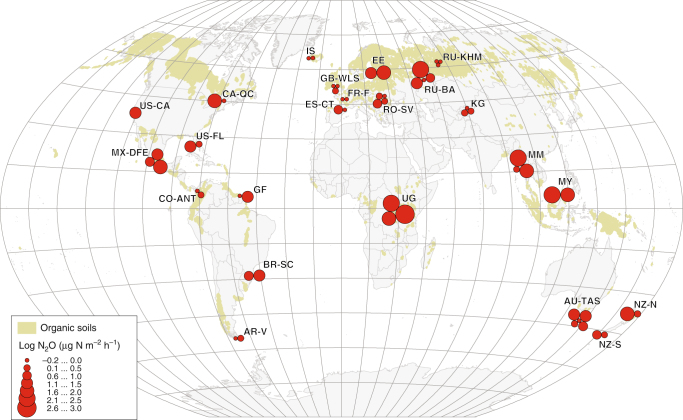
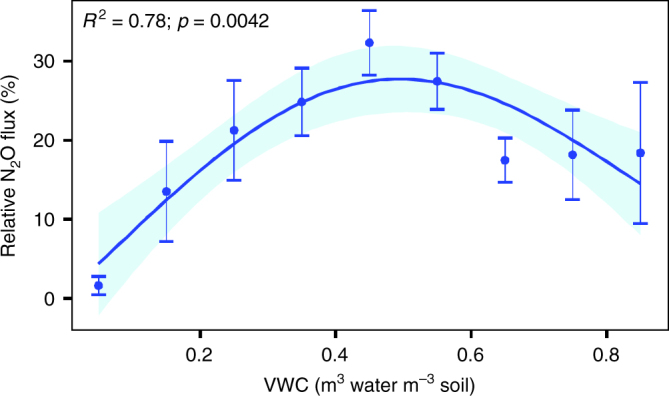
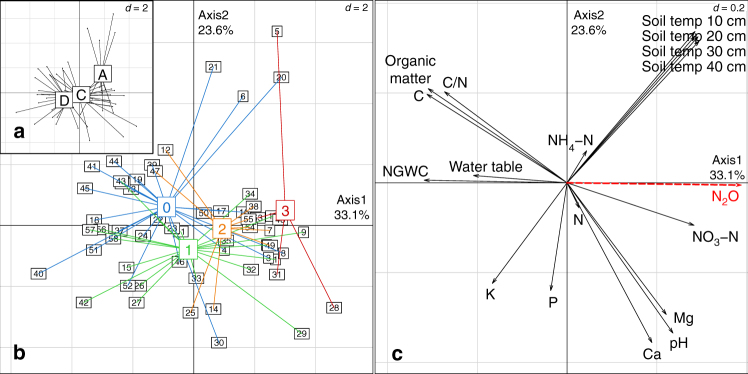
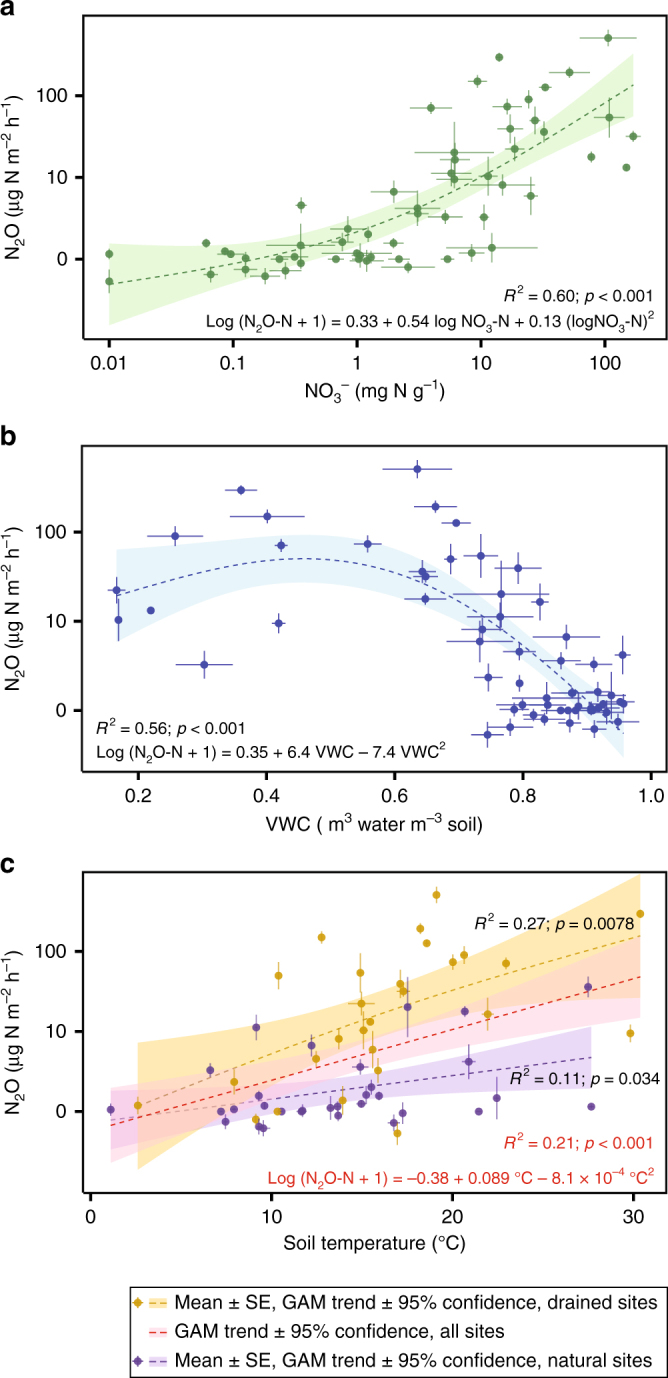
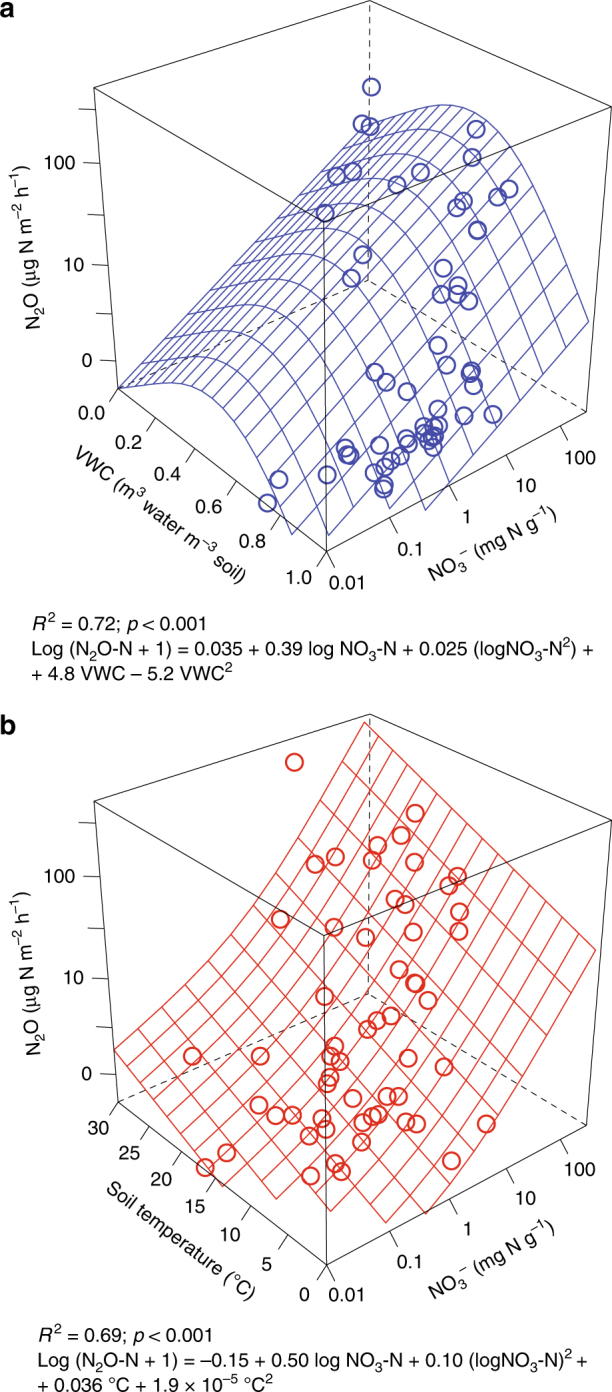
Nitrous oxide (NO) is a powerful greenhouse gas and the main driver of stratospheric ozone depletion. Since soils are the largest source of NO, predicting soil response to changes in climate or land use is central to understanding and managing NO. Here we find that NO flux can be predicted by models incorporating soil nitrate concentration (NO), water content and temperature using a global field survey of NO emissions and potential driving factors across a wide range of organic soils. NO emissions increase with NO and follow a bell-shaped distribution with water content. Combining the two functions explains 72% of NO emission from all organic soils. Above 5 mg NO-N kg, either draining wet soils or irrigating well-drained soils increases NO emission by orders of magnitude. As soil temperature together with NO explains 69% of NO emission, tropical wetlands should be a priority for NO management.
一氧化二氮(NO)是一种强大的温室气体,也是平流层臭氧消耗的主要驱动因素。由于土壤是一氧化二氮的最大来源,因此预测土壤对气候或土地利用变化的反应对于理解和管理一氧化二氮至关重要。在这里,我们发现可以通过模型来预测一氧化二氮通量,该模型结合了全球范围内广泛的有机土壤中一氧化二氮排放和潜在驱动因素的实地调查,使用土壤硝酸盐浓度(NO)、水含量和温度。一氧化二氮排放随 NO 和水含量呈钟形分布而增加。这两个函数的结合解释了所有有机土壤中 72%的一氧化二氮排放。当 NO-N 浓度高于 5mg/kg 时,无论是排干湿土还是灌溉排水良好的土壤,都会使一氧化二氮排放增加几个数量级。由于土壤温度与 NO 一起解释了 69%的一氧化二氮排放,因此热带湿地应该是一氧化二氮管理的优先事项。