Department of Medical Ultrasonic, The Third Affiliated Hospital of Sun Yat-sen University, Guangzhou 510630, China.
Department of Ultrasound, Peking University Third Hospital, Beijing 100191, China.
Theranostics. 2018 Feb 12;8(6):1665-1677. doi: 10.7150/thno.22469. eCollection 2018.
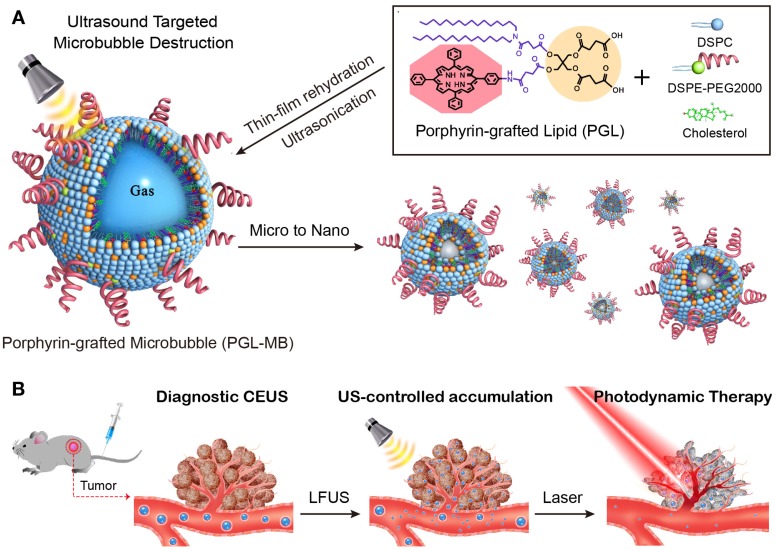
Photodynamic therapy (PDT) holds promise for focal therapy of prostate cancer (PCa). However, the therapeutic efficacy needs improvement, and further development of PDT for PCa has challenges, including uncertainty of photosensitizers (PSs) accumulation at the tumor site and difficulty in visualizing lesions using conventional ultrasound (US) imaging. We have developed novel porphyrin-grafted lipid (PGL) microbubbles (MBs; PGL-MBs) and propose a strategy to integrate PGL-MBs with US imaging to address these limitations and enhance PDT efficacy.
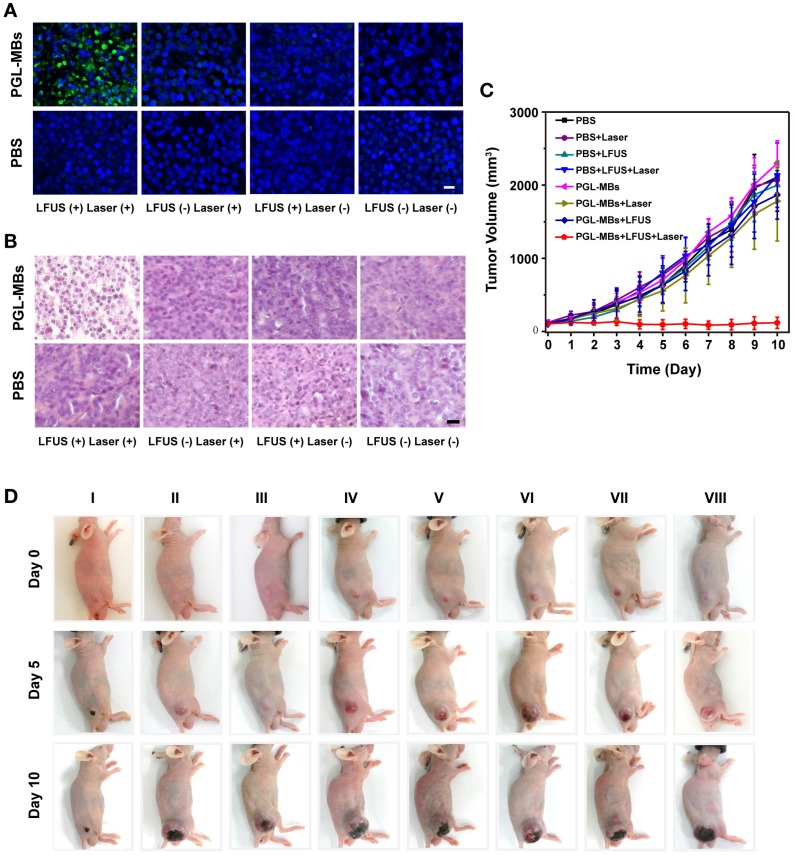
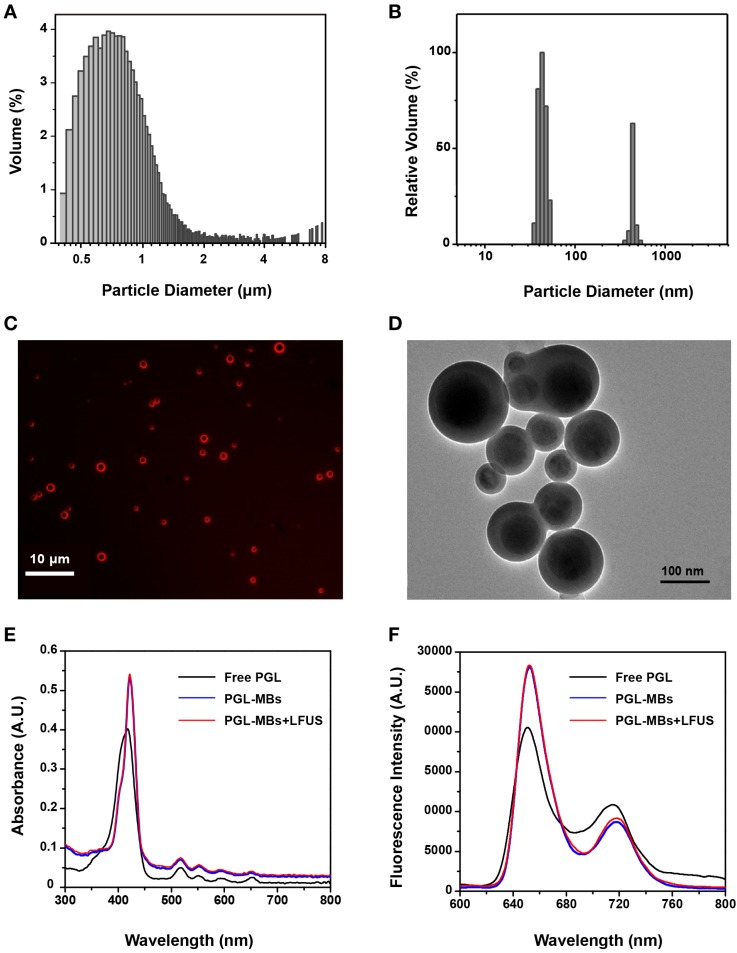
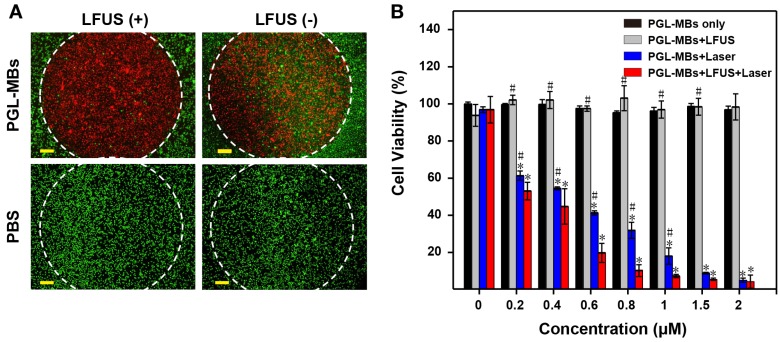
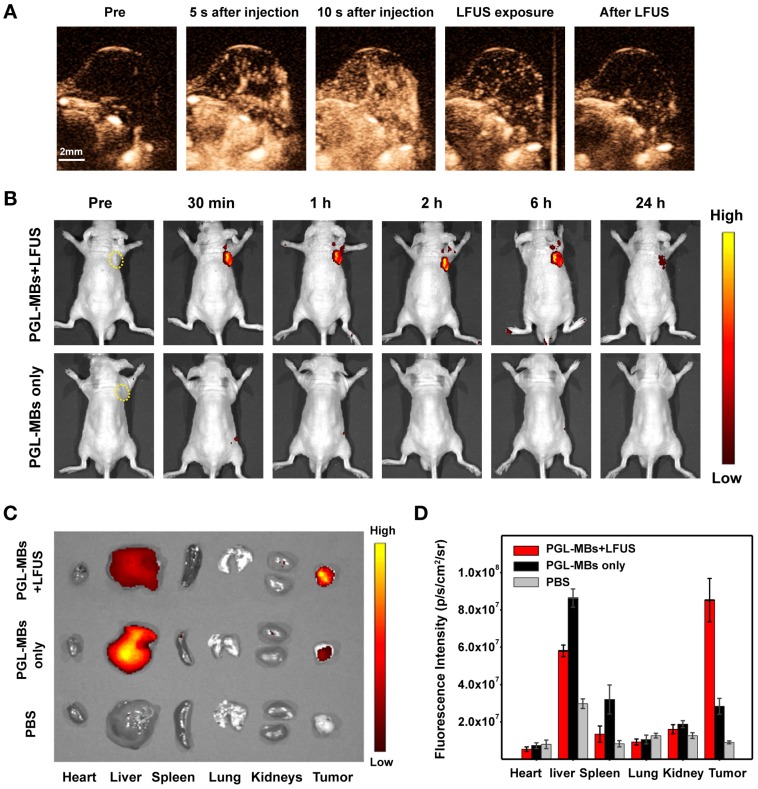
PGL-MBs have two functions: imaging guidance by contrast-enhanced ultrasound (CEUS) and targeted delivery of PSs by ultrasound targeted microbubble destruction (UTMD). PGL-MBs were prepared and characterized before and after low-frequency US (LFUS) exposure. Then, studies validated the efficacy of PDT with PGL-MBs in human prostate cancer PC3 cells. PC3-xenografted nude mice were used to validate CEUS imaging, accumulation at the tumor site, and PDT efficacy.
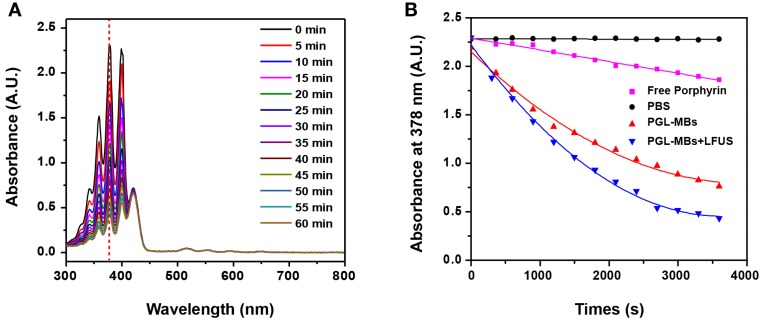
PGL-MBs showed good contrast enhancement for US imaging and were converted into nanoparticles upon LFUS exposure. The resulting uniquely structured nanoparticles avoided porphyrin fluorescence quenching and efficiently accumulated at the tumor site through the sonoporation effect created with the assistance of US to achieve excellent PDT efficacy.
This is the first preclinical investigation of MBs applied in PDT for PCa. PGL-MBs possess favorable CEUS imaging effects to enhance the localization of tumors. PGL-MBs with LFUS control PS accumulation at the tumor site to achieve highly effective PDT of PCa. This strategy carries enormous clinical potential for PCa management.
光动力疗法(PDT)有望成为前列腺癌(PCa)的局灶性治疗方法。然而,其治疗效果需要提高,并且 PDT 进一步发展用于 PCa 存在挑战,包括光敏剂(PS)在肿瘤部位的积聚的不确定性和使用常规超声(US)成像难以可视化病变。我们已经开发了新型卟啉接枝脂质(PGL)微泡(MB;PGL-MB),并提出了一种将 PGL-MB 与 US 成像相结合的策略,以解决这些限制并提高 PDT 效果。
PGL-MB 具有两种功能:通过对比增强超声(CEUS)进行成像指导和通过超声靶向微泡破坏(UTMD)靶向递送 PS。在低频超声(LFUS)暴露前后制备和表征 PGL-MB,然后在人前列腺癌 PC3 细胞中验证 PDT 与 PGL-MB 的效果。使用 PC3 异种移植裸鼠验证 CEUS 成像、在肿瘤部位的积聚和 PDT 效果。
PGL-MB 对 US 成像具有良好的对比增强效果,并且在 LFUS 暴露后转化为纳米颗粒。由此产生的独特结构纳米颗粒避免了卟啉荧光猝灭,并通过声孔作用在 US 的辅助下有效地在肿瘤部位积聚,从而实现了优异的 PDT 效果。
这是首次将 MB 应用于 PCa 的 PDT 的临床前研究。PGL-MB 具有良好的 CEUS 成像效果,可增强肿瘤的定位。具有 LFUS 控制的 PGL-MB 可将 PS 积聚在肿瘤部位,实现 PCa 的高效 PDT。该策略为 PCa 管理带来了巨大的临床潜力。