Institute of Sensory Ecology, Biology Department, Heinrich-Heine-University, Düsseldorf, Germany.
College of Plant Protection, Hebei Agricultural University, Baoding, China.
PLoS One. 2018 Mar 20;13(3):e0194167. doi: 10.1371/journal.pone.0194167. eCollection 2018.
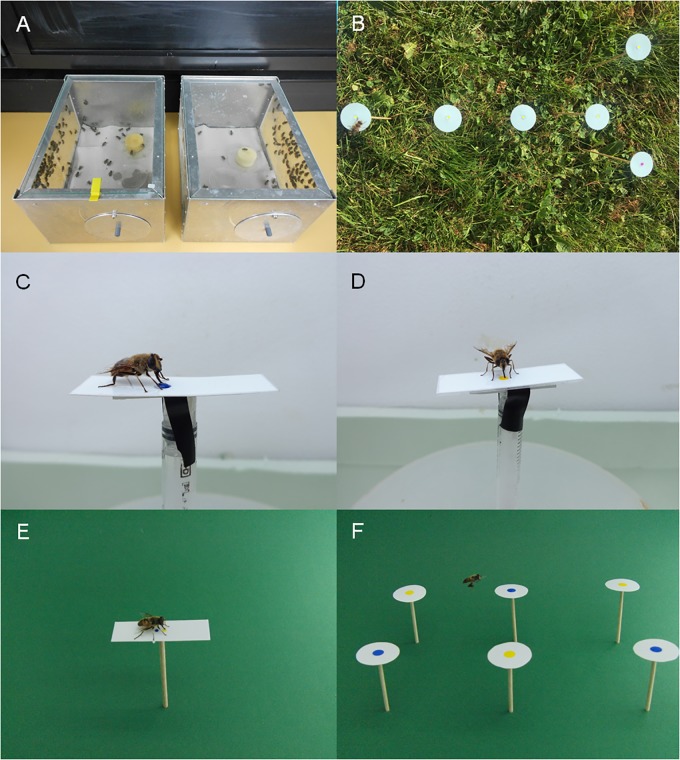
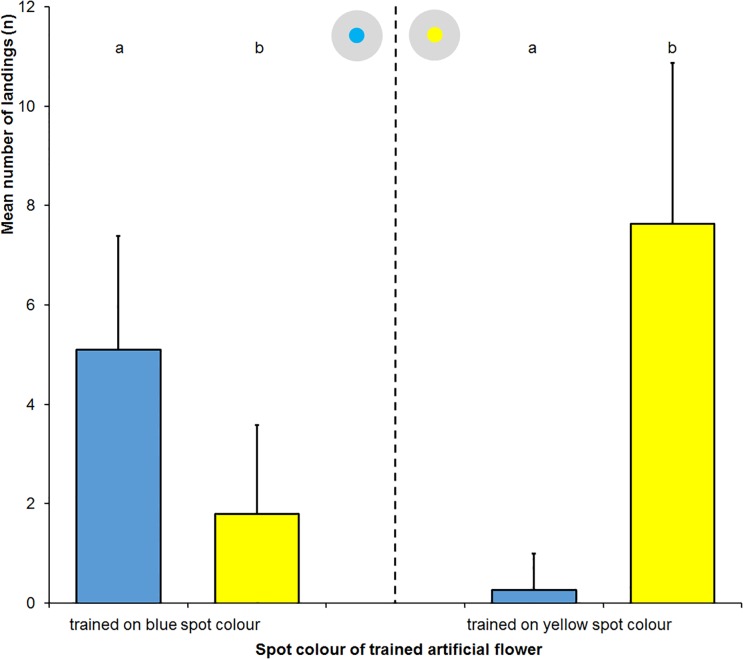
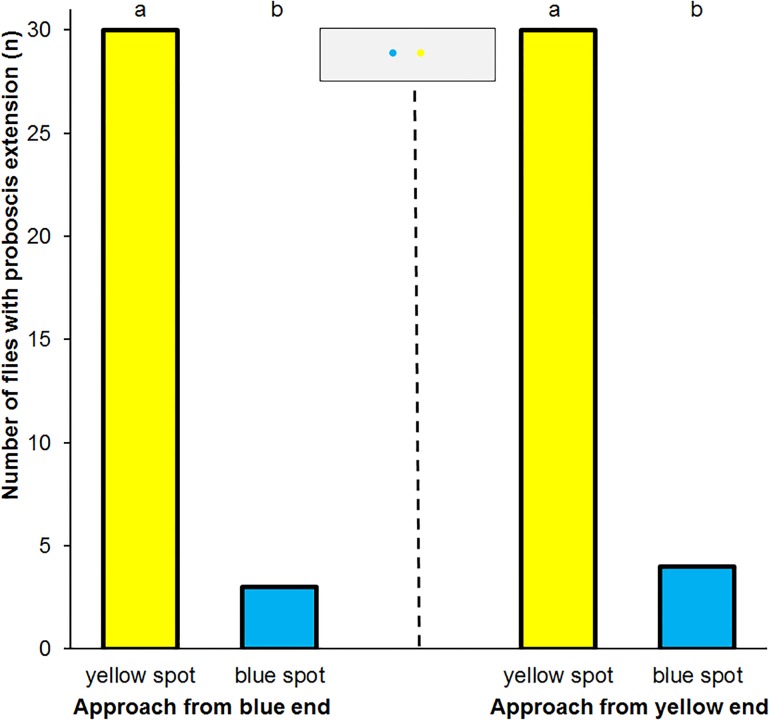
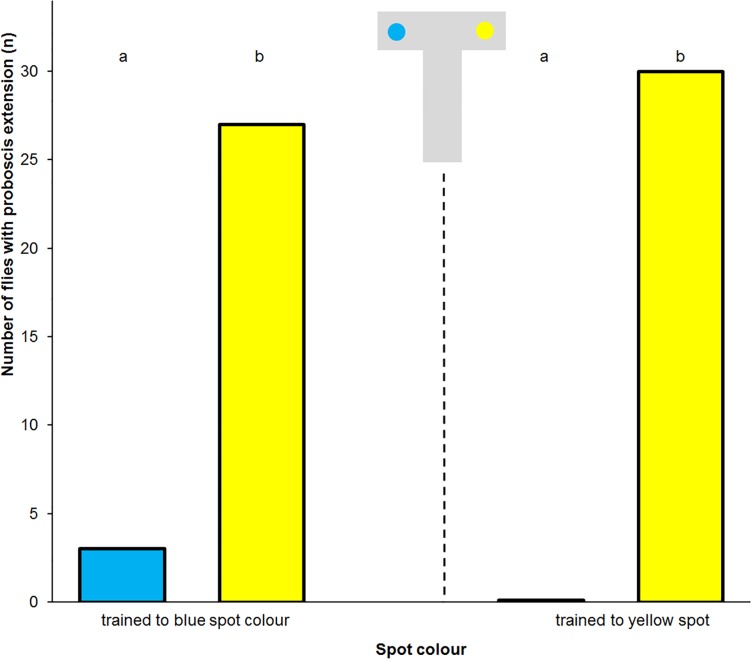
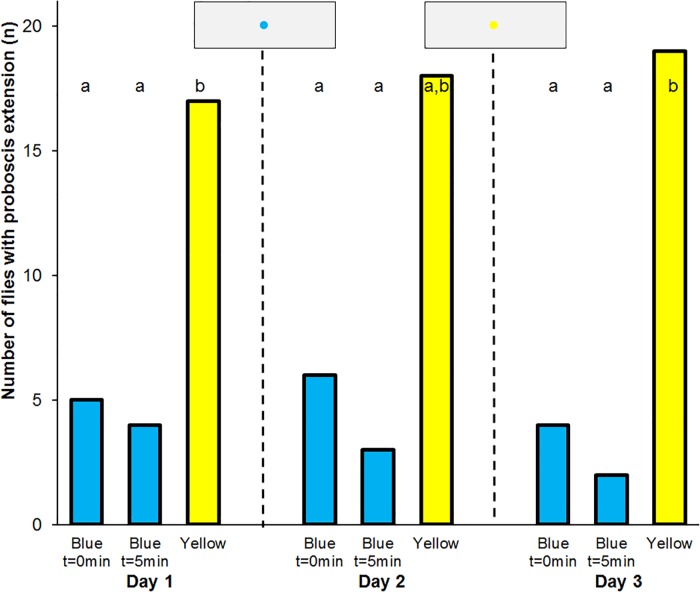
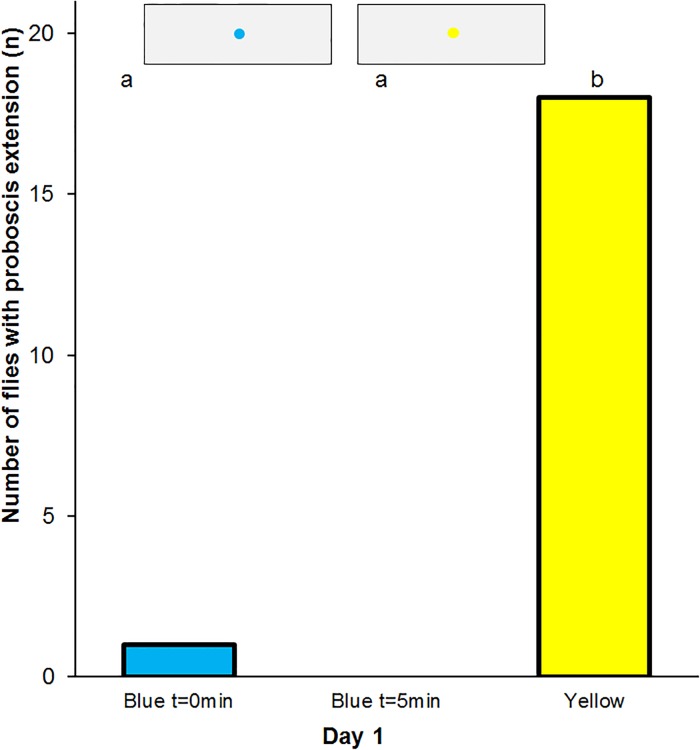
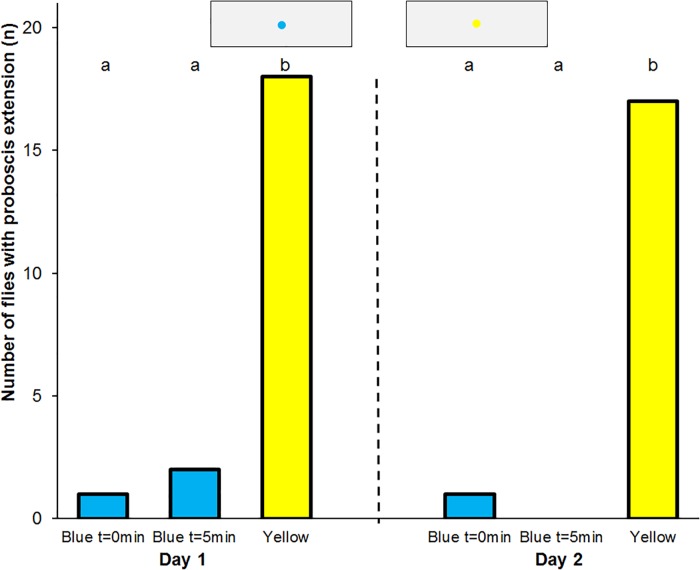
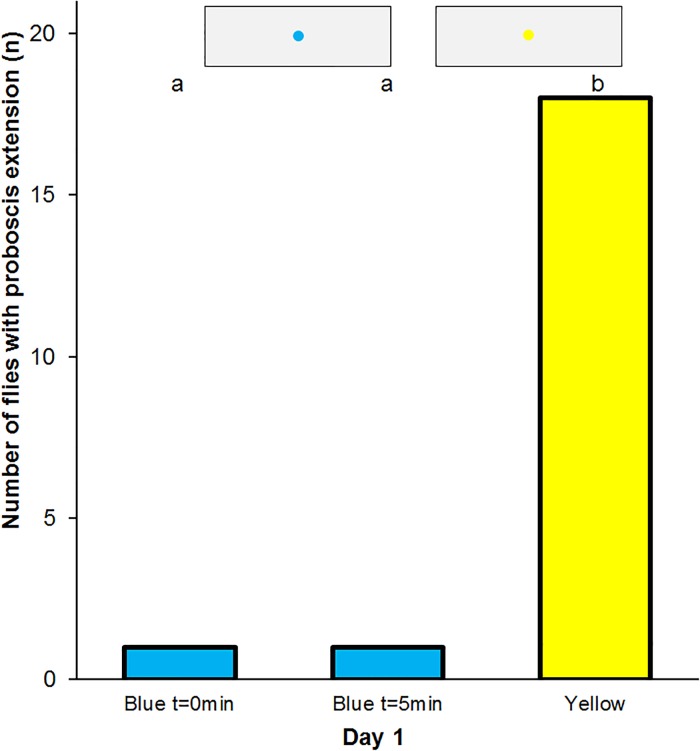
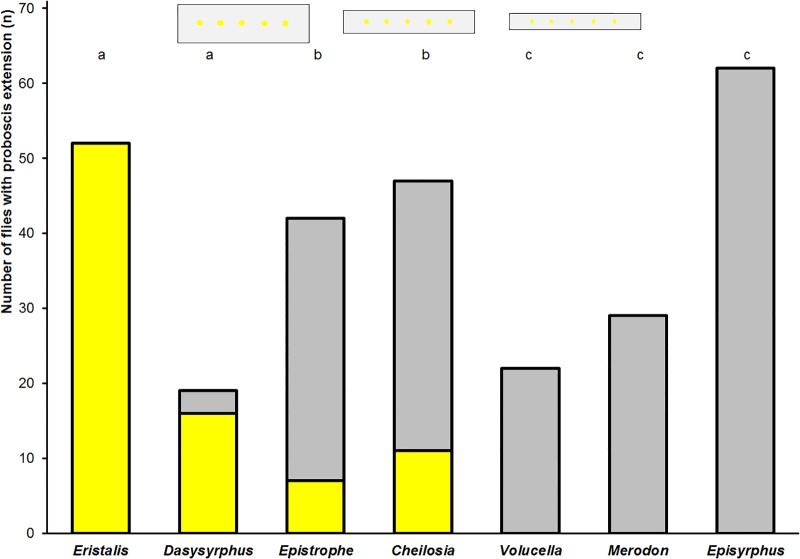
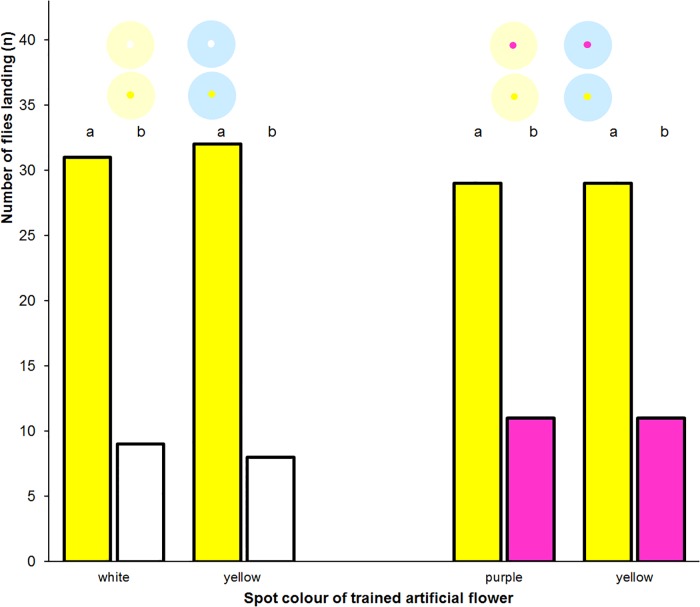
Flower visiting Eristalis hoverflies feed on nectar and pollen and are known to rely on innate colour preferences. In addition to a preference for visiting yellow flowers, the flies possess an innate proboscis reflex elicited by chemical as well as yellow colour stimuli. In this study we show that the flies' proboscis reflex is only triggered by yellow colour stimuli and not altered by conditioning to other colours. Neither in absolute nor in differential conditioning experiments the flies learned to associate other colours than yellow with reward. Even flies that experienced only blue nutrients during the first four days after hatching could not be trained to extend the proboscis towards other colours than yellow. The natural targets of the visually elicited proboscis reflex are yellow pollen and yellow anthers. One consequence of our findings is that flowers might advertise nectar and pollen rewards for Eristalis hoverflies by a yellow colour hue of nectar guides, nectaries, stamens or pollen. Alternatively, flowers might protect their pollen against Eristalis by displaying other pollen colours than yellow or direct flies by yellow pollen-mimicking floral guides towards nectar resources. Testing the proboscis extension of various hoverfly species in the field showed that only Eristalis hoverflies possess the proboscis reflex elicited by yellow colour hues.
访花虻以花蜜和花粉为食,已知它们依赖先天的颜色偏好。除了偏爱访问黄花外,这些蝇类还具有一种由化学物质和黄色颜色刺激引起的先天喙反射。在这项研究中,我们表明,蝇类的喙反射仅由黄色颜色刺激触发,而不会因对其他颜色的条件作用而改变。在绝对和差异条件作用实验中,蝇类都没有学会将除黄色以外的其他颜色与奖励联系起来。即使是在孵化后的头四天只接触蓝色营养物质的蝇类,也无法被训练将喙伸向黄色以外的其他颜色。视觉诱发的喙反射的自然靶标是黄色花粉和黄色花药。我们研究结果的一个后果是,花可能会通过花蜜引导物、蜜腺、雄蕊或花粉的黄色色调来为访花虻的花蜜和花粉提供奖励。或者,花可能会通过显示除黄色以外的其他花粉颜色或通过黄色花粉模拟的花引导物将蝇类引导向花蜜资源来保护自己的花粉免受访花虻的侵害。在野外测试各种虻蝇物种的喙延伸情况表明,只有访花虻具有由黄色色调引起的喙反射。