Division of Gastroenterology and Hepatology, Department of Internal Medicine.
Department of Digestive Surgery and.
Int J Med Sci. 2018 Mar 8;15(5):466-474. doi: 10.7150/ijms.23147. eCollection 2018.
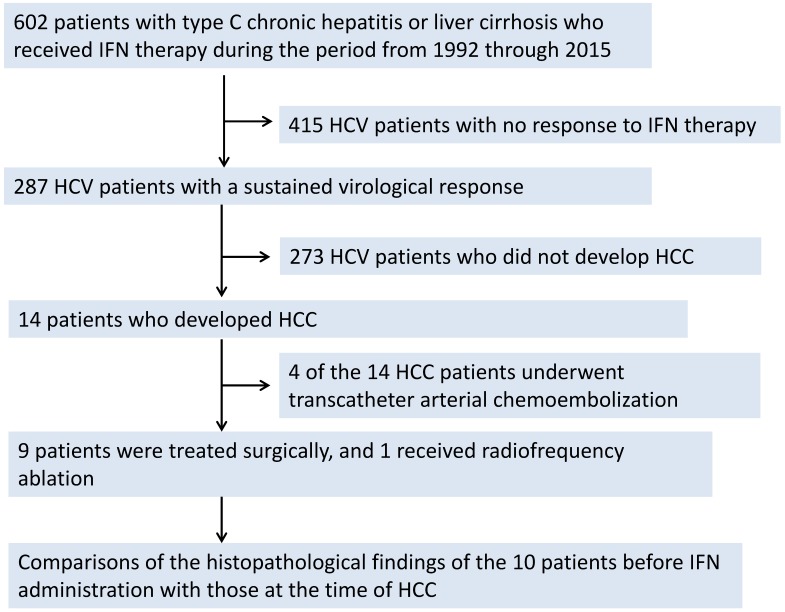
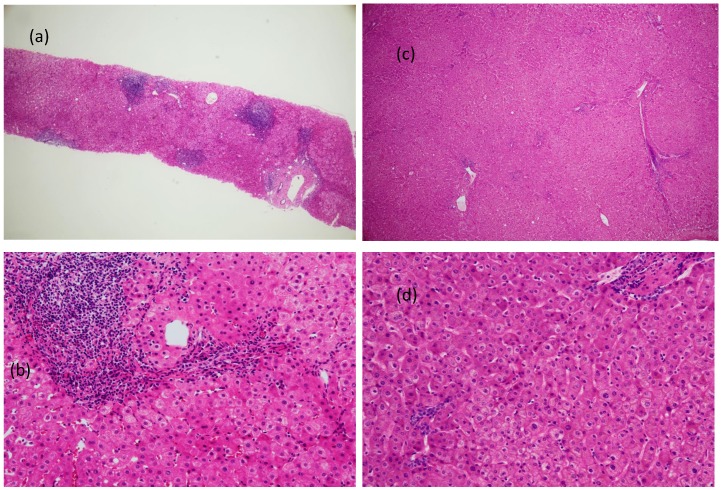
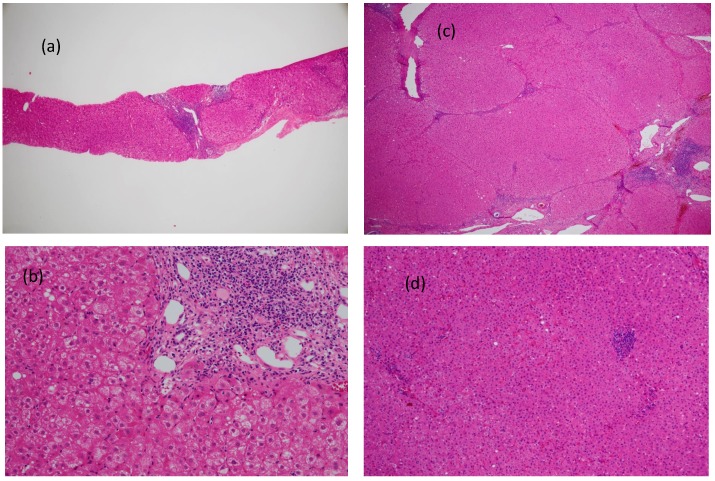
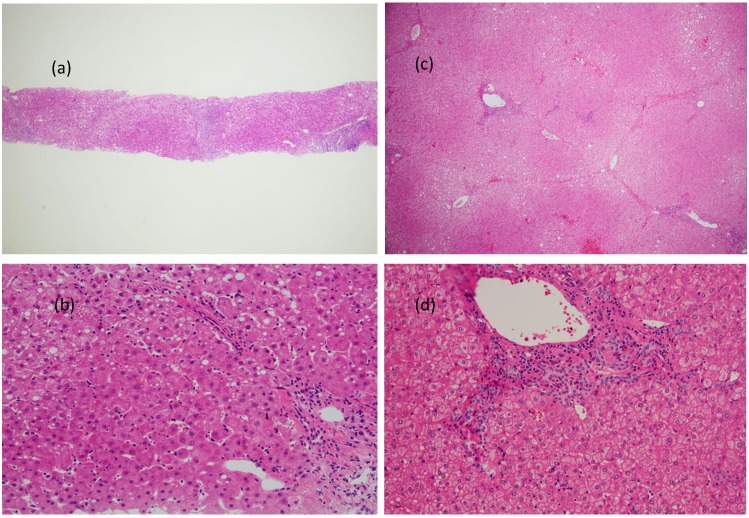
Hepatitis C virus (HCV) infection has long been treated with interferon therapy (IFN). Currently, more than 90% of IFN-treated patients show a sustained virological response (SVR) when also treated with ribavirin and/or a protease inhibitor. Histological inflammation and fibrosis improve in IFN-treated patients, which indicates HCV clearance. IFN also reduces the incidence of hepatocellular carcinoma (HCC). However, a small proportion of patients with SVR develop HCC. To investigate the causes of hepatic carcinogenesis after SVR, we compared the liver histological findings before IFN to those after the development of HCC. In total, 602 patients infected with type C chronic hepatitis or with liver cirrhosis who received IFN therapy during the period from 1992 through 2015 were included in this study. We assessed 14 of the 287 patients who achieved an SVR. HCC was diagnosed by computed tomography, angiography or liver biopsy. The longest time from the SVR until HCC detection was 16.5 years, and the mean was 7.2±4.6 years. Nine of the 14 patients underwent surgery and one radiofrequency ablation. The histological findings of 10 patients were available for comparison. The comparison of the histological findings before treatment with those after the HCC diagnosis revealed an amelioration of liver fibrosis and other inflammatory changes. All ten patients showed improvements in fibrosis and steatosis. However, we observed that mild inflammatory change persisted from 1.8 years to 16.5 years after the confirmation of SVR in all cases. We suspect that persistent histological inflammation is one of the factors contributing to hepatocarcinogenesis (i.e., HCC development) even after successful treatment.
丙型肝炎病毒 (HCV) 感染长期以来一直采用干扰素治疗 (IFN)。目前,超过 90%的接受 IFN 治疗的患者在同时接受利巴韦林和/或蛋白酶抑制剂治疗时显示出持续病毒学应答 (SVR)。IFN 治疗的患者的组织学炎症和纤维化得到改善,这表明 HCV 已清除。IFN 还降低了肝细胞癌 (HCC) 的发生率。然而,一小部分 SVR 患者会发展为 HCC。为了研究 SVR 后肝致癌的原因,我们将 IFN 治疗前的肝脏组织学发现与 HCC 发生后的发现进行了比较。 本研究共纳入了 602 例感染丙型慢性肝炎或肝硬化的患者,他们在 1992 年至 2015 年期间接受了 IFN 治疗。我们评估了 14 例获得 SVR 的患者中的 14 例。 HCC 通过计算机断层扫描、血管造影或肝活检诊断。从 SVR 到 HCC 检测的最长时间为 16.5 年,平均为 7.2±4.6 年。9 例患者接受了手术,1 例接受了射频消融术。有 10 例患者的组织学发现可供比较。治疗前的组织学发现与 HCC 诊断后的发现相比,肝纤维化和其他炎症变化有所改善。所有 10 例患者的纤维化和脂肪变性均有改善。然而,我们观察到在所有病例中,从 SVR 确认后 1.8 年到 16.5 年,持续的轻度炎症变化一直存在。 我们怀疑,即使在成功治疗后,持续的组织学炎症也是导致肝癌发生(即 HCC 发展)的因素之一。