Fromberger Peter, Meyer Sabrina, Jordan Kirsten, Müller Jürgen L
Clinic for Psychiatry and Psychotherapy - Forensic Psychiatry, Human Medical Center Göttingen, Georg-August-University Göttingen, Göttingen, Germany.
Front Psychol. 2018 Mar 6;9:224. doi: 10.3389/fpsyg.2018.00224. eCollection 2018.
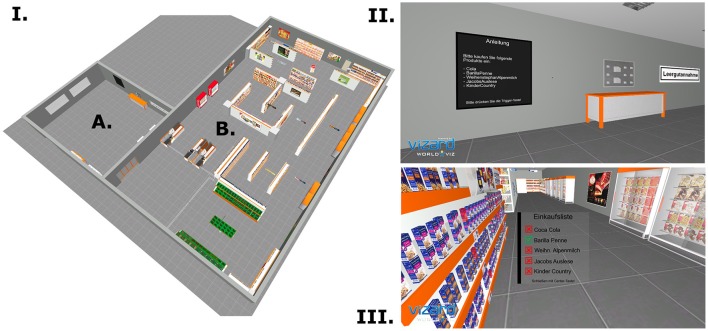
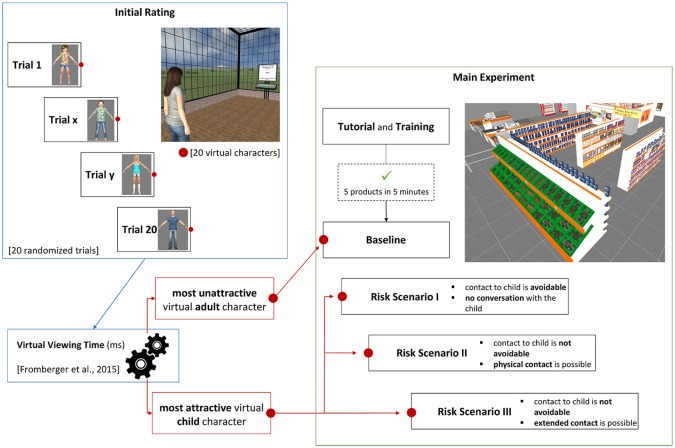
The decision about unsupervised privileges for sexual offenders against children (SOC) is one of the most difficult decisions for practitioners in forensic high-security hospitals. Facing the possible consequences of the decision for the society, a valid and reliable risk management of SOCs is essential. Some risk management approaches provide frameworks for the construction of relevant future risk situations. Due to ethical reasons, it is not possible to evaluate the validity of constructed risk situations in reality. The aim of the study was to test if behavioral monitoring of SOCs in high-immersive virtual risk situations provides additional information for risk management. Six SOCs and seven non-offender controls (NOC) walked through three virtual risk situations, confronting the participant with a virtual child character. The participant had to choose between predefined answers representing approach or avoidance behavior. Frequency of chosen answers were analyzed in regards to knowledge of the participants about coping skills and coping skills focused during therapy. SOCs and NOCs behavior differed only in one risk scenario. Furthermore, SOCs showed in 89% of all cases a behavior not corresponding to their own belief about adequate behavior in comparable risk situations. In 62% of all cases, SOCs behaved not corresponding to coping skills they stated that therapists focused on during therapy. In 50% of all cases, SOCs behaved in correspondence to coping skills therapists stated that they focused on during therapy. Therapists predicted the behavior of SOCs in virtual risk situations incorrect in 25% of all cases. Thus, virtual risk scenarios provide the possibility for practitioners to monitor the behavior of SOCs and to test their decisions on unsupervised privileges without endangering the community. This may provide additional information for therapy progress. Further studies are necessary to evaluate the predictive and ecological validity of behavioral monitoring in virtual risk situations for real life situations.
对于为针对儿童的性犯罪者(SOC)决定是否给予无监督特权,这是法医高安全级医院的从业者面临的最艰难决策之一。鉴于该决定可能给社会带来的后果,对SOC进行有效且可靠的风险管理至关重要。一些风险管理方法为构建相关未来风险情境提供了框架。出于伦理原因,无法在现实中评估所构建风险情境的有效性。本研究的目的是测试在高度沉浸式虚拟风险情境中对SOC进行行为监测是否能为风险管理提供额外信息。六名SOC和七名非犯罪对照者(NOC)走过三种虚拟风险情境,情境中会出现一个虚拟儿童角色。参与者必须在代表接近或回避行为的预定义答案中做出选择。针对参与者对应对技能的了解以及治疗中所关注的应对技能,对所选答案的频率进行了分析。SOC和NOC的行为仅在一种风险场景中有所不同。此外,在所有案例的89%中,SOC的行为与其自身对类似风险情境中适当行为的认知不符。在所有案例的62%中,SOC的行为与他们声称治疗师在治疗中所关注的应对技能不符。在所有案例的50%中,SOC的行为与治疗师声称他们在治疗中所关注的应对技能相符。治疗师对SOC在虚拟风险情境中的行为预测在所有案例的25%中是错误的。因此,虚拟风险场景为从业者提供了监测SOC行为并测试其关于无监督特权决定的可能性,而不会危及社区。这可能为治疗进展提供额外信息。有必要进行进一步研究,以评估虚拟风险情境中行为监测对于现实生活情境的预测效度和生态效度。