Shi Jianjian, Surma Michelle, Wei Lei
Riley Heart Research Center, Herman B Wells Center for Pediatric Research, Department of Pediatrics, Indiana University, School of Medicine, Indianapolis, Indiana, USA.
Department of Cellular and Integrative Physiology, Indiana University, School of Medicine, Indianapolis, Indiana, USA.
Oncotarget. 2018 Feb 8;9(16):12995-13008. doi: 10.18632/oncotarget.24457. eCollection 2018 Feb 27.
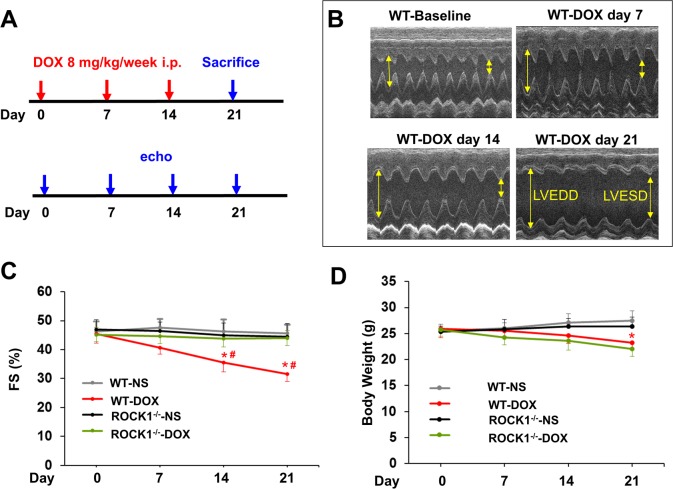
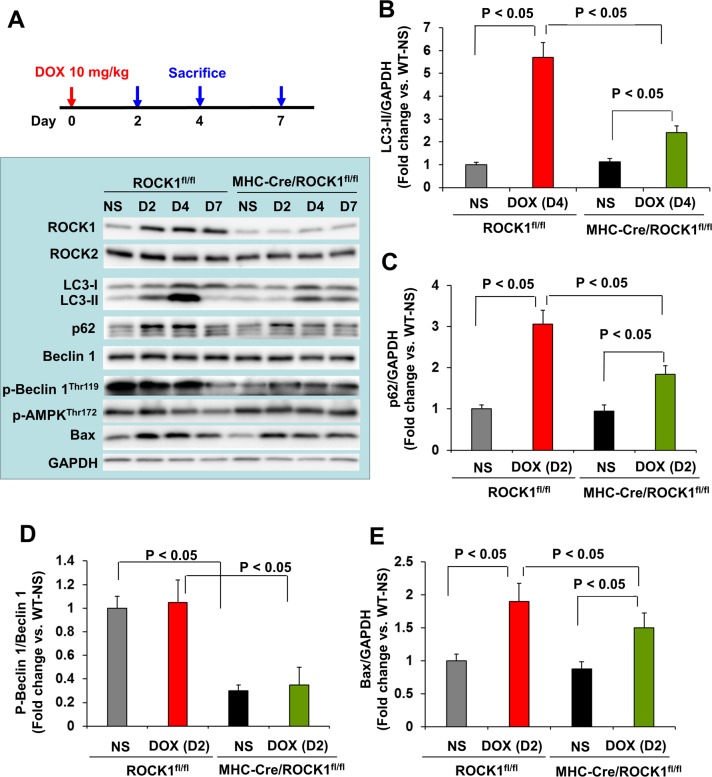
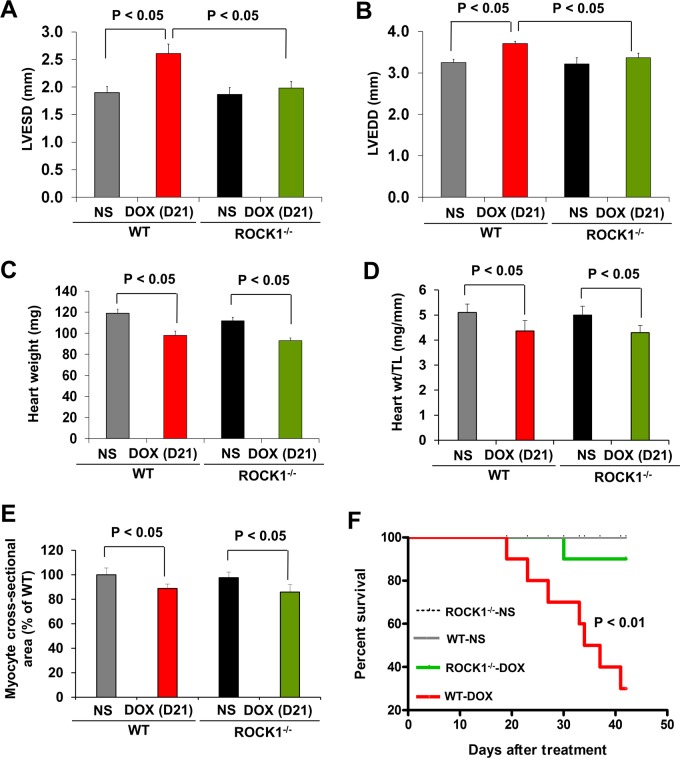
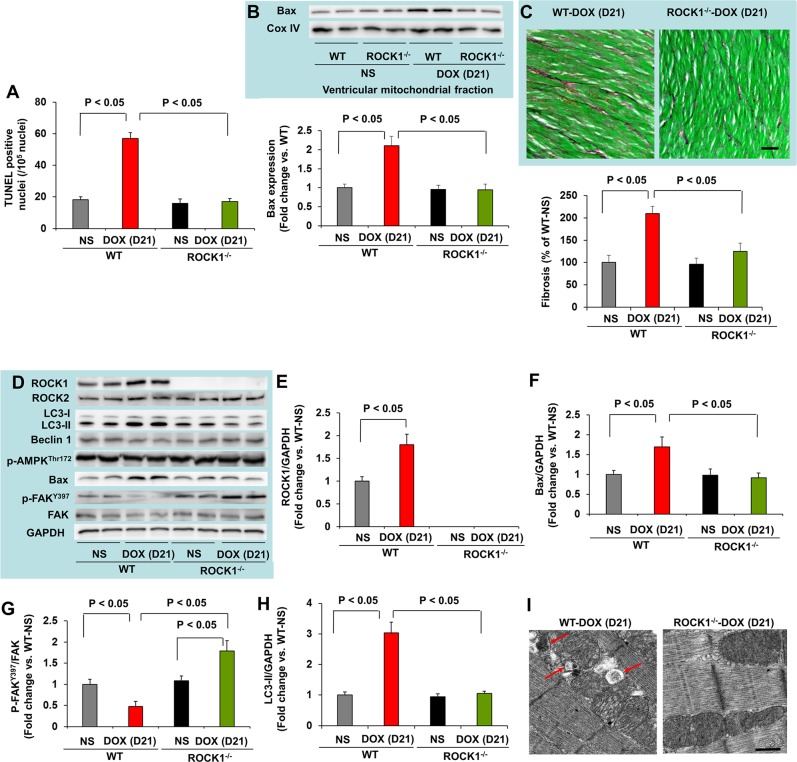
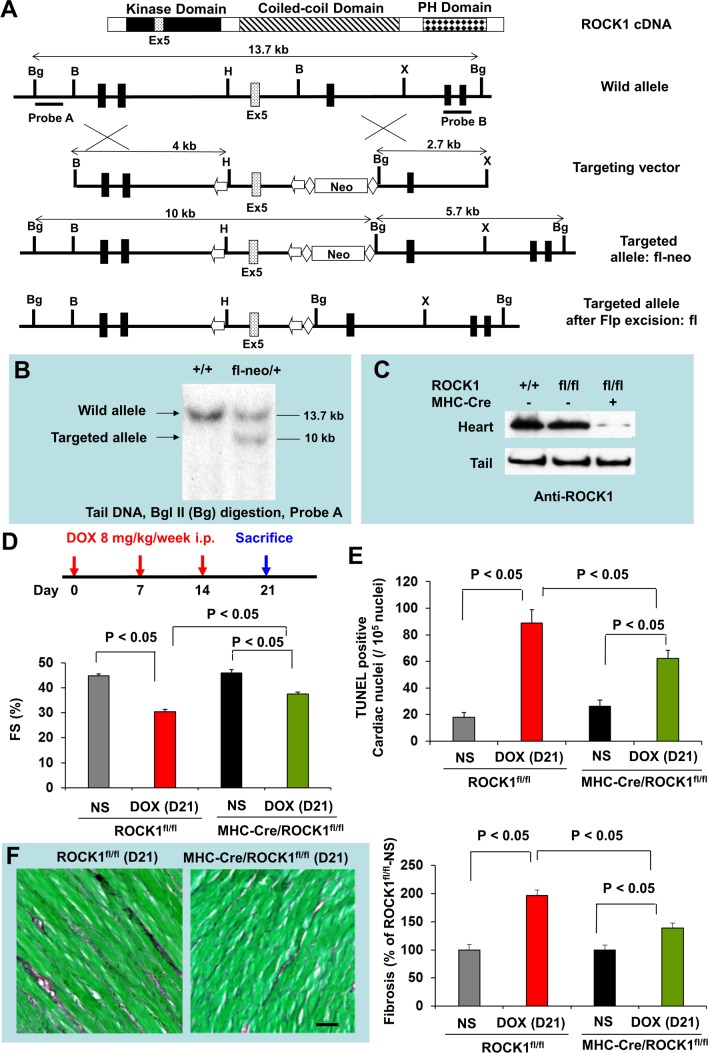
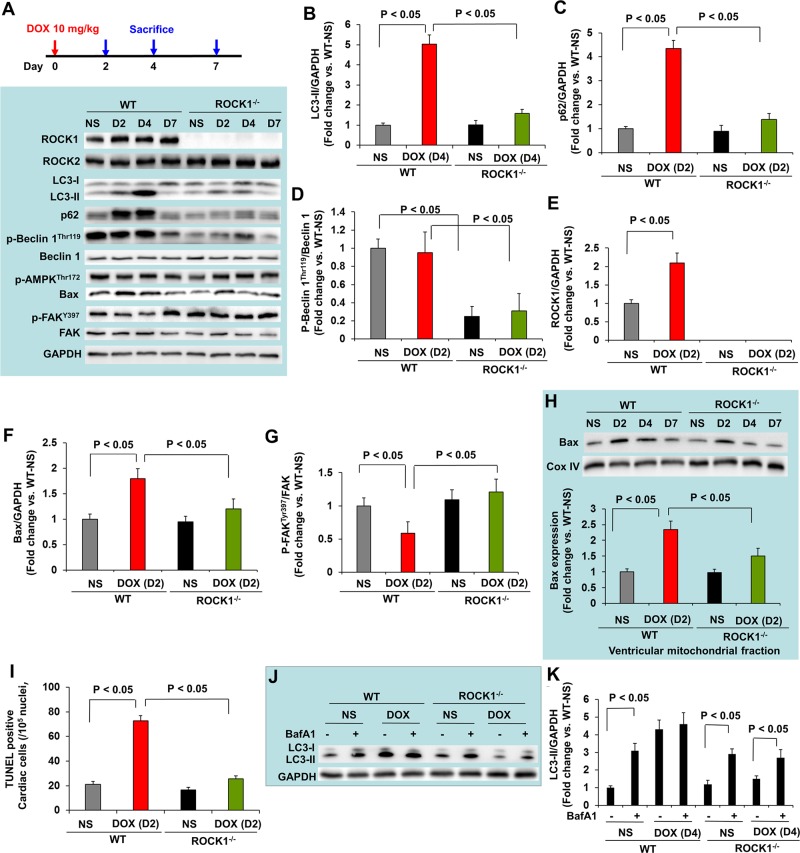
Doxorubicin is among the essential medicines with a wide antitumor spectrum, but its clinical application is limited by its cardiotoxicity. We recently discovered that ROCK1 is a key molecule in mediating cardiac remodeling in response to various stresses. To determine the roles of ROCK1 in doxorubicin cardiotoxicity, we gave three doses of doxorubicin injections to wild type (WT) and ROCK1 mice with one week intervals between treatments, the cumulative dose being 24 mg/kg. ROCK1 mice exhibited preserved cardiac function, reduced apoptosis, autophagy and fibrosis compared to the WT mice. To further determine the cellular mechanisms, we have examined the role of ROCK1 in cardiomyocytes using cardiomyocyte-specific knockout mice, MHC-Cre/ROCK1, which partially reproduced the cardioprotective characteristics of ROCK1 mice, indicating that ROCK1 in both cardiomyocytes and non-cardiomyocytes mediates doxorubicin cardiotoxicity. To elucidate the molecular mechanisms, a detailed time course study after a single doxorubicin injection at 10 mg/kg was performed in ROCK1 and MHC-Cre/ROCK1 mice. The molecular analysis revealed that both ROCK1 and MHC-Cre/ROCK1 hearts exhibited significant reduction of doxorubicin-induced early responses including increased apoptotic (Bax) and autophagic (p62/SQSTM1 and LC3-II) markers, associated with reduced Beclin 1 phosphorylation on Thr119, supporting reduced Beclin 1-mediated autophagy initiation due to increased association of Beclin 1 with Bcl 2 or Bcl-XL in these hearts compared to the WT or ROCK1 mice. These results support that ROCK1 deficiency is cardioprotective against doxorubicin-induced cardiotoxicity at least in part through reducing Beclin 1-mediated autophagy initiation in cardiomyocytes and restoring autophagic flux to ameliorate doxorubicin cardiotoxicity.
阿霉素是一种具有广泛抗肿瘤谱的基本药物,但其临床应用受到心脏毒性的限制。我们最近发现,ROCK1是介导心脏对各种应激反应进行重塑的关键分子。为了确定ROCK1在阿霉素心脏毒性中的作用,我们给野生型(WT)小鼠和ROCK1基因敲除小鼠分三次注射阿霉素,每次注射间隔一周,累积剂量为24mg/kg。与WT小鼠相比,ROCK1基因敲除小鼠的心脏功能得以保留,细胞凋亡、自噬和纤维化减少。为了进一步确定细胞机制,我们使用心肌细胞特异性敲除小鼠MHC-Cre/ROCK1研究了ROCK1在心肌细胞中的作用,该小鼠部分重现了ROCK1基因敲除小鼠的心脏保护特性,表明心肌细胞和非心肌细胞中的ROCK1均介导阿霉素的心脏毒性。为了阐明分子机制,我们对ROCK1基因敲除小鼠和MHC-Cre/ROCK1小鼠进行了单次10mg/kg阿霉素注射后的详细时间进程研究。分子分析显示,ROCK1基因敲除小鼠和MHC-Cre/ROCK1小鼠心脏中阿霉素诱导的早期反应均显著减少,包括凋亡(Bax)和自噬(p62/SQSTM1和LC3-II)标志物增加,同时与这些心脏中Thr119位点的Beclin 1磷酸化减少有关,这支持了由于Beclin 1与Bcl 2或Bcl-XL的结合增加,导致Beclin 1介导的自噬起始减少,与WT或ROCK1基因敲除小鼠相比。这些结果支持,ROCK1缺乏至少部分通过减少心肌细胞中Beclin 1介导的自噬起始和恢复自噬通量来改善阿霉素心脏毒性,从而对阿霉素诱导的心脏毒性具有心脏保护作用。