Drobot Björn, Steudtner Robin, Raff Johannes, Geipel Gerhard, Brendler Vinzenz, Tsushima Satoru
Helmholtz Zentrum Dresden Rossendorf , Institute of Resource Ecology , Bautzner Landstraße 400 , 01328 Dresden , Germany . Email:
Helmholtz Zentrum Dresden Rossendorf , Helmholtz Institute Freiberg for Resource Technology , Halsbrücker Straße 34 , 09599 Freiberg , Germany.
Chem Sci. 2015 Feb 1;6(2):964-972. doi: 10.1039/c4sc02022g. Epub 2014 Oct 28.
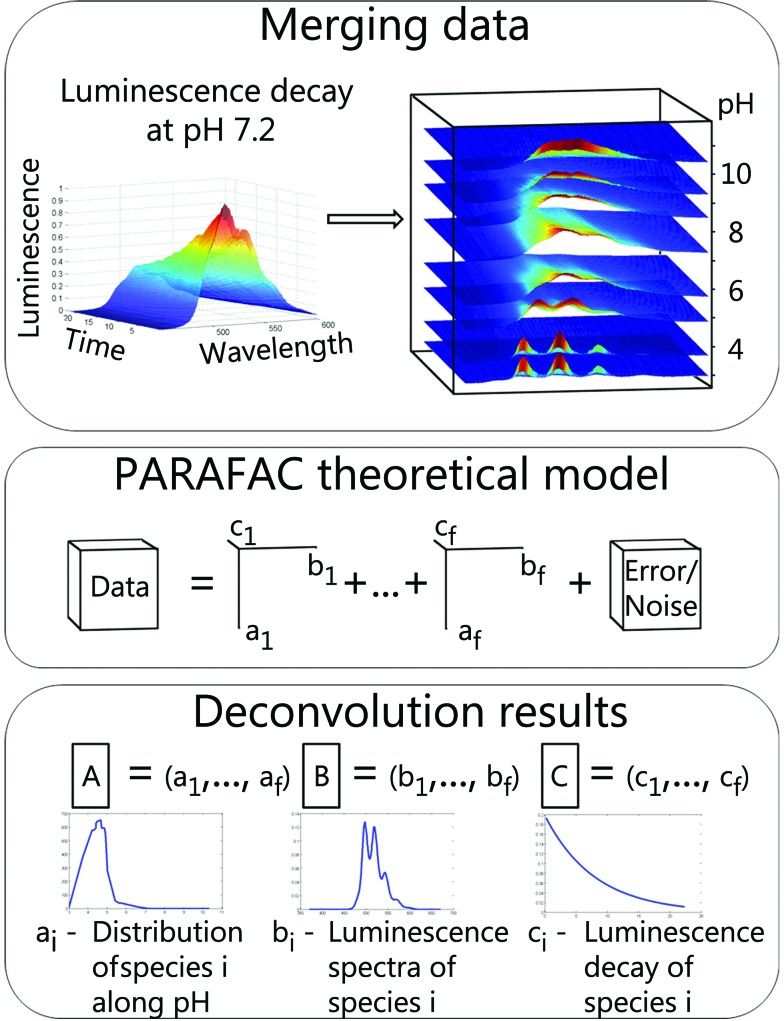
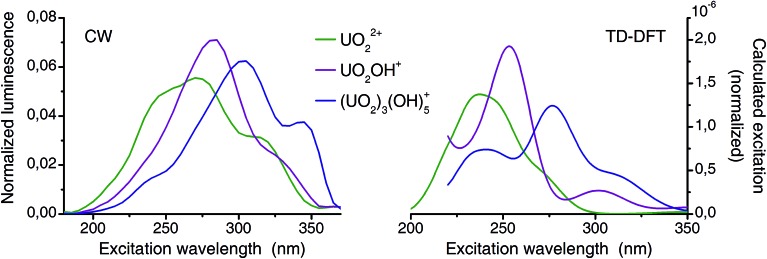
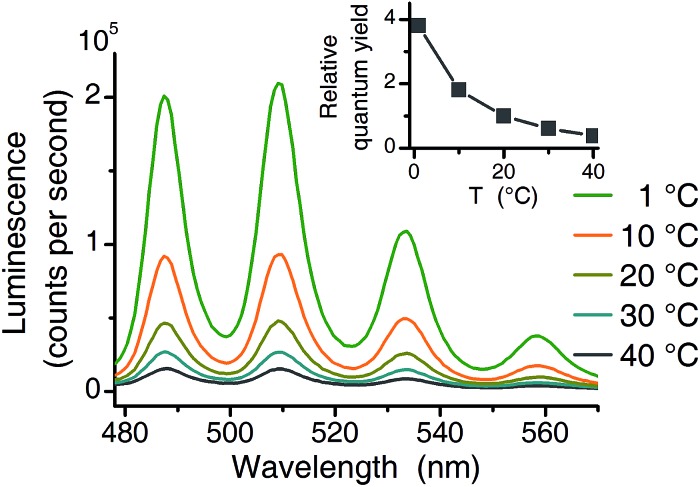
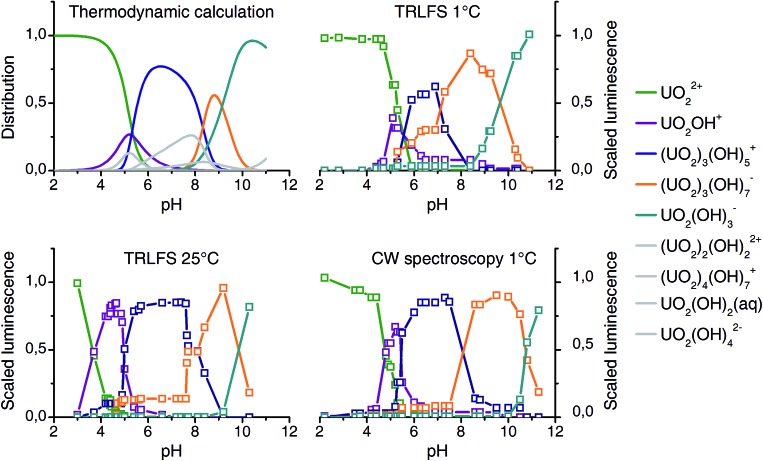
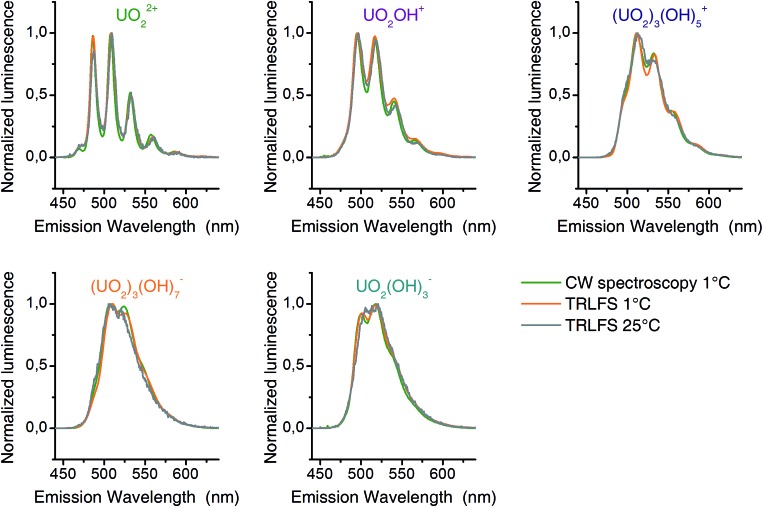
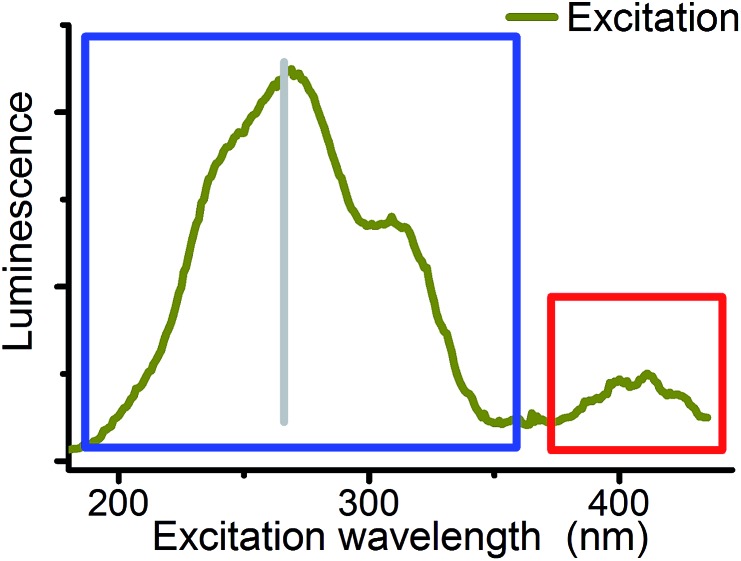
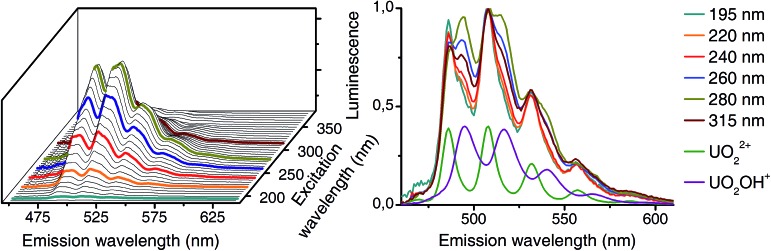
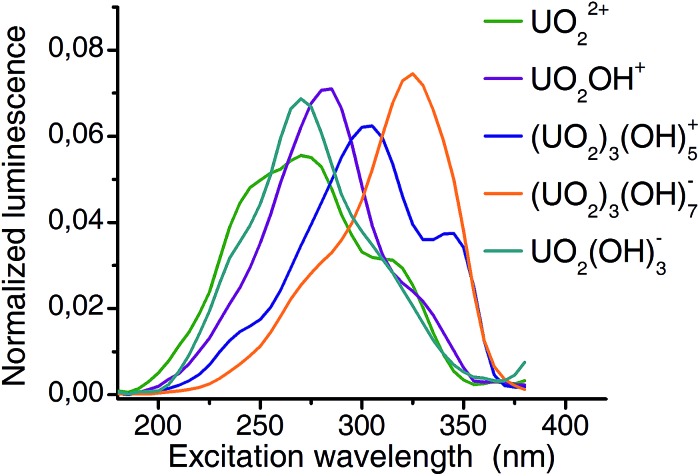
This study of aqueous metal speciation is an advanced combination of theoretical and experimental methods. Continuous wave (CW) and time-resolved laser-induced fluorescence spectroscopy (TRLFS) data of uranyl(vi) hydrolysis were analyzed using parallel factor analysis (PARAFAC). Distribution patterns of five major species were thereby derived under a fixed uranyl concentration (10 M) over a wide pH range from 2 to 11. UV (180 nm to 370 nm) excitation spectra were extracted for individual species. Time-dependent density functional theory (TD-DFT) calculations revealed ligand excitation (water, hydroxo, oxo) in this region and ligand-to-metal charge transfer (LMCT) responsible for luminescence. Thus excitation in the UV region is extreme ligand sensitive and specific. Combining findings from PARAFAC and DFT the [UO(HO)] cation (aquo complex 1 : 0) and four hydroxo complexes (1 : 1, 3 : 5, 3 : 7 and 1 : 3) were identified. The methodological concept used here is applicable to luminescent metals in general and thus enables acquisition of refined structural and thermodynamical data of lanthanide and actinide complexation.
这项关于水相金属形态的研究是理论与实验方法的先进结合。利用平行因子分析(PARAFAC)对铀酰(VI)水解的连续波(CW)和时间分辨激光诱导荧光光谱(TRLFS)数据进行了分析。由此得出了在固定铀酰浓度(10 M)下,pH值从2到11的宽范围内五种主要物种的分布模式。提取了各个物种的紫外(180 nm至370 nm)激发光谱。含时密度泛函理论(TD-DFT)计算揭示了该区域内的配体激发(水、羟基、氧)以及负责发光的配体到金属的电荷转移(LMCT)。因此,紫外区域的激发对配体极为敏感且具有特异性。结合PARAFAC和DFT的研究结果,鉴定出了[UO(HO)]阳离子(水合络合物1∶0)和四种羟基络合物(1∶1、3∶5、3∶7和1∶3)。这里使用的方法概念一般适用于发光金属,从而能够获取镧系和锕系络合的精细结构和热力学数据。