
衰老、细胞凋亡与自噬在多形性胶质母细胞瘤中的相互作用——在发病机制和治疗观点中的作用。
An Interplay between Senescence, Apoptosis and Autophagy in Glioblastoma Multiforme-Role in Pathogenesis and Therapeutic Perspective.
机构信息
Department of Orthodontics, Medical University of Lodz, 92-216 Lodz, Poland.
Department of Pediatric Dentistry, Medical University of Lodz, 92-216 Lodz, Poland.
出版信息
Int J Mol Sci. 2018 Mar 17;19(3):889. doi: 10.3390/ijms19030889.
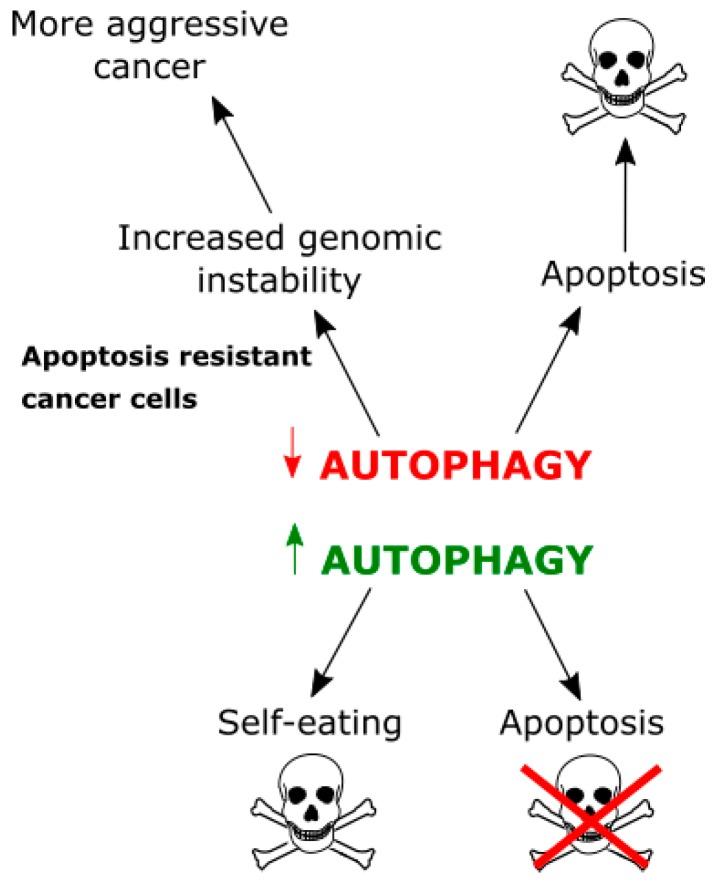
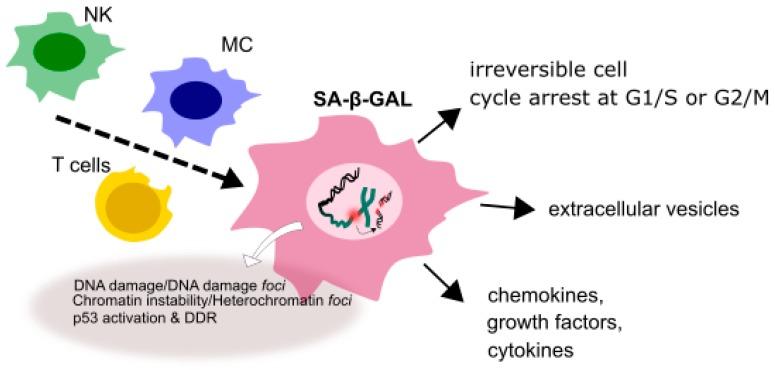
Autophagy, cellular senescence, programmed cell death and necrosis are key responses of a cell facing a stress. These effects are partly interconnected, but regulation of their mutual interactions is not completely clear. That regulation seems to be especially important in cancer cells, which have their own program of development and demand more nutrition and energy than normal cells. Glioblastoma multiforme (GBM) belongs to the most aggressive and most difficult to cure cancers, so studies on its pathogenesis and new therapeutic strategies are justified. Using an animal model, it was shown that autophagy is required for GBM development. Temozolomide (TMZ) is the key drug in GBM chemotherapy and it was reported to induce senescence, autophagy and apoptosis in GBM. In some GBM cells, TMZ induces small toxicity despite its significant concentration and GBM cells can be intrinsically resistant to apoptosis. Resveratrol, a natural compound, was shown to potentiate anticancer effect of TMZ in GBM cells through the abrogation G2-arrest and mitotic catastrophe resulting in senescence of GBM cells. Autophagy is the key player in TMZ resistance in GBM. TMZ can induce apoptosis due to selective inhibition of autophagy, in which autophagic vehicles accumulate as their fusion with lysosomes is blocked. Modulation of autophagic action of TMZ with autophagy inhibitors can result in opposite outcomes, depending on the step targeted in autophagic flux. Studies on relationships between senescence, autophagy and apoptosis can open new therapeutic perspectives in GBM.
自噬、细胞衰老、程序性细胞死亡和坏死是细胞面对应激时的关键反应。这些效应部分相互关联,但它们相互作用的调节并不完全清楚。这种调节在癌细胞中似乎尤为重要,因为癌细胞有自己的发育程序,比正常细胞需要更多的营养和能量。多形性胶质母细胞瘤(GBM)属于最具侵袭性和最难治愈的癌症之一,因此对其发病机制和新的治疗策略的研究是合理的。使用动物模型表明,自噬是 GBM 发展所必需的。替莫唑胺(TMZ)是 GBM 化疗的关键药物,据报道它能诱导 GBM 中的衰老、自噬和细胞凋亡。在一些 GBM 细胞中,尽管 TMZ 的浓度很高,但它只会引起轻微的毒性,而且 GBM 细胞可能对细胞凋亡有内在的抗性。天然化合物白藜芦醇被证明可以通过阻止自噬小体与溶酶体融合来抑制 G2 期阻滞和有丝分裂灾难,从而导致 GBM 细胞衰老,从而增强 TMZ 在 GBM 细胞中的抗癌作用。自噬是 GBM 对 TMZ 耐药的关键因素。TMZ 可以通过选择性抑制自噬诱导细胞凋亡,在这种情况下,自噬小体由于与溶酶体融合受阻而积累。用自噬抑制剂调节 TMZ 的自噬作用会根据自噬流中靶向的步骤产生相反的结果。研究衰老、自噬和细胞凋亡之间的关系可以为 GBM 开辟新的治疗前景。




 Zotero 插件