Friedrich Miescher Laboratory of the Max Planck Society, 72076 Tübingen, Germany.
Max Planck Institute of Cell Biology and Genetics, 01307 Dresden, Germany.
Proc Natl Acad Sci U S A. 2018 Apr 3;115(14):3680-3685. doi: 10.1073/pnas.1717474115. Epub 2018 Mar 21.
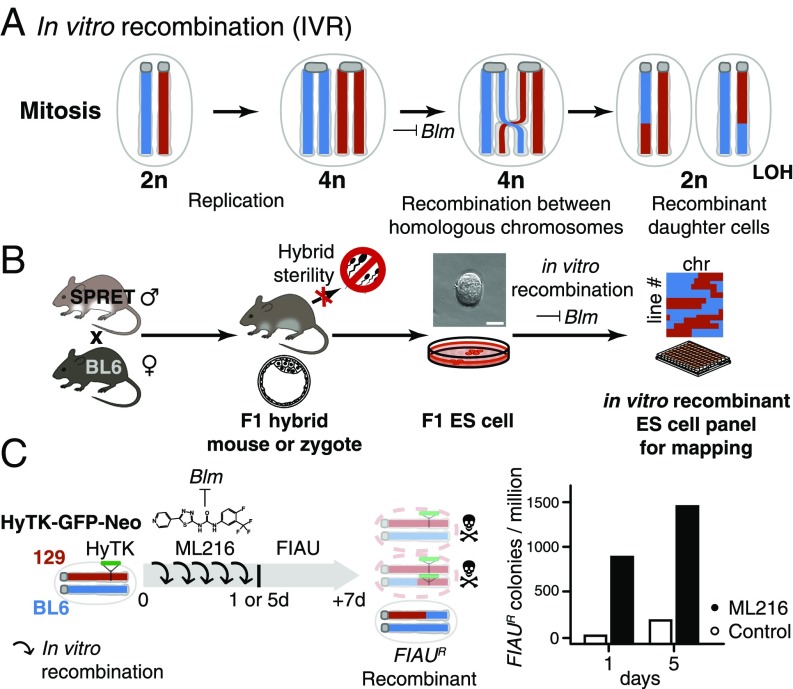
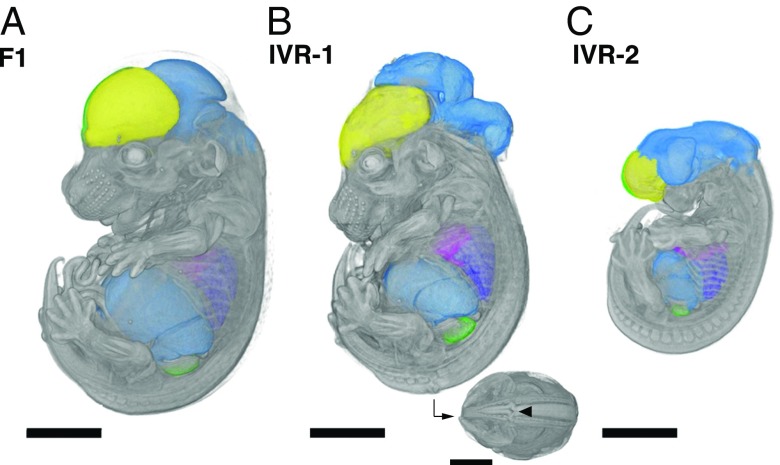
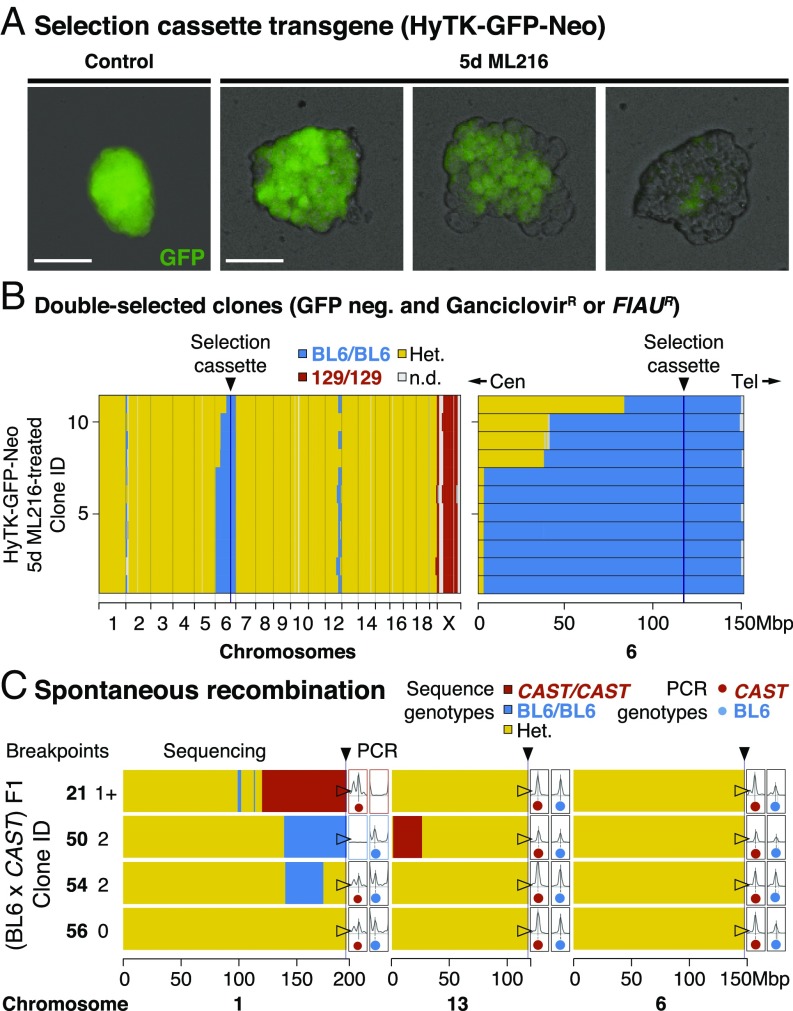
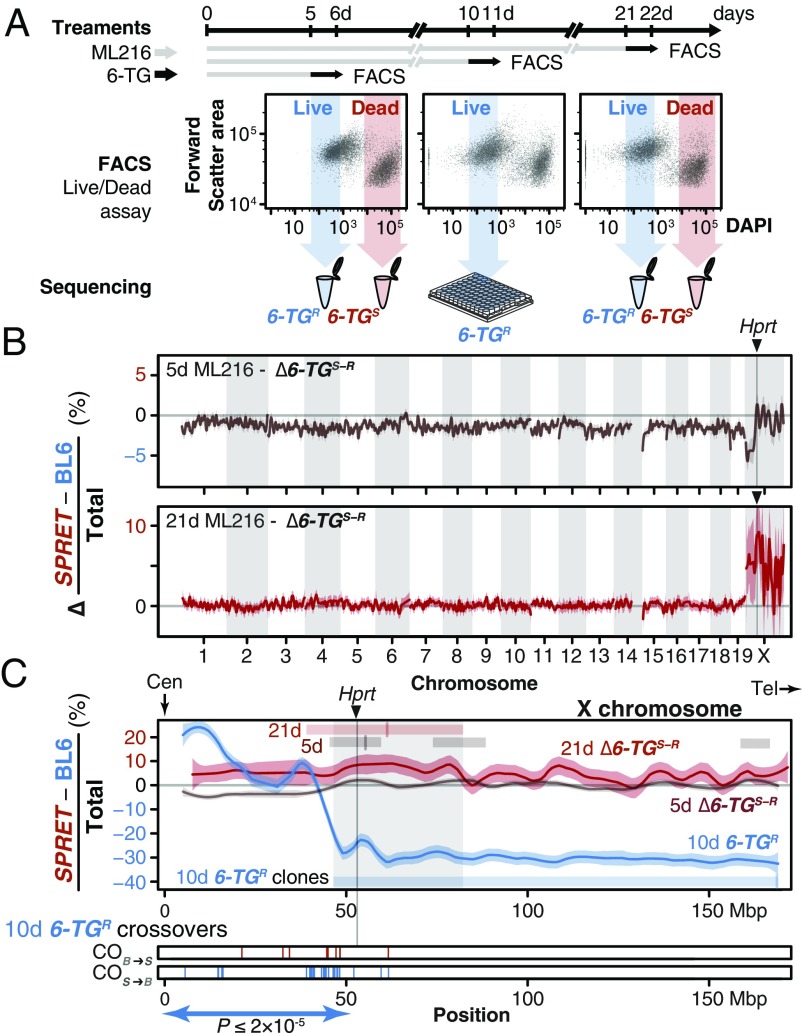
Discovering the genetic changes underlying species differences is a central goal in evolutionary genetics. However, hybrid crosses between species in mammals often suffer from hybrid sterility, greatly complicating genetic mapping of trait variation across species. Here, we describe a simple, robust, and transgene-free technique to generate "in vitro crosses" in hybrid mouse embryonic stem (ES) cells by inducing random mitotic cross-overs with the drug ML216, which inhibits the DNA helicase Bloom syndrome (BLM). Starting with an interspecific F1 hybrid ES cell line between the laboratory mouse and (∼1.5 million years of divergence), we mapped the genetic basis of drug resistance to the antimetabolite tioguanine to a single region containing hypoxanthine-guanine phosphoribosyltransferase () in as few as 21 d through "flow mapping" by coupling in vitro crosses with fluorescence-activated cell sorting (FACS). We also show how our platform can enable direct study of developmental variation by rederiving embryos with contribution from the recombinant ES cell lines. We demonstrate how in vitro crosses can overcome major bottlenecks in mouse complex trait genetics and address fundamental questions in evolutionary biology that are otherwise intractable through traditional breeding due to high cost, small litter sizes, and/or hybrid sterility. In doing so, we describe an experimental platform toward studying evolutionary systems biology in mouse and potentially in human and other mammals, including cross-species hybrids.
发现导致物种差异的遗传变化是进化遗传学的核心目标。然而,哺乳动物物种之间的杂交通常会受到杂种不育的影响,这极大地增加了跨物种特征变异的遗传作图的复杂性。在这里,我们描述了一种简单、稳健且无转基因的技术,通过使用抑制 DNA 解旋酶布鲁姆综合征 (BLM) 的药物 ML216 诱导随机有丝分裂交叉,在杂交小鼠胚胎干细胞 (ES) 细胞中产生“体外交叉”。从实验室小鼠和(约 150 万年的分化)之间的种间 F1 杂交 ES 细胞系开始,我们通过将体外交叉与荧光激活细胞分选 (FACS) 相结合的“流式图谱”,将抗代谢物硫鸟嘌呤的药物抗性的遗传基础映射到单个包含次黄嘌呤鸟嘌呤磷酸核糖转移酶 () 的区域,仅用 21 天即可完成。我们还展示了我们的平台如何通过从重组 ES 细胞系中重新衍生胚胎来直接研究发育变异。我们展示了体外交叉如何克服小鼠复杂性状遗传学中的主要瓶颈,并解决通过传统杂交由于成本高、产仔数少和/或杂种不育而难以解决的进化生物学中的基本问题。这样,我们描述了一种用于在小鼠中研究进化系统生物学的实验平台,并且可能在人类和其他哺乳动物中,包括跨物种杂交中也适用。