Department of Mathematics, Imperial College London, South Kensington Campus, London SW7 2AZ, UK.
Department of Mathematics, Imperial College London, South Kensington Campus, London SW7 2AZ, UK
J R Soc Interface. 2018 Mar;15(140). doi: 10.1098/rsif.2017.0834.
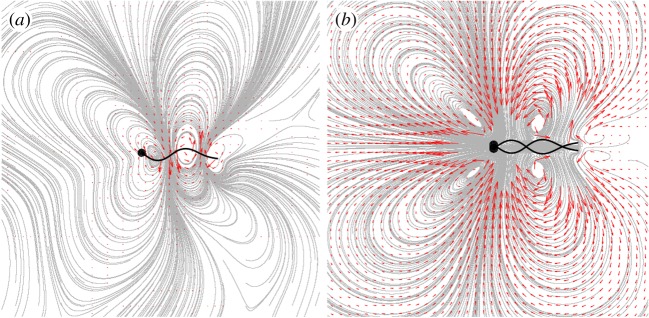
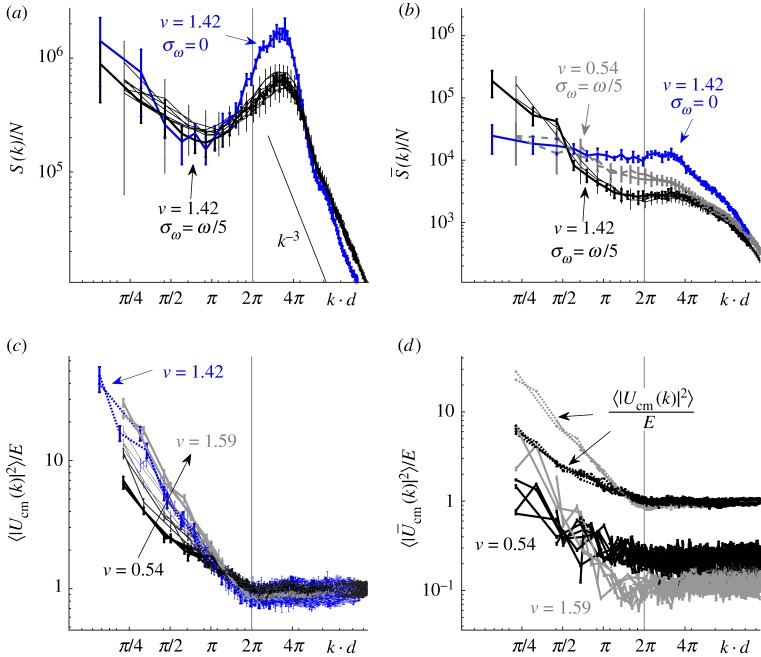
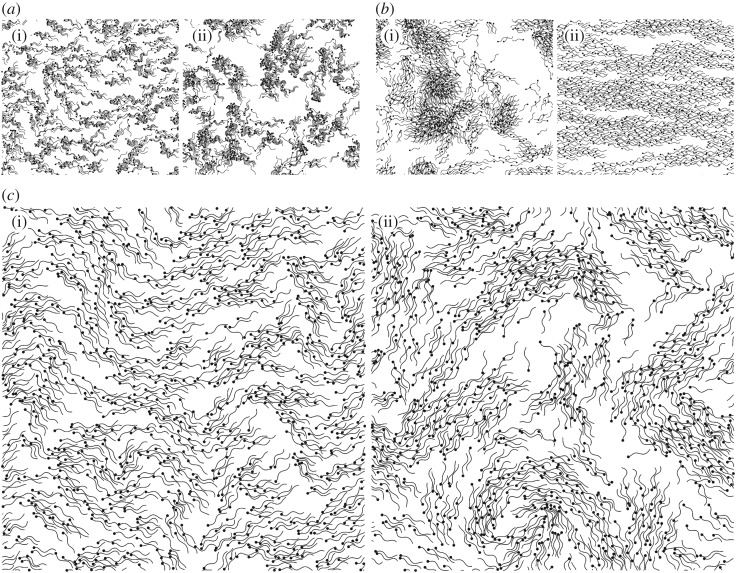
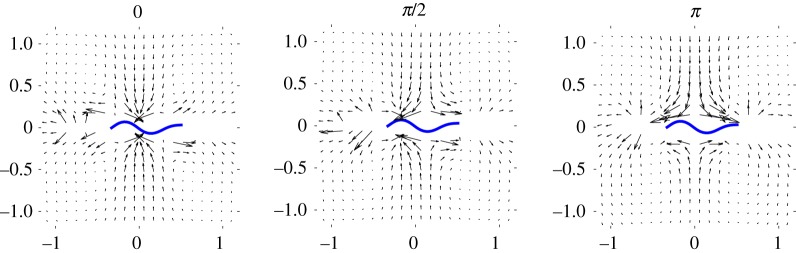
Swimming cells and microorganisms are as diverse in their collective dynamics as they are in their individual shapes and propulsion mechanisms. Even for sperm cells, which have a stereotyped shape consisting of a cell body connected to a flexible flagellum, a wide range of collective dynamics is observed spanning from the formation of tightly packed groups to the display of larger-scale, turbulence-like motion. Using a detailed mathematical model that resolves flagellum dynamics, we perform simulations of sperm suspensions containing up to 1000 cells and explore the connection between individual and collective dynamics. We find that depending on the level of variation in individual dynamics from one swimmer to another, the sperm exhibit either a strong tendency to aggregate, or the suspension exhibits large-scale swirling. Hydrodynamic interactions govern the formation and evolution of both states. In addition, a quantitative analysis of the states reveals that the flows generated at the time scale of flagellum undulations contribute significantly to the overall energy in the surrounding fluid, highlighting the importance of resolving these flows.
游动的细胞和微生物在其集体动力学方面与它们的个体形状和推进机制一样多样化。即使对于精子细胞,它们具有由连接到柔性鞭毛的细胞体组成的定型形状,也观察到了从紧密聚集的群体形成到显示更大规模、类湍流运动的广泛的集体动力学。使用解析鞭毛动力学的详细数学模型,我们对包含多达 1000 个细胞的精子悬浮液进行了模拟,并探索了个体和集体动力学之间的联系。我们发现,根据个体动力学从一个游泳者到另一个游泳者的变化程度,精子要么表现出强烈的聚集倾向,要么悬浮液表现出大规模的旋转。流体动力学相互作用控制着这两种状态的形成和演变。此外,对状态的定量分析表明,在鞭毛波动的时间尺度上产生的流对周围流体的总能量有很大贡献,突出了解析这些流的重要性。