Anderson David F, Dhariwal Mukesh, Bouchet Christine, Keith Michael S
University Hospital Southampton, NHS Foundation Trust, Southampton, UK.
Novartis Ireland Ltd., Dublin, Ireland.
Clin Ophthalmol. 2018 Mar 6;12:439-452. doi: 10.2147/OPTH.S146829. eCollection 2018.
To systematically review the published evidence on the prevalence and economic and humanistic burden of astigmatism in cataract patients.
For this systematic literature review, the Medline, PubMed, Embase, and Cochrane databases were searched from 1996 to September 2015 for available scientific literature that met the inclusion criteria. Studies published in the English language reporting prevalence and humanistic and economic burden in patients diagnosed with cataract and astigmatism were included.
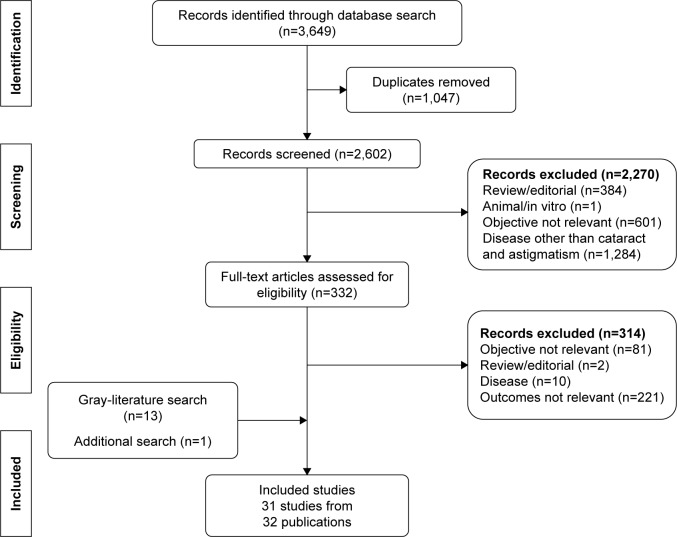
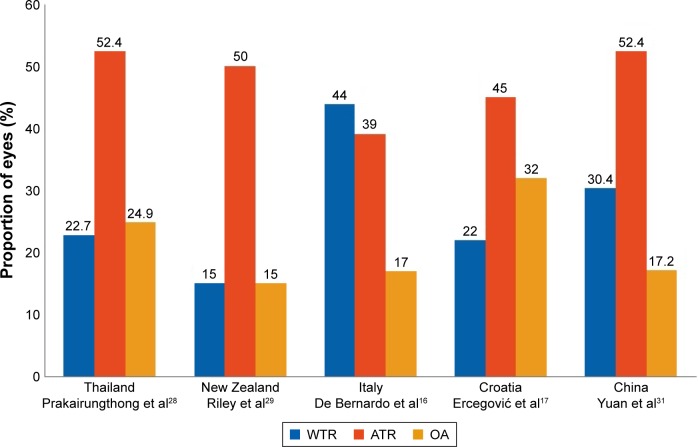
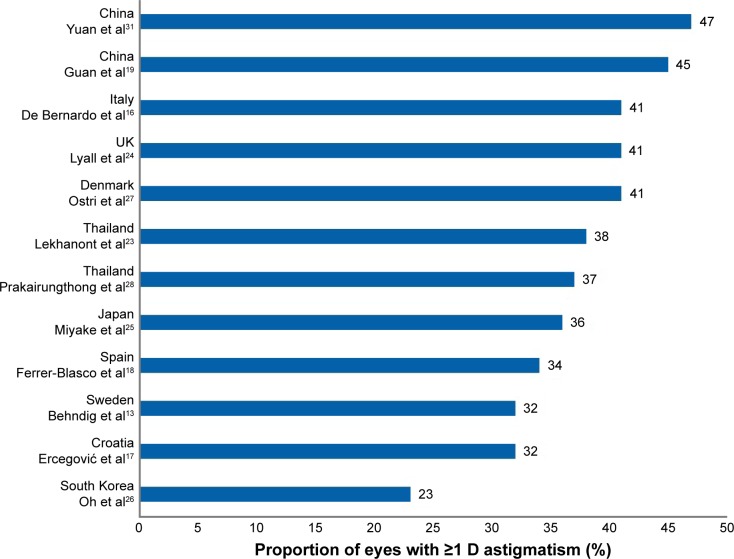
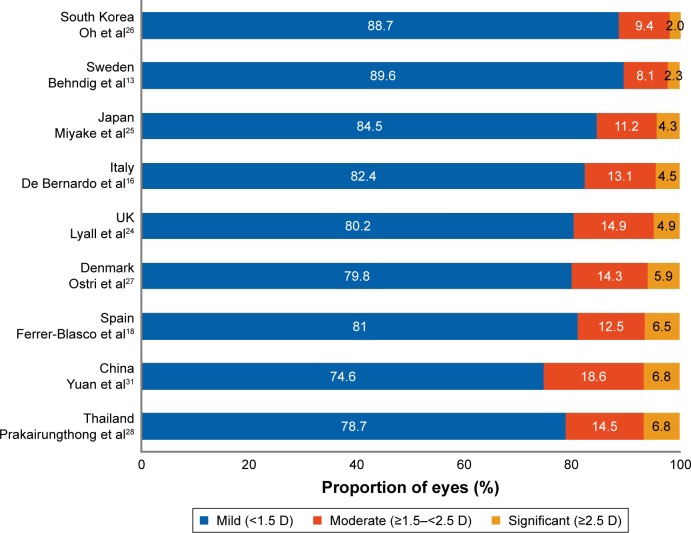
Of 3,649 papers reviewed, 31 studies from 32 publications met the inclusion criteria of this review. Preexisting astigmatism ≥1 D was present in up to 47% of cataract eyes. The cost burden of residual uncorrected astigmatism after cataract surgery was driven by the cost of spectacles, which was estimated to range from $2,151 to $3,440 in the US and $1,786 to $4,629 in Europe over a lifetime. In cataract patients, both preexisting and postoperative residual astigmatism were associated with poor vision-related patient satisfaction and quality of life, as well as higher spectacle burden. Astigmatism correction during cataract surgery appears to improve visual outcomes and results in overall lifetime cost savings compared to astigmatism correction with postoperative vision correction.
There is a high prevalence of preexisting astigmatism in cataract patients. Although published data are limited, both preoperative astigmatism and postoperative residual astigmatism affect visual function and vision-related quality of life, resulting in increased humanistic burden. Suboptimal correction of astigmatism during cataract surgery drives the continuous need for vision correction with spectacles in the postoperative period. Patients must bear the out-of-pocket expenses, since payers often do not reimburse the cost of spectacles. Greater access to astigmatism correction during cataract surgery could improve visual outcomes and quality of life in patients. More research is required to gain a better understanding of the disease burden of astigmatism in cataract patients.
系统回顾已发表的关于白内障患者散光患病率以及经济和人文负担的证据。
对于这项系统文献综述,检索了1996年至2015年9月的Medline、PubMed、Embase和Cochrane数据库,以获取符合纳入标准的现有科学文献。纳入以英文发表的、报告诊断为白内障和散光患者的患病率以及人文和经济负担的研究。
在审查的3649篇论文中,来自32篇出版物的31项研究符合本综述的纳入标准。高达47%的白内障患眼中存在≥1 D的术前散光。白内障手术后残余未矫正散光的成本负担由眼镜成本驱动,在美国,一生的眼镜成本估计在2151美元至3440美元之间,在欧洲为1786美元至4629美元。在白内障患者中,术前和术后残余散光均与视力相关的患者满意度和生活质量差以及眼镜负担较重有关。与术后视力矫正矫正散光相比,白内障手术期间矫正散光似乎可改善视觉效果并节省一生的总体成本。
白内障患者术前散光患病率很高。尽管已发表的数据有限,但术前散光和术后残余散光均会影响视觉功能和视力相关的生活质量,导致人文负担增加。白内障手术期间散光矫正不充分导致术后持续需要使用眼镜进行视力矫正。患者必须承担自付费用,因为付款人通常不报销眼镜费用。在白内障手术期间更多地进行散光矫正可以改善患者的视觉效果和生活质量。需要更多的研究来更好地了解白内障患者散光的疾病负担。