Zhao Bing, Shi Qiao-Juan, Zhang Zhen-Zhong, Wang Shu-Yan, Wang Xi, Wang Hao
Department of Anesthesiology, The First Affiliated Hospital, School of Medicine, Zhejiang University, Hangzhou, Zhejiang 310013, P.R. China.
Experimental Animal Center, Zhejiang Academy of Medical Sciences, Hangzhou, Zhejiang 310013, P.R. China.
Exp Ther Med. 2018 Apr;15(4):3836-3846. doi: 10.3892/etm.2018.5893. Epub 2018 Feb 26.
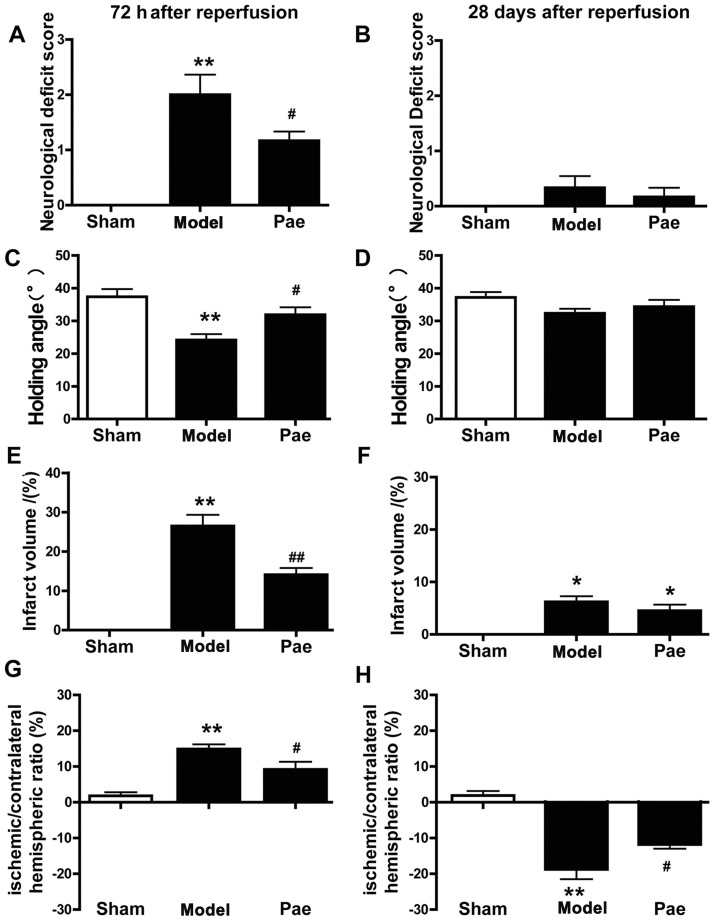
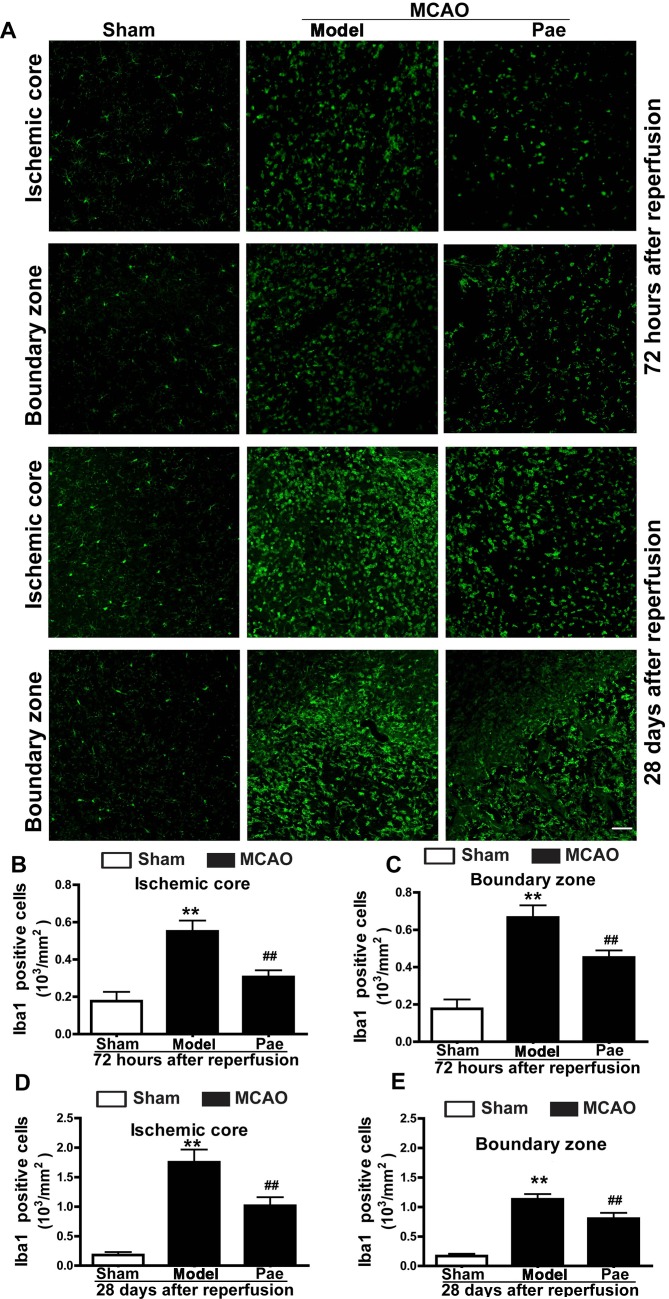
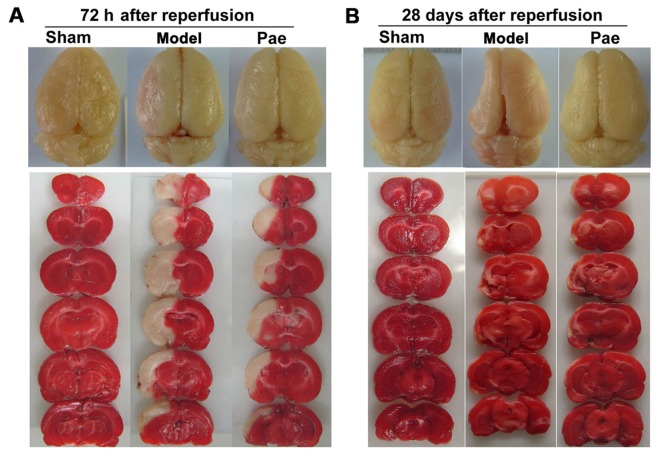
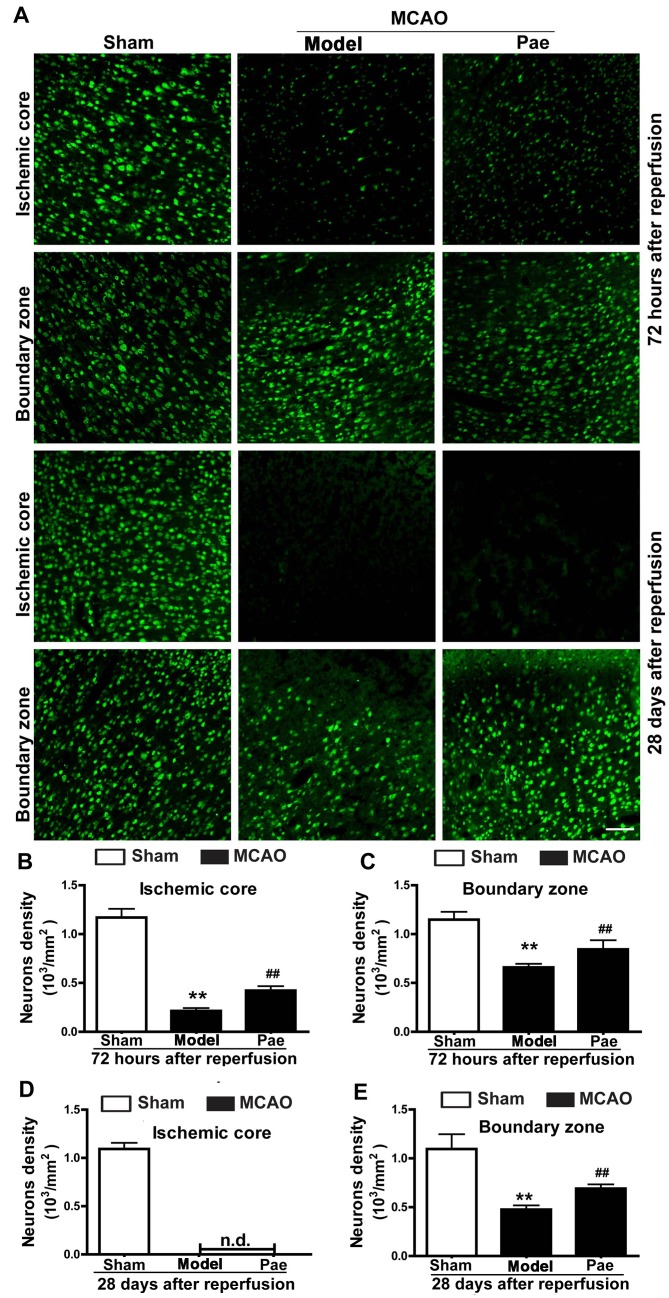
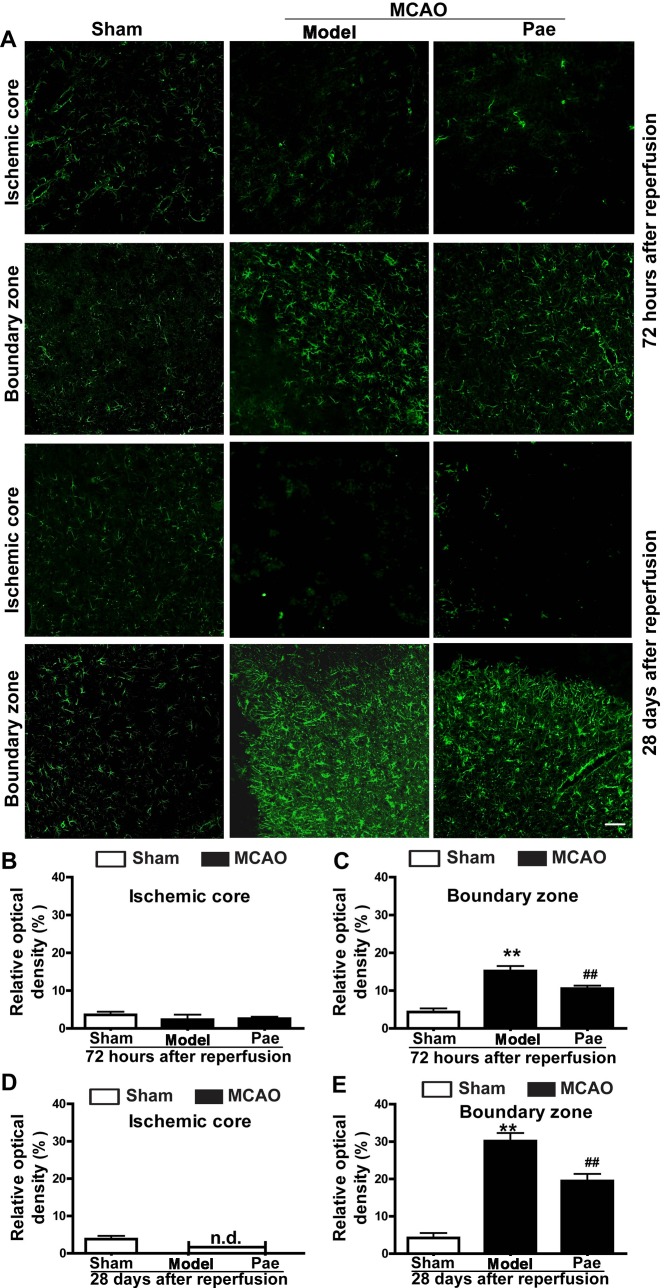
Ischemic stroke is a highly complex pathological process that is divided into acute, subacute and chronic phases. Paeonol is a biologically active natural product with a variety of pharmacological effects, including those on neuronal activity. However, the effects of paeonol on subacute/chronic ischemic stroke have remained to be elucidated. The present study was designed to investigate the effects of paeonol against subacute and chronic cerebral ischemic injury and to explore the possible underlying mechanisms. Male adult Sprague Dawley rats were randomly divided into a sham group (treated with saline), a model group [subjected to middle cerebral artery occlusion (MCAO) and treated with saline] and a paeonol-treated group (MCAO + paeonol at 25 mg/kg). Behavioral impairment, infarct volume and ischemic/contralateral hemispheric ratios were assessed at 72 h and at 28 days after MCAO, respectively. Immunofluorescence was employed to determine the neuronal damage and glial responses after MCAO. Compared with the model group, paeonol treatment significantly attenuated behavioral impairment, ischemic infarct volume and moderate cerebral edema in the ischemic brain at 72 h, as well as brain atrophy at 28 days after reperfusion. Furthermore, paeonol treatment ameliorated neuronal damage in the ischemic core and boundary zone regions at 72 h after reperfusion and in the boundary zone at 28 days after reperfusion. In addition, paeonol treatment reduced the proliferation of astrocytes in the boundary zone, and inhibited microglial activation in the ischemic core and boundary zone regions at 72 h and 28 days after reperfusion. These results demonstrated the protective effects of paeonol against subacute/chronic cerebral ischemia, and the mechanism of action may include subacute/chronic microglial activation and astrocyte proliferation.
缺血性中风是一个高度复杂的病理过程,可分为急性、亚急性和慢性阶段。丹皮酚是一种具有多种药理作用的生物活性天然产物,包括对神经元活性的作用。然而,丹皮酚对亚急性/慢性缺血性中风的影响仍有待阐明。本研究旨在探讨丹皮酚对亚急性和慢性脑缺血损伤的影响,并探索其可能的潜在机制。成年雄性Sprague Dawley大鼠被随机分为假手术组(用生理盐水处理)、模型组[接受大脑中动脉闭塞(MCAO)并给予生理盐水处理]和丹皮酚治疗组(MCAO + 25 mg/kg丹皮酚)。分别在MCAO后72小时和28天评估行为障碍、梗死体积以及缺血/对侧半球比率。采用免疫荧光法测定MCAO后的神经元损伤和胶质细胞反应。与模型组相比,丹皮酚治疗在72小时时显著减轻了行为障碍、缺血梗死体积以及缺血脑区的中度脑水肿,在再灌注后28天时减轻了脑萎缩。此外,丹皮酚治疗改善了再灌注后72小时缺血核心区和边界区以及再灌注后28天边界区的神经元损伤。此外,丹皮酚治疗减少了边界区星形胶质细胞的增殖,并在再灌注后72小时和28天时抑制了缺血核心区和边界区小胶质细胞的激活。这些结果证明了丹皮酚对亚急性/慢性脑缺血具有保护作用,其作用机制可能包括亚急性/慢性小胶质细胞激活和星形胶质细胞增殖。