Peking University-Tsinghua University-National Institute of Biological Sciences Joint Graduate Program, School of Life Sciences, Peking University, Beijing, 100871, China.
National Institute of Biological Sciences, Beijing, 102206, China.
Genome Biol. 2018 Mar 22;19(1):39. doi: 10.1186/s13059-018-1413-5.
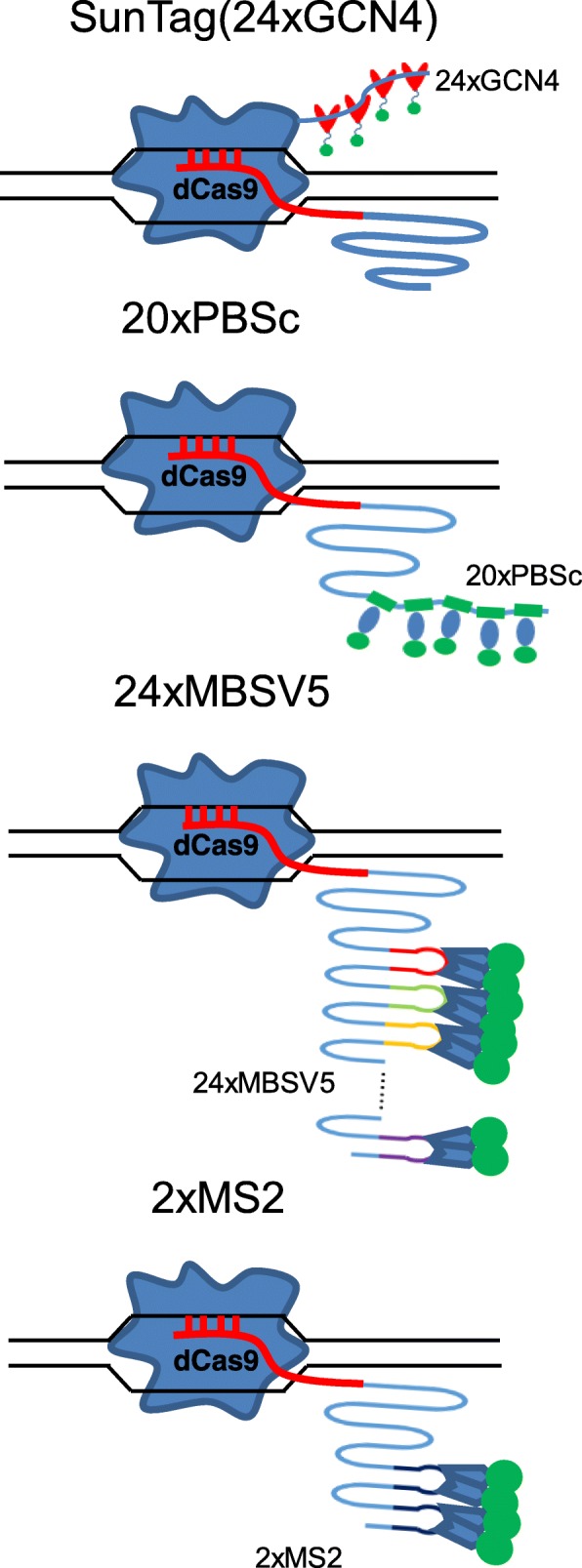
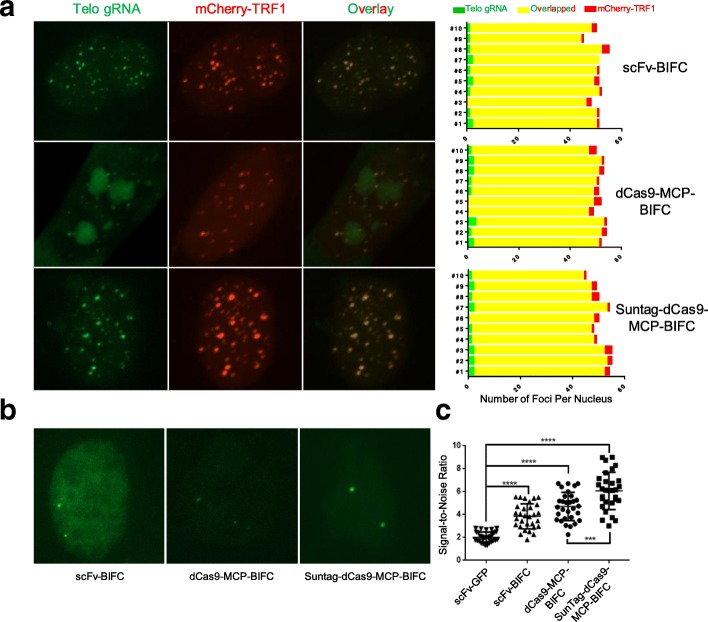
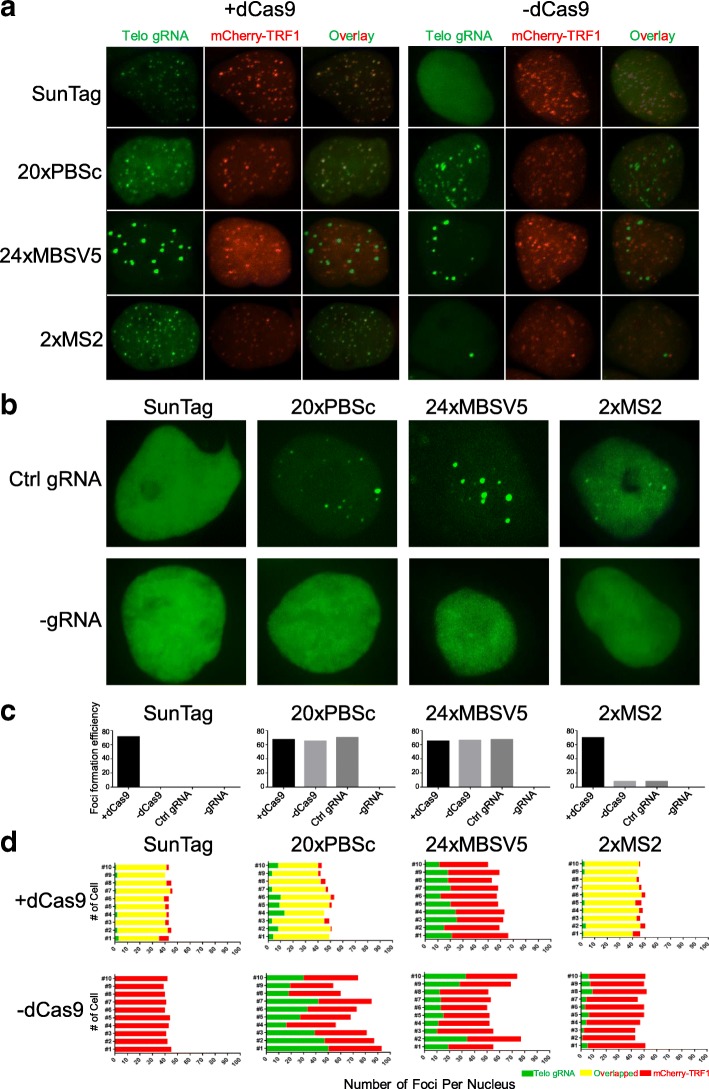
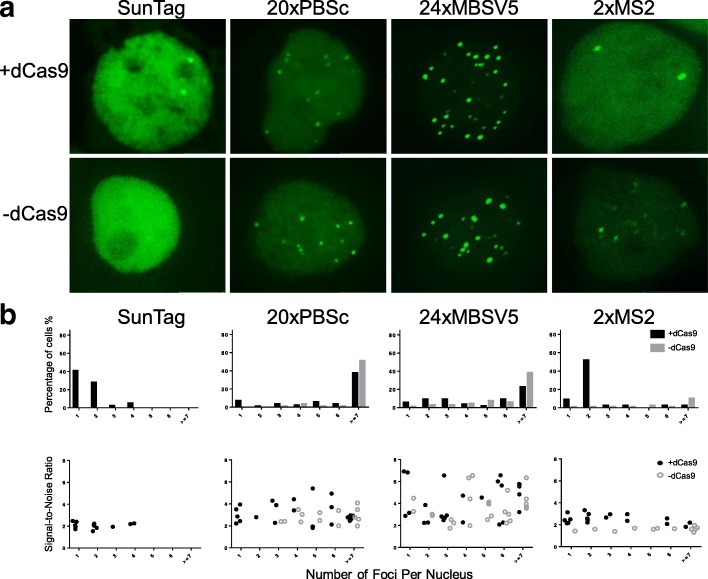
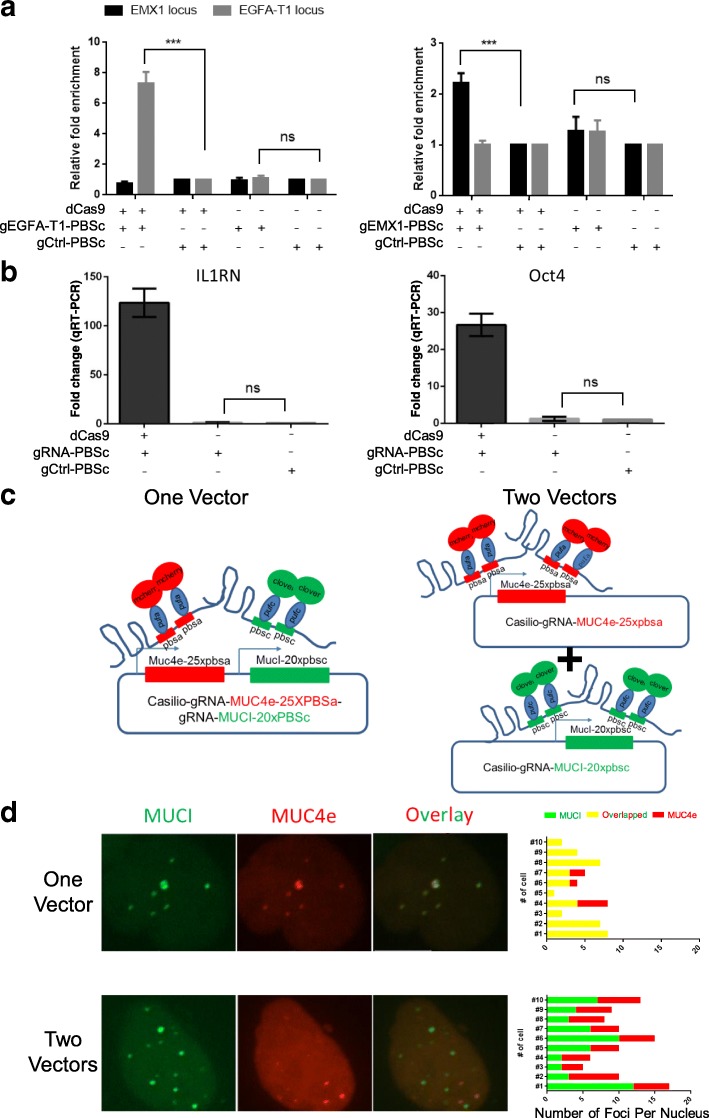
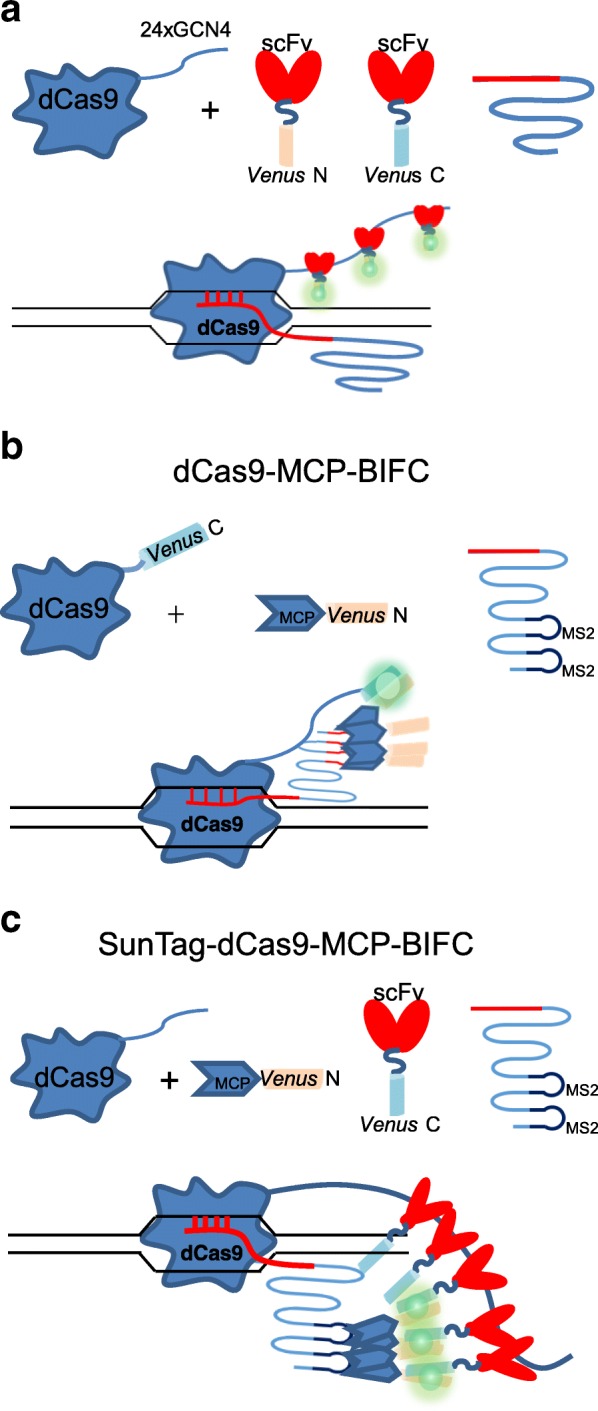
CRISPR/dCas9 binds precisely to defined genomic sequences through targeting of guide RNA (gRNA) sequences. In vivo imaging of genomic loci can be achieved by recruiting fluorescent proteins using either dCas9 or gRNA. We thoroughly validate and compare the effectiveness and specificity of several dCas9/gRNA genome labeling systems. Surprisingly, we discover that in the gRNA-labeling strategies, accumulation of tagged gRNA transcripts leads to non-specific labeling foci. Furthermore, we develop novel bimolecular fluorescence complementation (BIFC) methods that combine the advantages of both dCas9-labeling and gRNA-labeling strategies. The BIFC-dCas9/gRNA methods demonstrate high signal-to-noise ratios and have no non-specific foci.
CRISPR/dCas9 通过靶向向导 RNA(gRNA)序列精确结合到定义的基因组序列。通过使用 dCas9 或 gRNA 招募荧光蛋白,可以实现基因组位点的体内成像。我们彻底验证和比较了几种 dCas9/gRNA 基因组标记系统的有效性和特异性。令人惊讶的是,我们发现,在 gRNA 标记策略中,标记 gRNA 转录本的积累导致非特异性标记焦点。此外,我们开发了新的双分子荧光互补(BIFC)方法,结合了 dCas9 标记和 gRNA 标记策略的优点。BIFC-dCas9/gRNA 方法表现出高信噪比,并且没有非特异性焦点。