
巴西东南部马科动物间传播的血清学证据
Serological Evidence of Circulation Among Equids, Southeast Brazil.
作者信息
Borges Iara A, Reynolds Mary G, McCollum Andrea M, Figueiredo Poliana O, Ambrosio Lara L D, Vieira Flavia N, Costa Galileu B, Matos Ana C D, de Andrade Almeida Valeria M, Ferreira Paulo C P, Lobato Zélia I P, Dos Reis Jenner K P, Kroon Erna G, Trindade Giliane S
机构信息
Departamento de Microbiologia, Instituto de Ciências Biológicas, Universidade Federal de Minas Gerais, Belo Horizonte, Brazil.
Centers for Disease Control and Prevention (CDC), Atlanta, GA, United States.
出版信息
Front Microbiol. 2018 Mar 8;9:402. doi: 10.3389/fmicb.2018.00402. eCollection 2018.
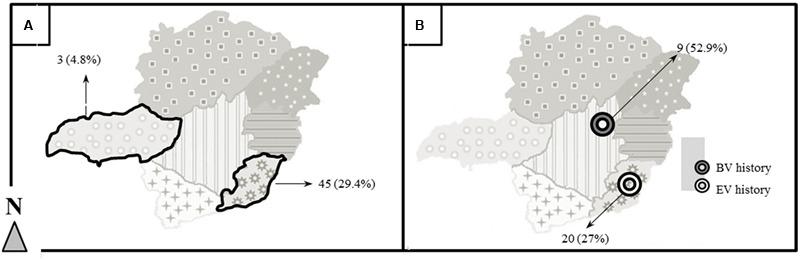
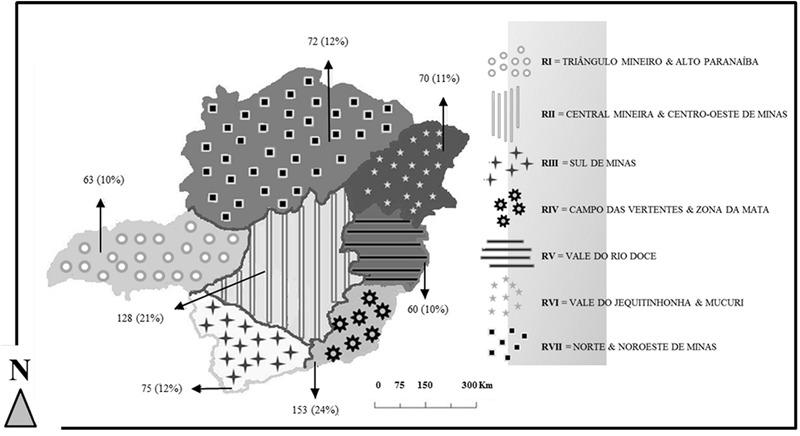
Since 1999 (VACV) outbreaks involving bovines and humans have been reported in Brazil; this zoonosis is known as Bovine Vaccinia (BV) and is mainly an occupational disease of milkers. It was only in 2008 (and then again in 2011 and 2014) however, that VACV was found causing natural infections in Brazilian equids. These reports involved only equids, no infected humans or bovines were identified, and the sources of infections remain unknown up to date. The peculiarities of Equine Vaccinia outbreaks (e.g., absence of human infection), the frequently shared environments, and fomites by equids and bovines in Brazilian farms and the remaining gaps in BV epidemiology incited a question over OPV serological status of equids in Brazil. For this report, sera from 621 equids - representing different species, ages, sexes and locations of origin within Minas Gerais State, southeast Brazil - were examined for the presence of anti- (OPV) antibodies. Only 74 of these were sampled during an Equine Vaccinia outbreak, meaning some of these specific animals presented typical lesions of OPV infections. The majority of sera, however, were sampled from animals without typical signs of OPV infection and during the absence of reported Bovine or Equine Vaccinia outbreaks. Results suggest the circulation of VACV among equids of southeast Brazil even prior to the time of the first VACV outbreak in 2008. There is a correlation of OPVs outbreaks among bovines and equids although many gaps remain to our understanding of its nature. The data obtained may even be carefully associated to recent discussion over OPVs history. Moreover, data is available to improve the knowledge and instigate new researches regarding OPVs circulation in Brazil and worldwide.
自1999年以来,巴西已报告了涉及牛和人的牛痘病毒(VACV)疫情;这种人畜共患病被称为牛痘(BV),主要是挤奶工的职业病。然而,直到2008年(随后在2011年和2014年再次出现),才发现VACV在巴西马科动物中引起自然感染。这些报告仅涉及马科动物,未发现受感染的人类或牛,感染源至今仍不明。马痘疫情的特殊性(如无人类感染)、巴西农场中马科动物和牛频繁共享的环境及污染物,以及BV流行病学中存在的其他空白,引发了对巴西马科动物牛痘疫苗(OPV)血清学状态的质疑。在本报告中,检测了来自巴西东南部米纳斯吉拉斯州不同物种、年龄、性别和产地的621匹马科动物血清中抗(OPV)抗体的存在情况。其中只有74份血清是在马痘疫情期间采集的,这意味着其中一些特定动物出现了OPV感染的典型病变。然而,大多数血清是在没有OPV感染典型症状的动物身上采集的,且当时未报告牛痘或马痘疫情。结果表明,早在2008年首次出现VACV疫情之前,VACV就在巴西东南部的马科动物中传播。牛和马科动物的OPV疫情之间存在相关性,尽管我们对其性质的理解仍存在许多空白。所获得的数据甚至可以与最近关于OPV历史的讨论仔细关联起来。此外,现有数据可用于增进相关知识,并推动有关巴西及全球OPV传播的新研究。
 Zotero 插件