Kristensen Steffan K, Eikeland Espen Z, Taarning Esben, Lindhardt Anders T, Skrydstrup Troels
Carbon Dioxide Activation Center (CADIAC) , The Interdisciplinary Center (iNANO) , Department of Chemistry , Aarhus University , Gustav Wieds Vej 14 , 8000 Aarhus , Denmark . Email:
Center for Materials Crystallography , The Interdisciplinary Center (iNANO) , Department of Chemistry , Aarhus University , Langelandsgade 140 , 8000 Aarhus , Denmark.
Chem Sci. 2017 Dec 1;8(12):8094-8105. doi: 10.1039/c7sc03912c. Epub 2017 Oct 6.
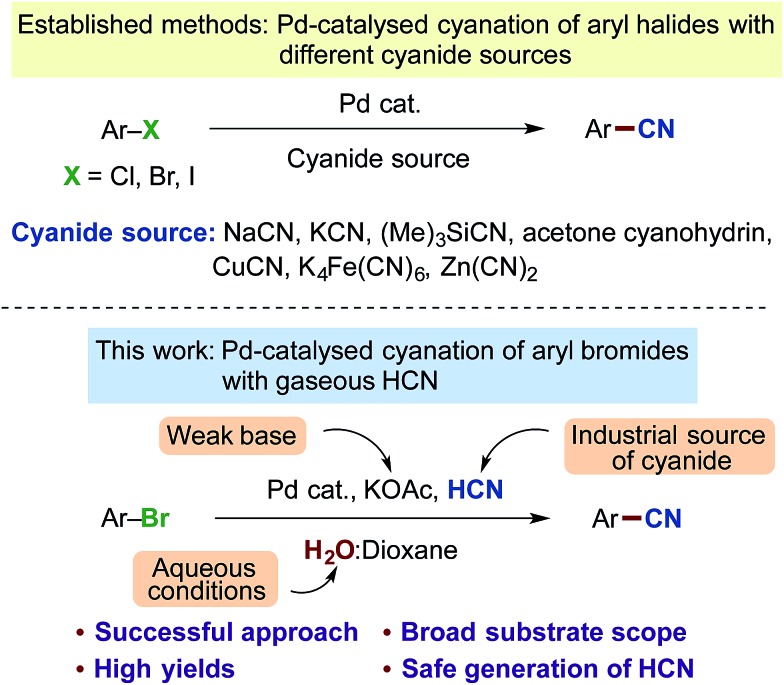
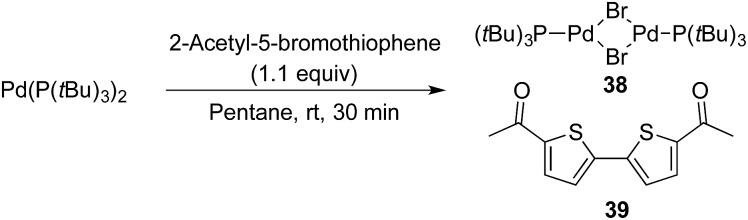
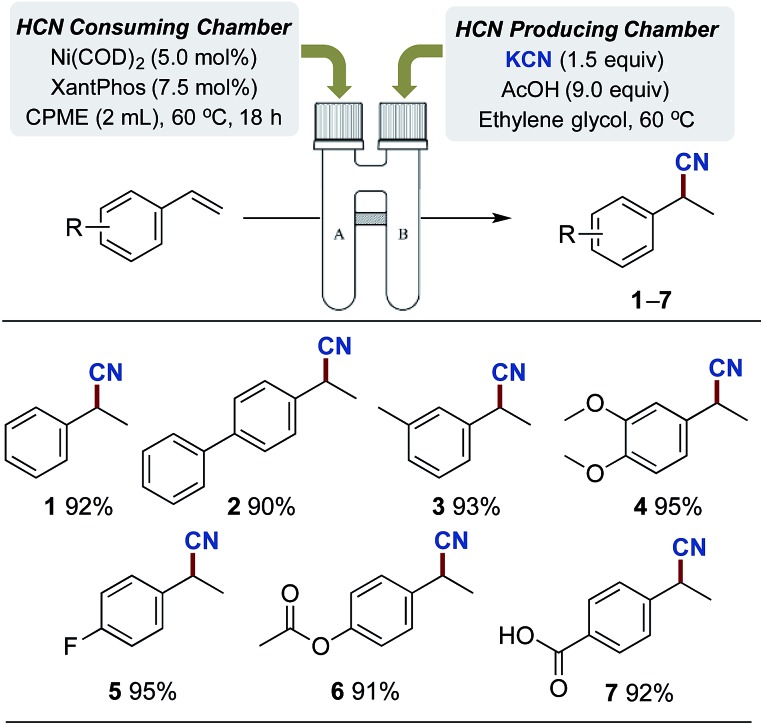
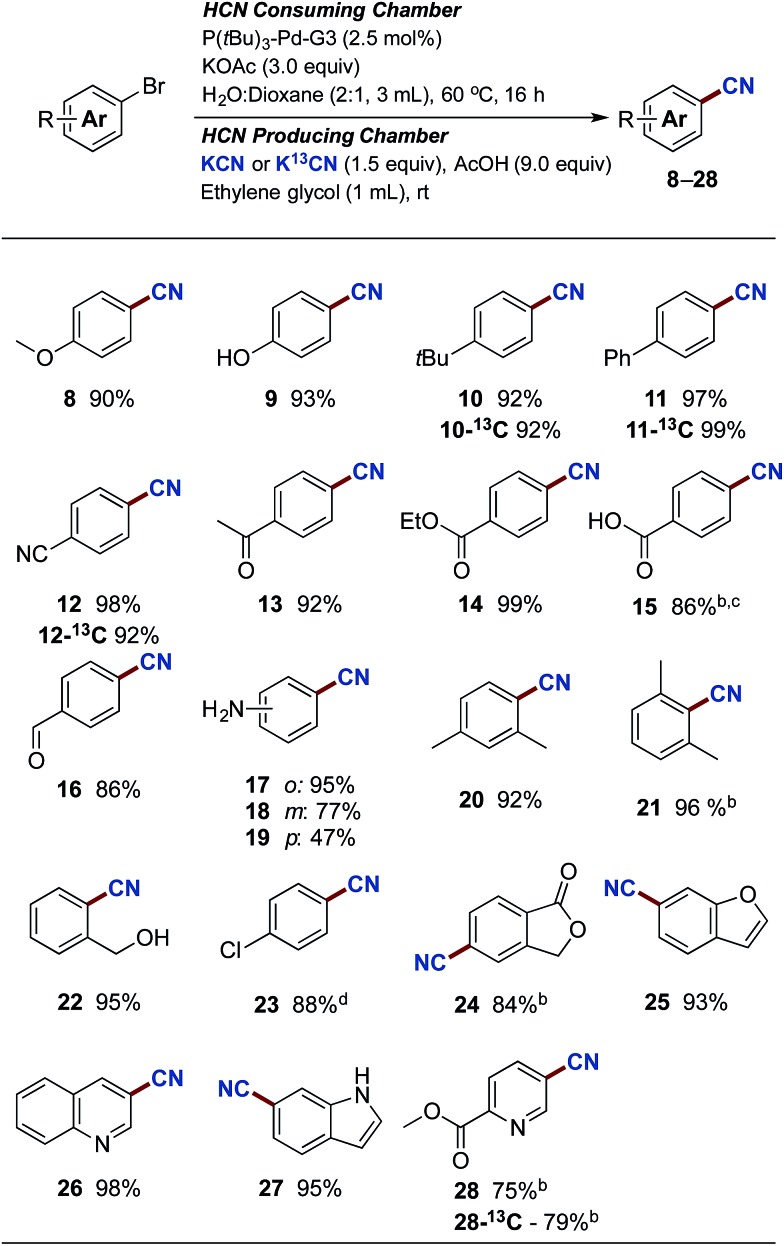
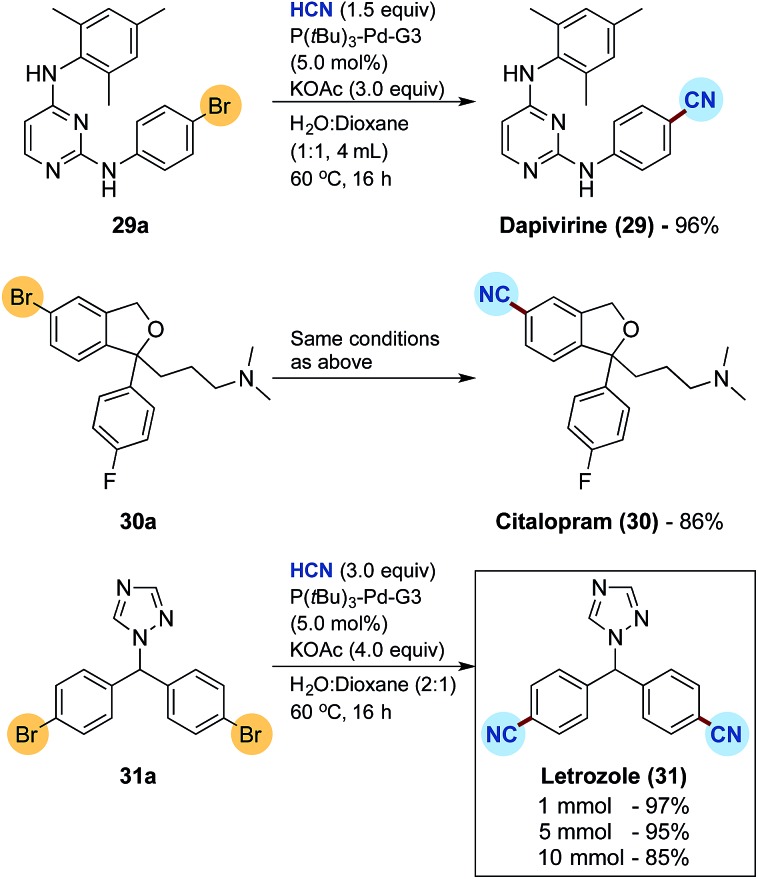
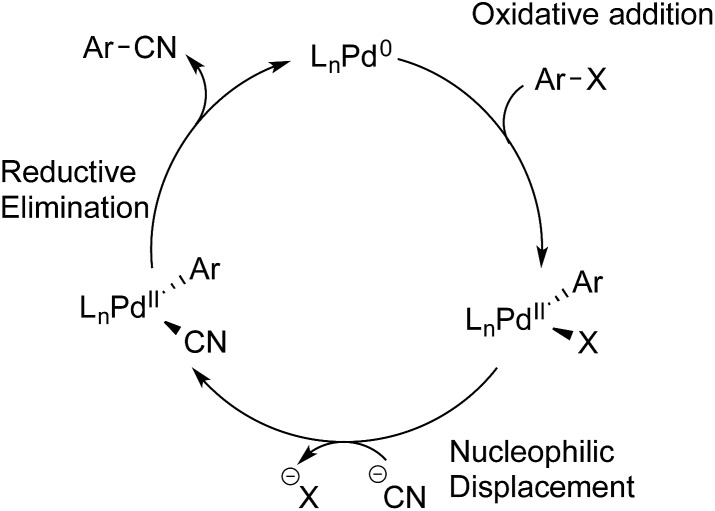
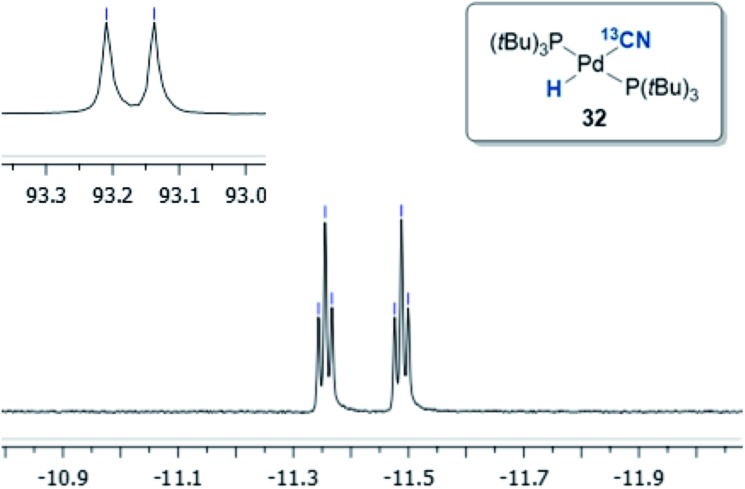
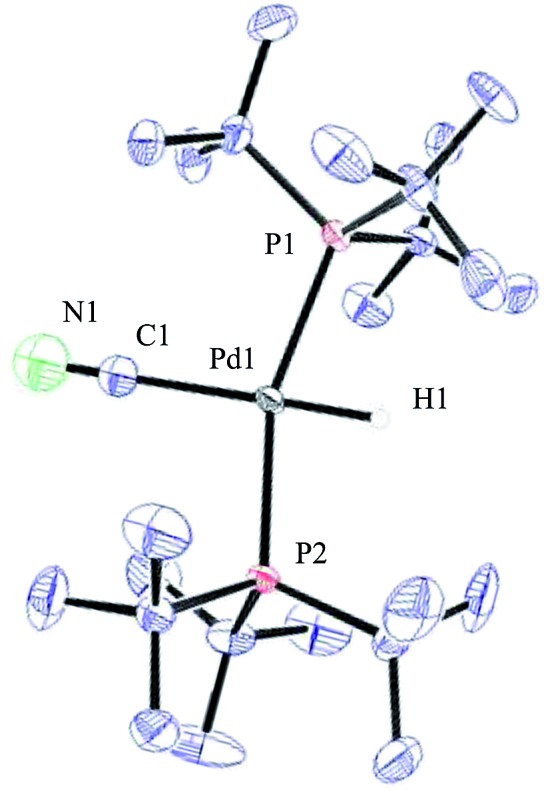
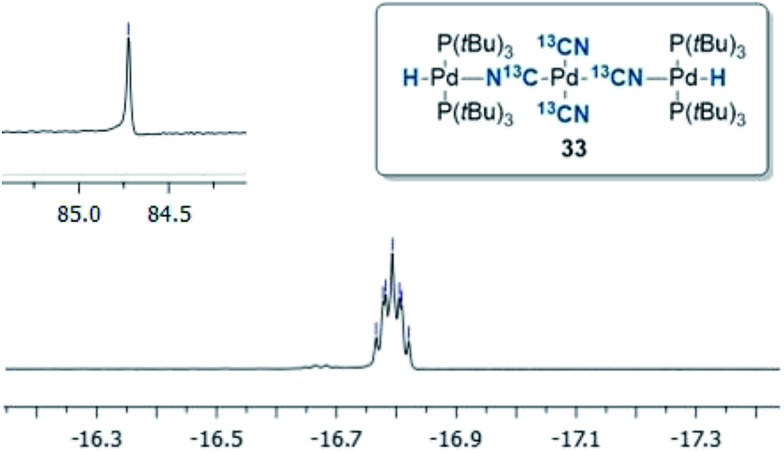
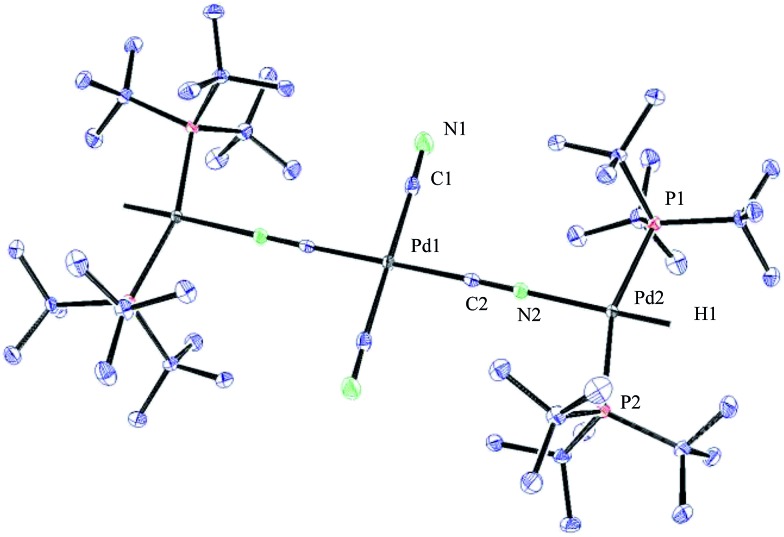
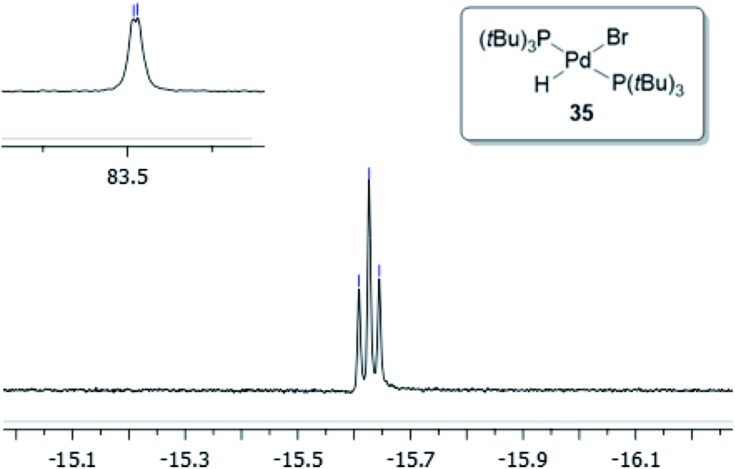
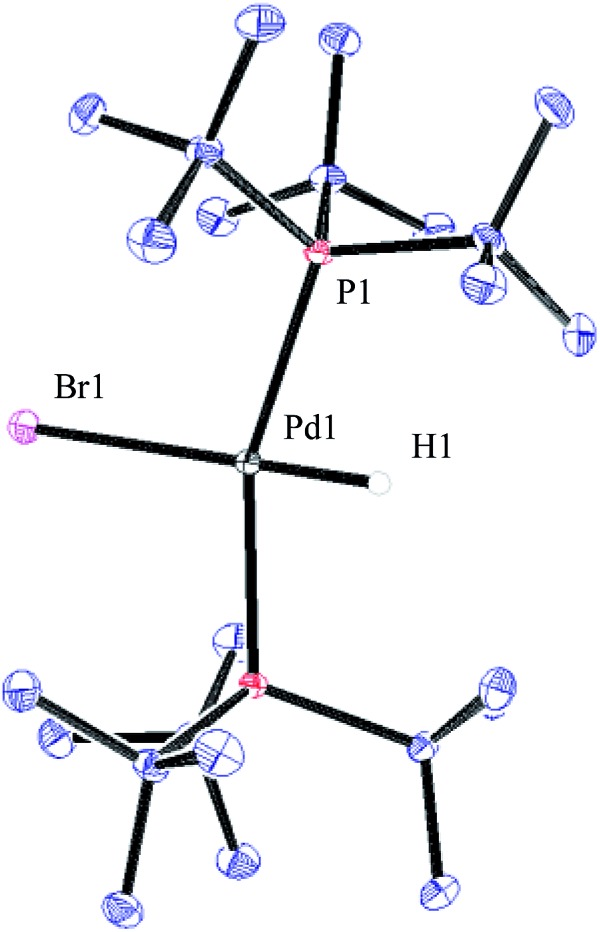
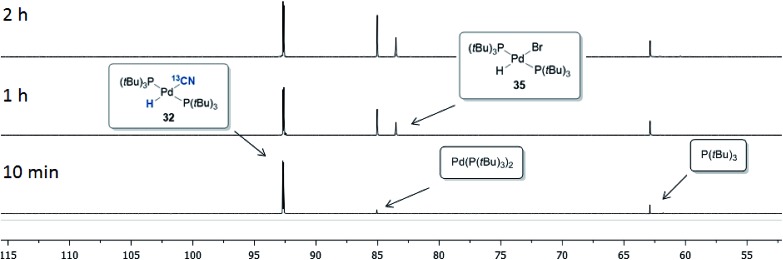
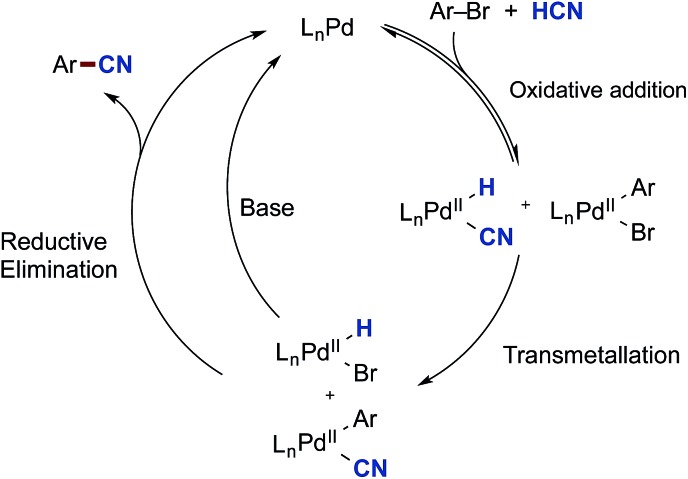
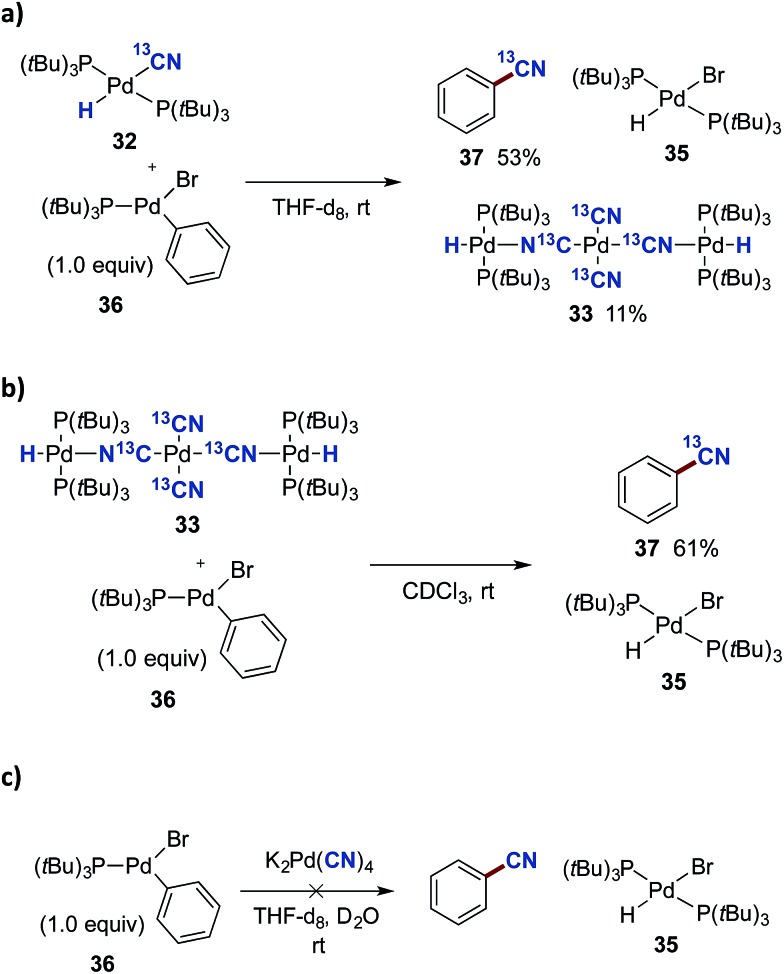
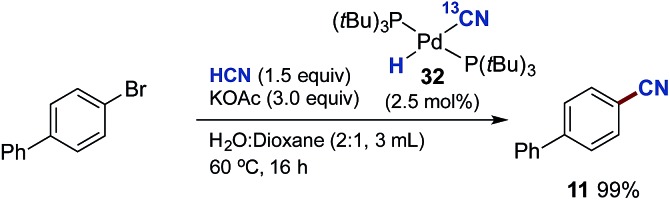
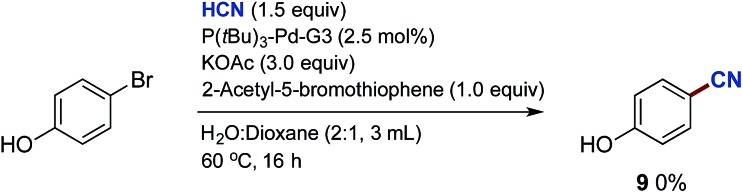
A protocol for the Pd-catalysed cyanation of aryl bromides using near stoichiometric and gaseous hydrogen cyanide is reported for the first time. A two-chamber reactor was adopted for the safe liberation of generated HCN in a closed environment, which proved highly efficient in the Ni-catalysed hydrocyanation as the test reaction. Subsequently, this setup was exploited for converting a range of aryl and heteroaryl bromides (28 examples) directly into the corresponding benzonitriles in high yields, without the need for cyanide salts. Cyanation was achieved employing the Pd(0) precatalyst, P(Bu)-Pd-G3 and a weak base, potassium acetate, in a dioxane-water solvent mixture. The methodology was also suitable for the synthesis of C-labelled benzonitriles with generated C-hydrogen cyanide. Stoichiometric studies with the metal complexes were undertaken to delineate the mechanism for this catalytic transformation. Treatment of Pd(P(Bu)) with HCN in THF provided two Pd-hydride complexes, (P(Bu))Pd(H)(CN), and [(P(Bu))Pd(H)]Pd(CN), both of which were isolated and characterised by NMR spectroscopy and X-ray crystal structure analysis. When the same reaction was performed in a THF : water mixture in the presence of KOAc, only (P(Bu))Pd(H)(CN) was formed. Subjection of this cyano hydride metal complex with the oxidative addition complex (P(Bu))Pd(Ph)(Br) in a 1 : 1 ratio in THF led to a transmetallation step with the formation of (P(Bu))Pd(H)(Br) and C-benzonitrile from a reductive elimination step. These experiments suggest the possibility of a catalytic cycle involving initially the formation of two Pd(ii)-species from the oxidative addition of L Pd(0) into HCN and an aryl bromide followed by a transmetallation step to L Pd(Ar)(CN) and L Pd(H)(Br), which both reductively eliminate, the latter in the presence of KOAc, to generate the benzonitrile and L Pd(0).
首次报道了一种使用近化学计量的气态氰化氢进行钯催化芳基溴化物氰化反应的方案。采用双室反应器在封闭环境中安全释放生成的HCN,在以镍催化氢氰化反应作为测试反应时,该反应器证明具有高效性。随后,利用该装置将一系列芳基和杂芳基溴化物(28个实例)直接高产率地转化为相应的苯甲腈,无需使用氰化物盐。在二氧六环 - 水溶剂混合物中,使用Pd(0)预催化剂、P(Bu)-Pd-G3和弱碱醋酸钾实现氰化反应。该方法也适用于用生成的C-氰化氢合成C标记的苯甲腈。对金属配合物进行了化学计量学研究以阐明这种催化转化的机理。在四氢呋喃中用HCN处理Pd(P(Bu))得到两种钯氢配合物,(P(Bu))Pd(H)(CN)和[(P(Bu))Pd(H)]Pd(CN),两者均通过核磁共振光谱和X射线晶体结构分析进行了分离和表征。当在醋酸钾存在下于四氢呋喃与水的混合物中进行相同反应时,仅形成(P(Bu))Pd(H)(CN)。在四氢呋喃中以1∶1的比例将这种氰基氢金属配合物与氧化加成配合物(P(Bu))Pd(Ph)(Br)混合,导致发生金属转移步骤,形成(P(Bu))Pd(H)(Br),并通过还原消除步骤生成C-苯甲腈。这些实验表明存在一种催化循环的可能性,该循环最初涉及通过L Pd(0)与HCN和芳基溴的氧化加成形成两种Pd(ii)物种,随后进行金属转移步骤生成L Pd(Ar)(CN)和L Pd(H)(Br),两者均进行还原消除,后者在醋酸钾存在下生成苯甲腈和L Pd(0)。