Centre for Experimental Medicine, Queen's University Belfast, Belfast, United Kingdom.
Cardiovascular Division, King's College London, London, United Kingdom.
Stem Cells. 2018 Jul;36(7):1033-1044. doi: 10.1002/stem.2820. Epub 2018 Apr 10.
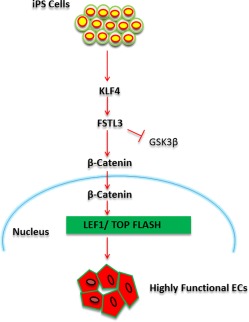
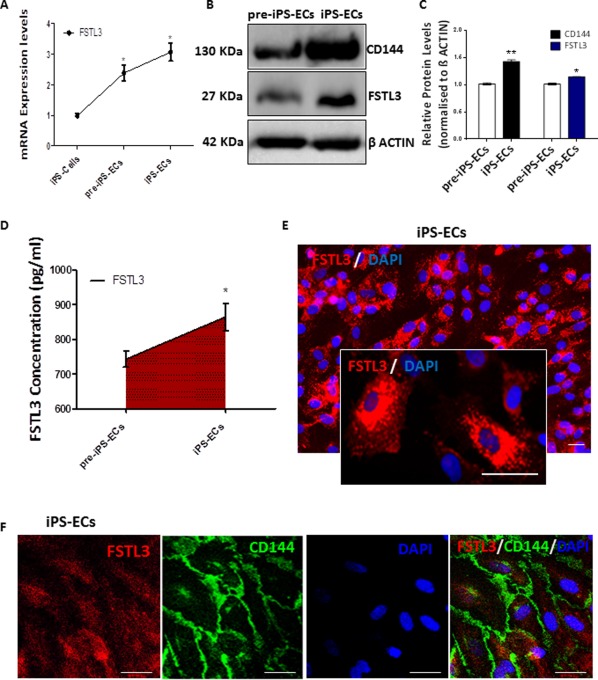
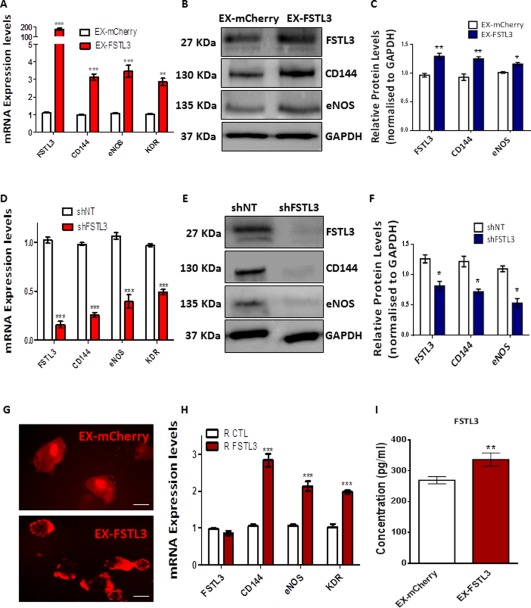
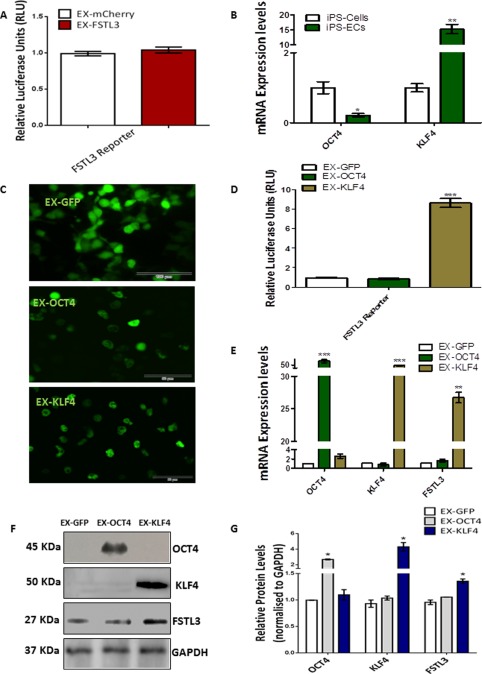
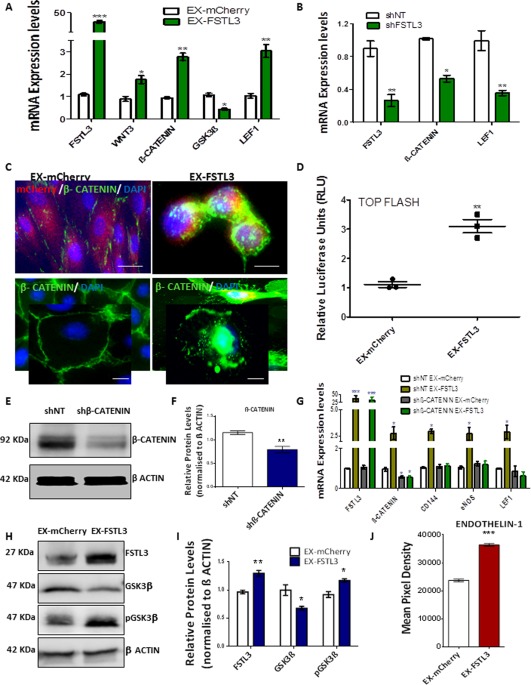
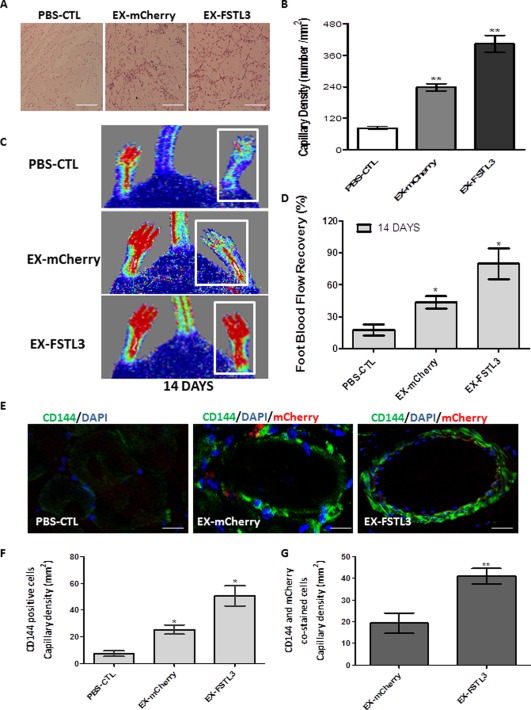
The fight against vascular disease requires functional endothelial cells (ECs) which could be provided by differentiation of induced Pluripotent Stem Cells (iPS Cells) in great numbers for use in the clinic. However, the great promise of the generated ECs (iPS-ECs) in therapy is often restricted due to the challenge in iPS-ECs preserving their phenotype and function. We identified that Follistatin-Like 3 (FSTL3) is highly expressed in iPS-ECs, and, as such, we sought to clarify its possible role in retaining and improving iPS-ECs function and phenotype, which are crucial in increasing the cells' potential as a therapeutic tool. We overexpressed FSTL3 in iPS-ECs and found that FSTL3 could induce and enhance endothelial features by facilitating β-catenin nuclear translocation through inhibition of glycogen synthase kinase-3β activity and induction of Endothelin-1. The angiogenic potential of FSTL3 was also confirmed both in vitro and in vivo. When iPS-ECs overexpressing FSTL3 were subcutaneously injected in in vivo angiogenic model or intramuscularly injected in a hind limb ischemia NOD.CB17-Prkdcscid/NcrCrl SCID mice model, FSTL3 significantly induced angiogenesis and blood flow recovery, respectively. This study, for the first time, demonstrates that FSTL3 can greatly enhance the function and maturity of iPS-ECs. It advances our understanding of iPS-ECs and identifies a novel pathway that can be applied in cell therapy. These findings could therefore help improve efficiency and generation of therapeutically relevant numbers of ECs for use in patient-specific cell-based therapies. In addition, it can be particularly useful toward the treatment of vascular diseases instigated by EC dysfunction. Stem Cells 2018;36:1033-1044.
对抗血管疾病需要功能正常的内皮细胞(ECs),而诱导多能干细胞(iPS 细胞)可以大量分化提供这些细胞,用于临床治疗。然而,由于在保持 iPS-ECs 表型和功能方面存在挑战,生成的 ECs(iPS-ECs)在治疗中的巨大潜力往往受到限制。我们发现,卵泡抑素样 3(Follistatin-Like 3,FSTL3)在 iPS-ECs 中高表达,因此,我们试图阐明其在维持和改善 iPS-ECs 功能和表型方面的可能作用,这对于提高细胞作为治疗工具的潜力至关重要。我们在 iPS-ECs 中过表达 FSTL3,发现 FSTL3 可以通过抑制糖原合酶激酶-3β(glycogen synthase kinase-3β,GSK-3β)的活性和诱导内皮素-1(Endothelin-1,ET-1),诱导和增强内皮特征。FSTL3 的血管生成潜力也在体外和体内得到了证实。当在体内血管生成模型中皮下注射过表达 FSTL3 的 iPS-ECs 或在 NOD.CB17-Prkdcscid/NcrCrl SCID 小鼠后肢缺血模型中肌肉内注射过表达 FSTL3 的 iPS-ECs 时,FSTL3 分别显著诱导了血管生成和血流恢复。这项研究首次表明,FSTL3 可以极大地增强 iPS-ECs 的功能和成熟度。它加深了我们对 iPS-ECs 的认识,并确定了一种可应用于细胞治疗的新途径。这些发现有助于提高效率,并生成用于患者特异性基于细胞的治疗的治疗相关数量的 ECs。此外,它对于治疗由 EC 功能障碍引发的血管疾病可能特别有用。干细胞 2018;36:1033-1044.