University of Maryland School of Nursing, Baltimore, MD.
Department of Pediatrics, University of Maryland School of Medicine, Baltimore, MD.
J Dev Behav Pediatr. 2018 Apr;39(3):238-245. doi: 10.1097/DBP.0000000000000535.
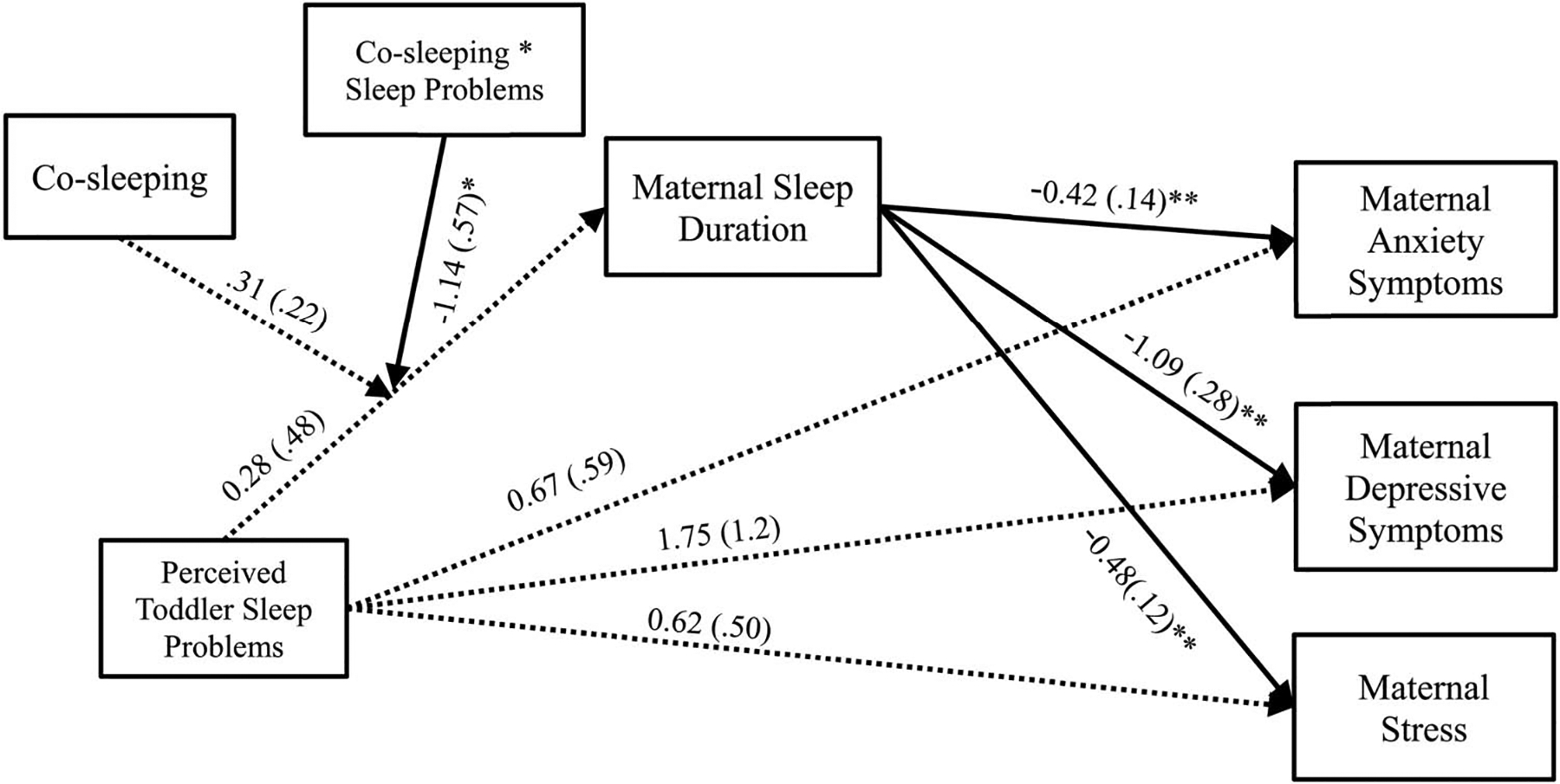
Childhood sleep problems are associated with insufficient parental sleep and adverse maternal mental health symptoms, which may be exacerbated when mothers/toddlers co-sleep (i.e., bed/room sharing). This study examines maternal sleep duration as a mechanism linking perceived toddler sleep problems with maternal mental health and examines whether these associations vary by co-sleeping, in addition to exploring alternative models.
Low-income mothers of toddlers (n = 280) (age 12-32 months) recruited from Women, Infants, and Children and pediatric clinics provided demographic information and completed questionnaires on their toddler's sleep and their own sleep duration and mental health symptoms (depressive symptoms, anxiety, and stress). Indirect and conditional indirect models were conducted to examine the relation between perceived toddler sleep problems and maternal mental health.
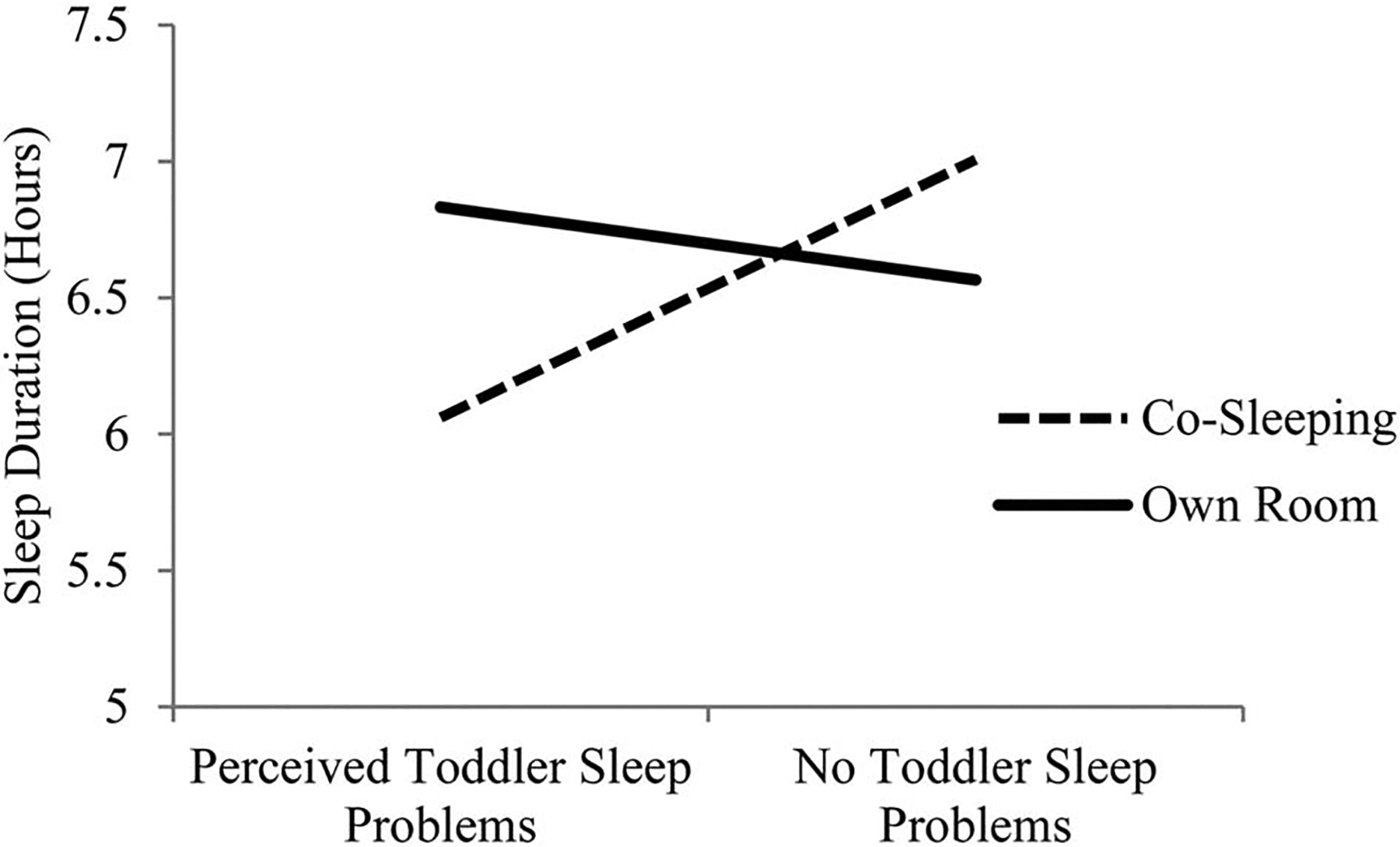
Perceived toddler sleep problems were associated with an average decrease of 51 minutes in maternal sleep when co-sleeping (mean = 6.1 h). Maternal sleep duration mediated the relation between perceived toddler sleep problems and maternal symptoms of depression, anxiety, and stress for co-sleeping mothers. Maternal sleep duration did not mediate relations between maternal mental health symptoms and perceived toddler sleep problems.
This study provides a conceptual model by which parent and child sleep is related to parental mental health. Practitioners might consider alternatives to co-sleeping when discussing sleep arrangements with parents. Future studies should replicate results longitudinally and examine whether reducing co-sleeping improves maternal sleep duration and reduces perceptions of toddler sleep problems.
儿童睡眠问题与父母睡眠不足和母亲心理健康症状有关,当母亲/幼儿同睡(即床/房间共享)时,这些问题可能会加剧。本研究考察了母亲的睡眠持续时间作为一种机制,将感知到的幼儿睡眠问题与母亲的心理健康联系起来,并探讨了这些关联是否因同睡而不同,此外还探索了替代模型。
从妇女、婴儿和儿童以及儿科诊所招募了 280 名低龄幼儿(12-32 个月)的母亲,她们提供了人口统计学信息,并完成了关于幼儿睡眠以及自己的睡眠持续时间和心理健康症状(抑郁症状、焦虑和压力)的问卷。进行了间接和条件间接模型,以检验感知到的幼儿睡眠问题与母亲心理健康之间的关系。
当同睡时,感知到的幼儿睡眠问题与母亲睡眠平均减少 51 分钟(平均 6.1 小时)有关。当母亲同睡时,母亲的睡眠持续时间在感知到的幼儿睡眠问题与抑郁、焦虑和压力症状之间起到了中介作用。母亲的睡眠持续时间并未在母亲心理健康症状与感知到的幼儿睡眠问题之间起到中介作用。
本研究提供了一个概念模型,通过该模型可以将父母和孩子的睡眠与父母的心理健康联系起来。从业者在与父母讨论睡眠安排时,可以考虑替代同睡的方法。未来的研究应该在纵向进行复制,并检验减少同睡是否可以改善母亲的睡眠持续时间并减少对幼儿睡眠问题的感知。