UPMC Hillman Cancer Center, Pittsburgh, PA 15213.
Department of Pharmacology and Chemical Biology, University of Pittsburgh School of Medicine, Pittsburgh, PA 15213.
Proc Natl Acad Sci U S A. 2018 Apr 10;115(15):3930-3935. doi: 10.1073/pnas.1717190115. Epub 2018 Mar 26.
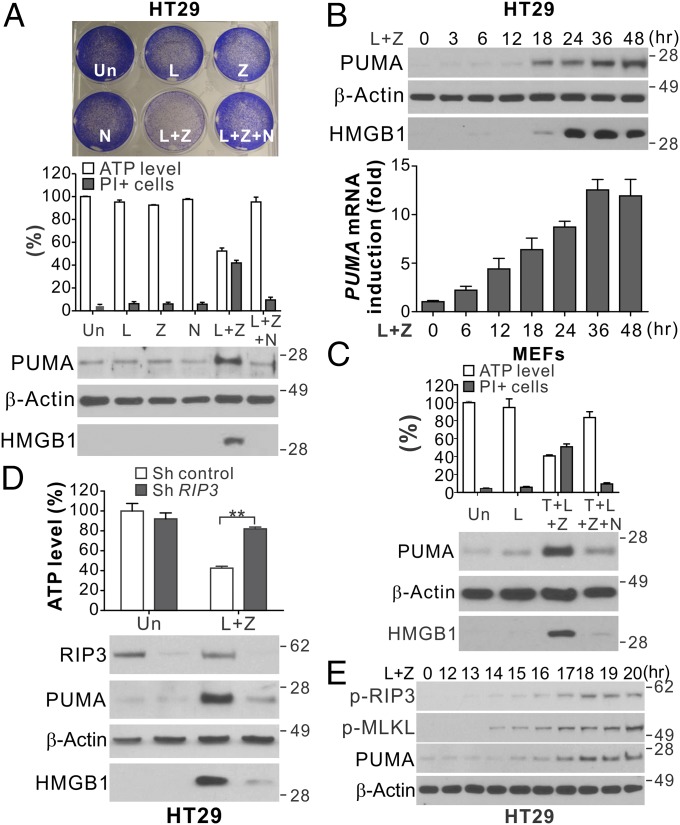
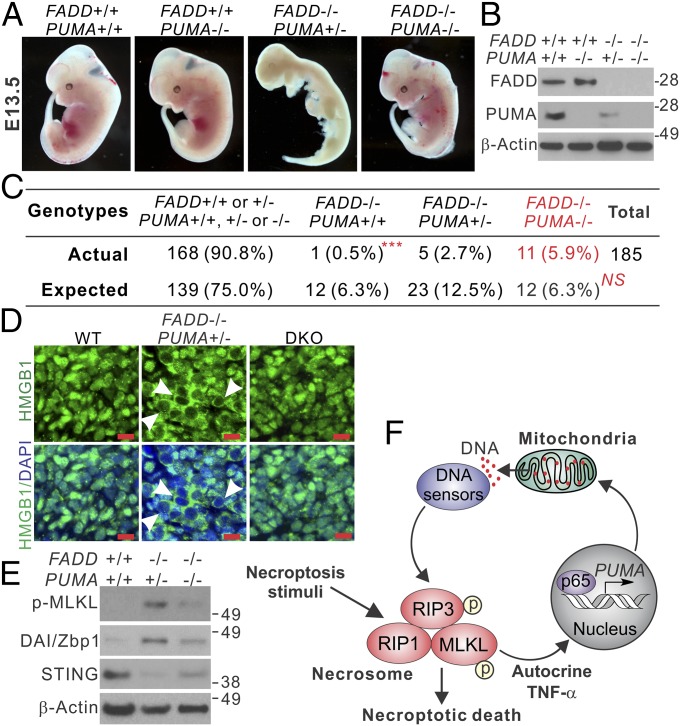
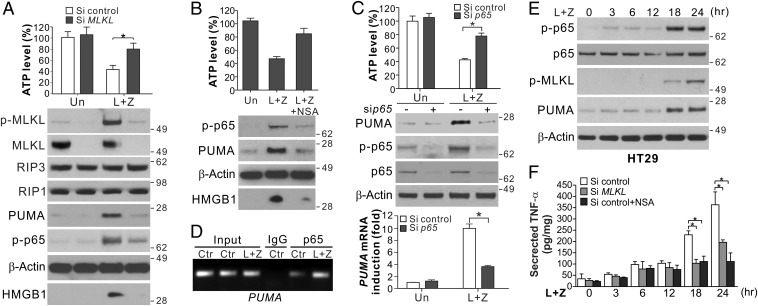
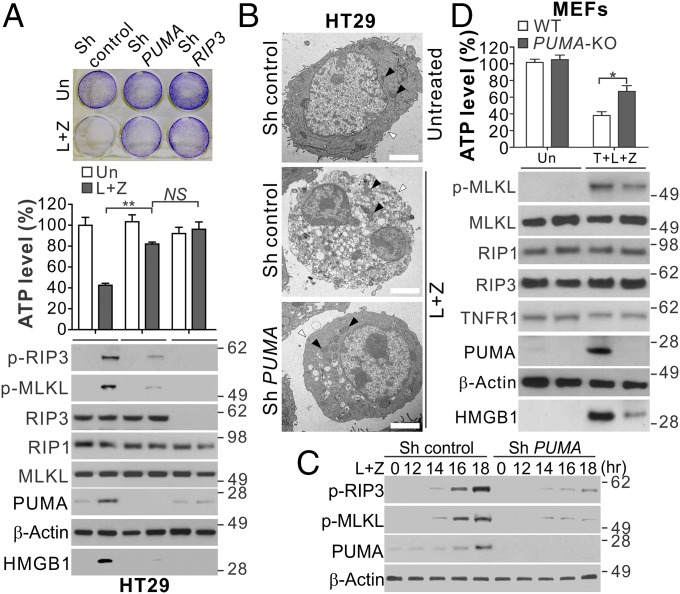
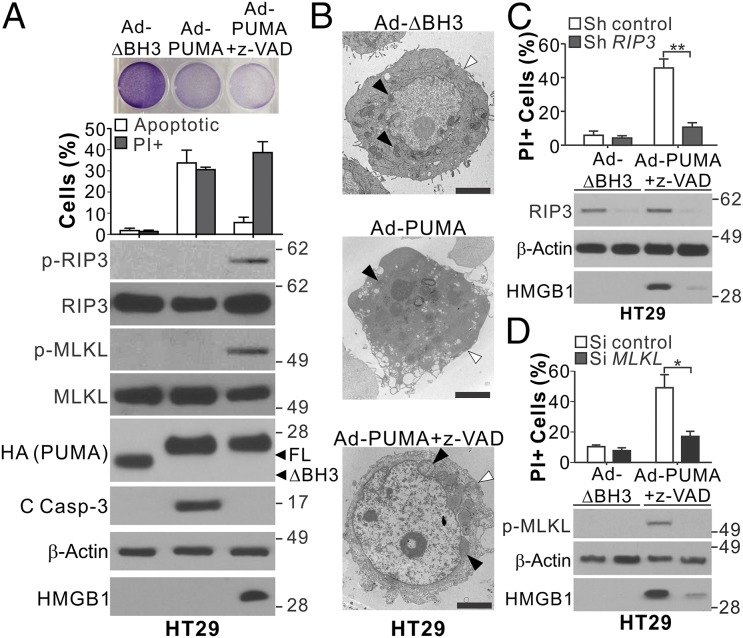
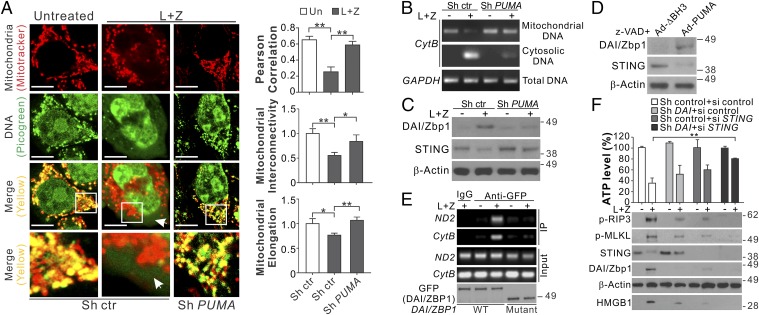
Necroptosis, a form of regulated necrotic cell death, is governed by RIP1/RIP3-mediated activation of MLKL. However, the signaling process leading to necroptotic death remains to be elucidated. In this study, we found that , a proapoptotic BH3-only Bcl-2 family member, is transcriptionally activated in an RIP3/MLKL-dependent manner following induction of necroptosis. The induction of PUMA, which is mediated by autocrine TNF-α and enhanced NF-κB activity, contributes to necroptotic death in RIP3-expressing cells with caspases inhibited. On induction, PUMA promotes the cytosolic release of mitochondrial DNA and activation of the DNA sensors DAI/Zbp1 and STING, leading to enhanced RIP3 and MLKL phosphorylation in a positive feedback loop. Furthermore, deletion of partially rescues necroptosis-mediated developmental defects in -deficient embryos. Collectively, our results reveal a signal amplification mechanism mediated by PUMA and cytosolic DNA sensors that is involved in TNF-driven necroptotic death in vitro and in vivo.
细胞程序性坏死是一种受调控的细胞坏死形式,由 RIP1/RIP3 介导的 MLKL 激活所调控。然而,导致细胞程序性坏死的信号转导过程仍有待阐明。在这项研究中,我们发现,作为一种促凋亡的 BH3 仅 Bcl-2 家族成员,在诱导细胞程序性坏死后,以 RIP3/MLKL 依赖的方式被转录激活。PUMA 的诱导是由自分泌 TNF-α和增强的 NF-κB 活性介导的,对于 caspase 抑制的表达 RIP3 的细胞中的细胞程序性坏死死亡有贡献。在诱导后,PUMA 促进线粒体 DNA 的细胞质释放,并激活 DNA 传感器 DAI/Zbp1 和 STING,导致 RIP3 和 MLKL 的磷酸化在正反馈环中增强。此外,缺失部分挽救了 -缺陷胚胎中由细胞程序性坏死介导的发育缺陷。总的来说,我们的结果揭示了一个由 PUMA 和细胞质 DNA 传感器介导的信号放大机制,该机制参与了 TNF 驱动的体外和体内细胞程序性坏死死亡。