Linda Crnic Institute for Down Syndrome, University of Colorado, Aurora, Colorado, United States of America.
Department of Integrative Physiology, University of Colorado, Boulder, Colorado, United States of America.
PLoS One. 2018 Mar 27;13(3):e0194581. doi: 10.1371/journal.pone.0194581. eCollection 2018.
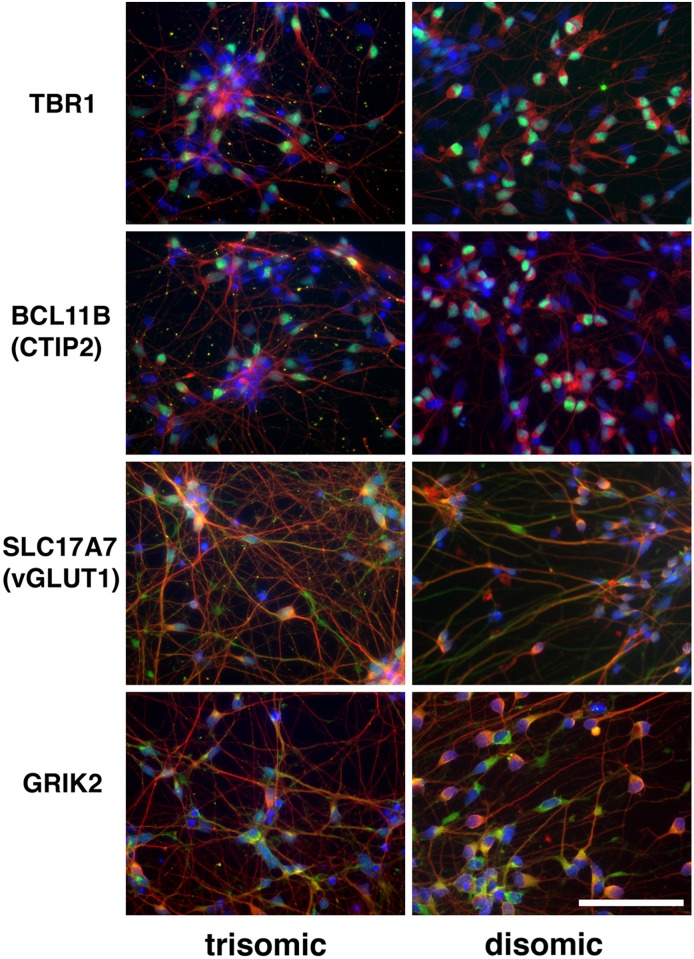
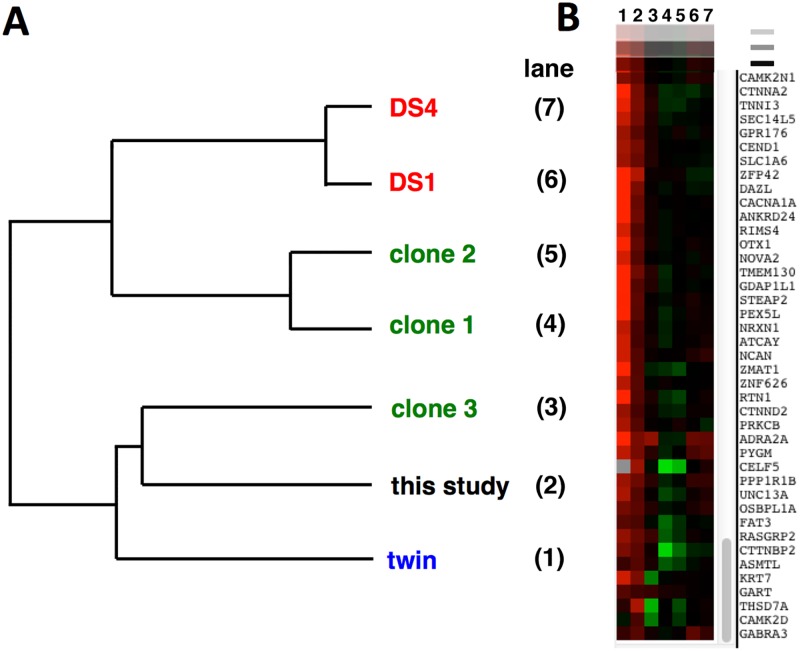
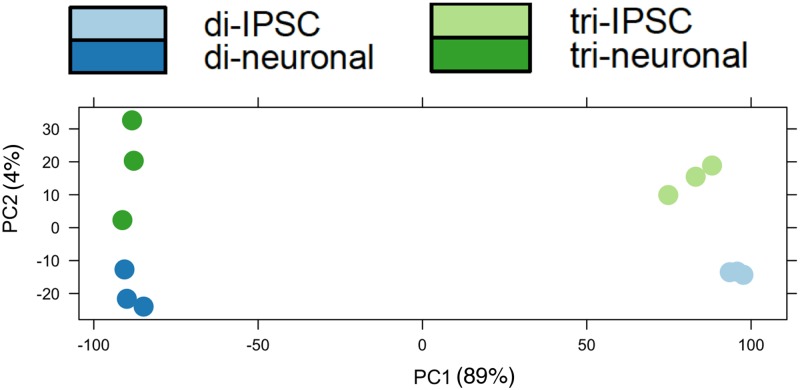
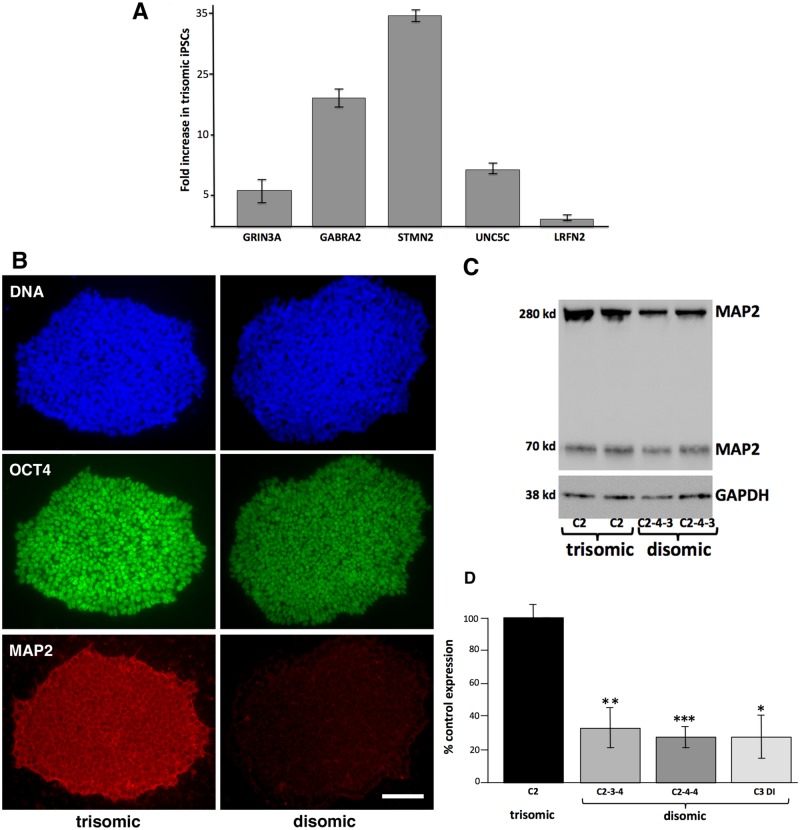
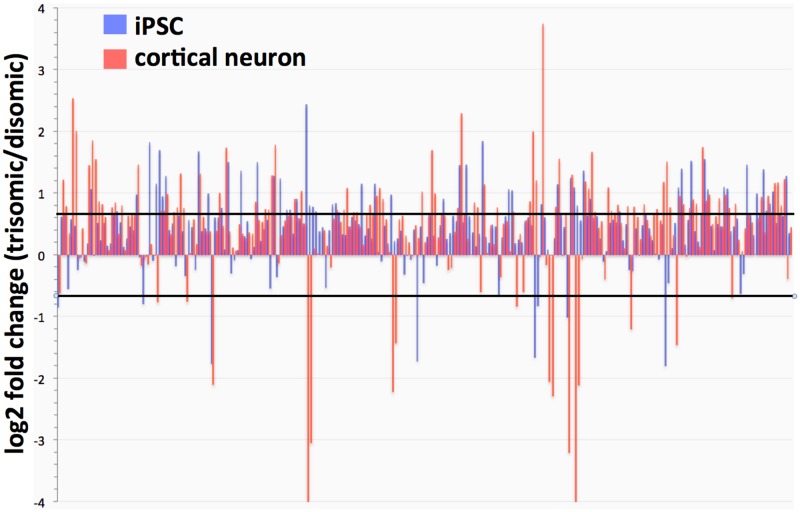
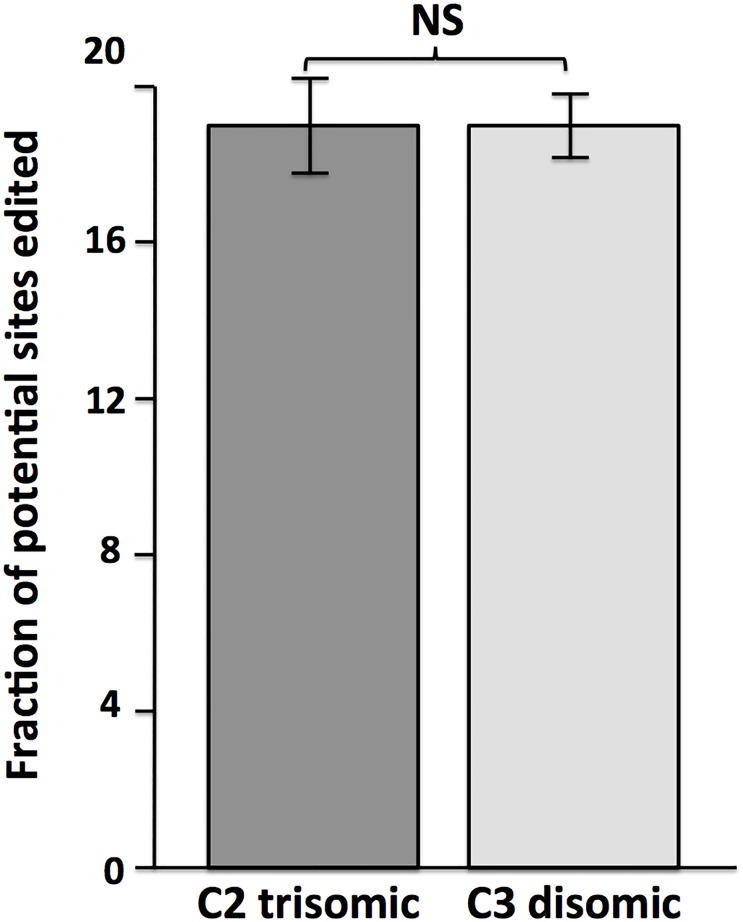
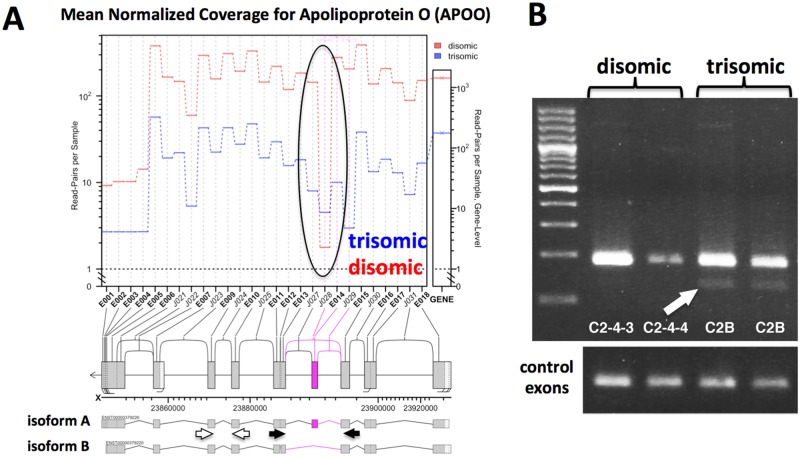
Trisomy of chromosome 21, the genetic cause of Down syndrome, has the potential to alter expression of genes on chromosome 21, as well as other locations throughout the genome. These transcriptome changes are likely to underlie the Down syndrome clinical phenotypes. We have employed RNA-seq to undertake an in-depth analysis of transcriptome changes resulting from trisomy of chromosome 21, using induced pluripotent stem cells (iPSCs) derived from a single individual with Down syndrome. These cells were originally derived by Li et al, who genetically targeted chromosome 21 in trisomic iPSCs, allowing selection of disomic sibling iPSC clones. Analyses were conducted on trisomic/disomic cell pairs maintained as iPSCs or differentiated into cortical neuronal cultures. In addition to characterization of gene expression levels, we have also investigated patterns of RNA adenosine-to-inosine editing, alternative splicing, and repetitive element expression, aspects of the transcriptome that have not been significantly characterized in the context of Down syndrome. We identified significant changes in transcript accumulation associated with chromosome 21 trisomy, as well as changes in alternative splicing and repetitive element transcripts. Unexpectedly, the trisomic iPSCs we characterized expressed higher levels of neuronal transcripts than control disomic iPSCs, and readily differentiated into cortical neurons, in contrast to another reported study. Comparison of our transcriptome data with similar studies of trisomic iPSCs suggests that trisomy of chromosome 21 may not intrinsically limit neuronal differentiation, but instead may interfere with the maintenance of pluripotency.
21 号染色体三体,唐氏综合征的遗传原因,有可能改变 21 号染色体上基因的表达,以及基因组中的其他位置。这些转录组变化可能是唐氏综合征临床表型的基础。我们使用 RNA-seq 技术,对来自单个唐氏综合征个体的诱导多能干细胞(iPSC)中,由于 21 号染色体三体而导致的转录组变化进行了深入分析。这些细胞最初是由 Li 等人通过对三体 iPSC 中的 21 号染色体进行基因靶向,从而选择二倍体兄弟姐妹 iPSC 克隆而获得的。对维持为 iPSC 或分化为皮质神经元培养物的三体/二倍体细胞对进行了分析。除了对基因表达水平进行了表征外,我们还研究了 RNA 腺苷到肌苷编辑、可变剪接和重复元件表达的模式,这些转录组方面在唐氏综合征的背景下尚未得到充分表征。我们确定了与 21 号染色体三体相关的转录物积累的显著变化,以及可变剪接和重复元件转录物的变化。出乎意料的是,我们所表征的三体 iPSC 表达的神经元转录物水平高于对照二倍体 iPSC,并且易于分化为皮质神经元,这与另一项报道的研究形成对比。我们的转录组数据与类似的三体 iPSC 研究进行比较表明,21 号染色体三体本身可能不会限制神经元分化,而是可能干扰多能性的维持。