Chen Feng, Ma Lulu, Ren Jiangang, Luo Xinyu, Liu Bibo, Zhou Xiangyang
School of Resource and Environment, Henan University of Engineering, No. 1, Xianghe Road, Zhengzhou 451191, China.
School of Metallurgy and Environment, Central South University, Lushan South Street 932, Yuelu District, Changsha 410083, China.
Nanomaterials (Basel). 2018 Mar 26;8(4):191. doi: 10.3390/nano8040191.
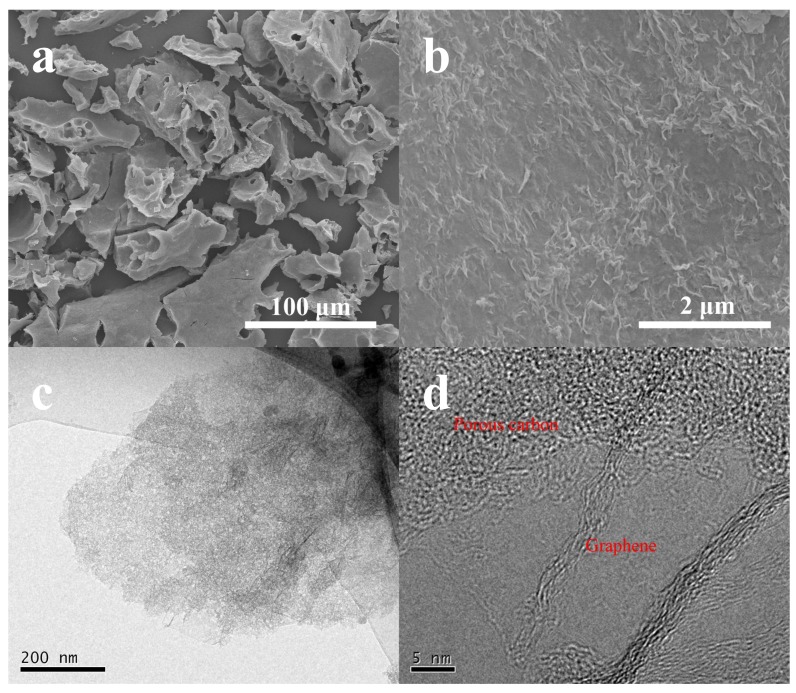
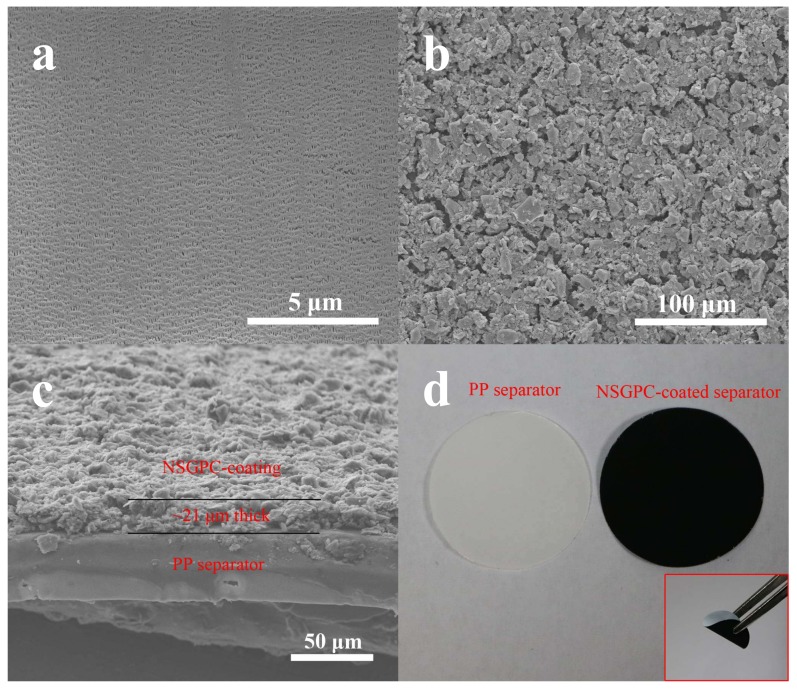
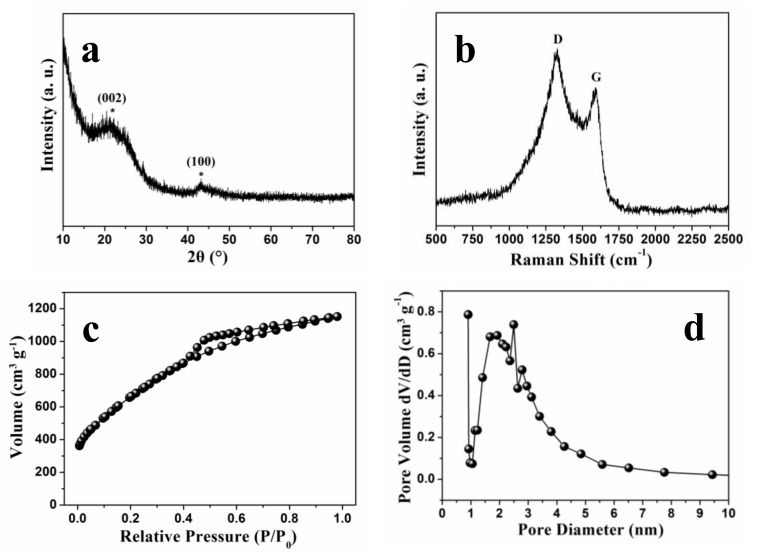
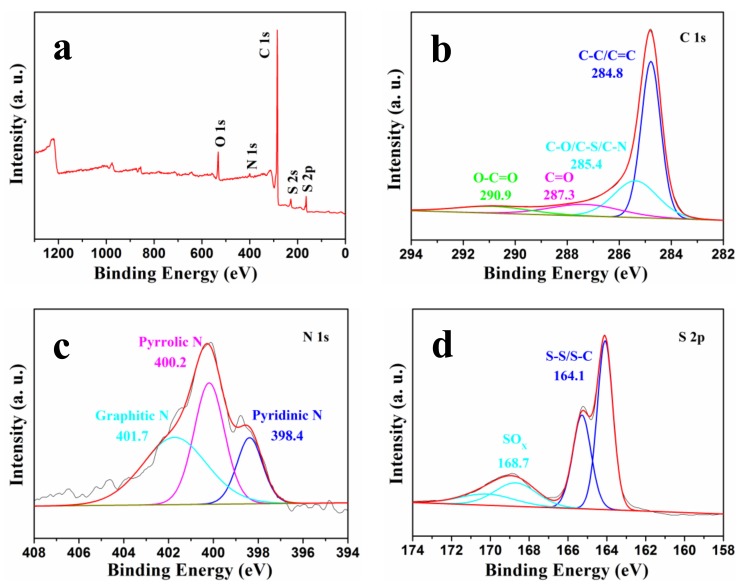
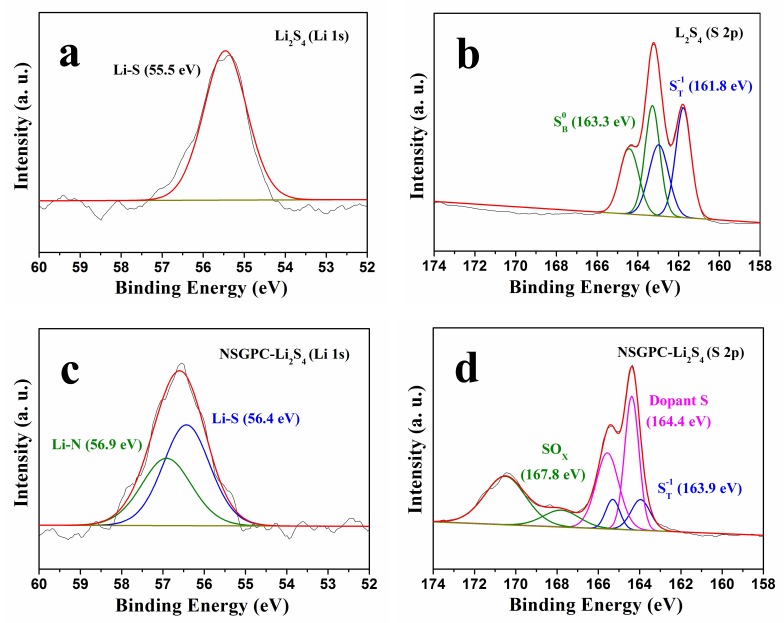
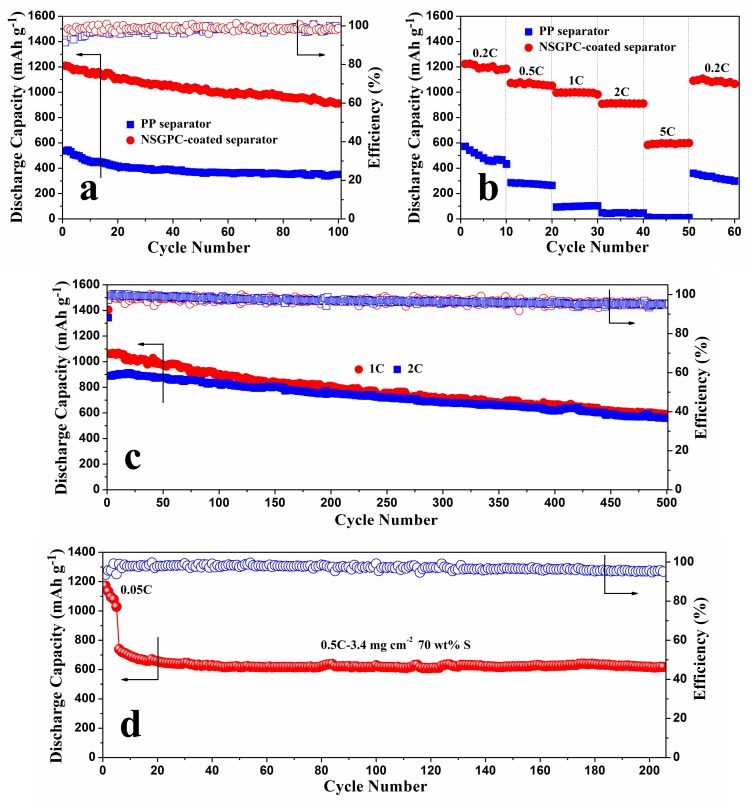
Lithium-sulfur (Li-S) batteries have been identified as the greatest potential next- generation energy-storage systems because of the large theoretical energy density of 2600 Wh kg. However, its practical application on a massive scale is impeded by severe capacity loss resulted from the notorious polysulfides shuttle. Here, we first present a novel technique to synthesize sandwich-type nitrogen and sulfur codoped graphene-backboned porous carbon (NSGPC) to modify the commercial polypropylene separator in Li-S batteries. The as-synthesized NSGPC exhibits a unique micro/mesoporous carbon framework, large specific surface area (2439.0 m² g), high pore volume (1.78 cm³ g), good conductivity, and in situ nitrogen (1.86 at %) and sulfur (5.26 at %) co-doping. Benefiting from the particular physical properties and chemical components of NSGPC, the resultant NSGPC-coated separator not only can facilitate rapid Li⁺ ions and electrons transfer, but also can restrict the dissolution of polysulfides to alleviate the shuttle effect by combining the physical absorption and strong chemical adsorption. As a result, Li-S batteries with NSGPC-coated separator exhibit high initial reversible capacity (1208.6 mAh g at 0.2 C), excellent rate capability (596.6 mAh g at 5 C), and superior cycling stability (over 500 cycles at 2 C with 0.074% capacity decay each cycle). Propelling our easy-designed pure sulfur cathode to a extremely increased mass loading of 3.4 mg cm (70 wt. % sulfur), the Li-S batteries with this functional composite separator exhibit a superior high initial capacity of 1171.7 mAh g, which is quite beneficial to commercialized applications.
锂硫(Li-S)电池因其2600 Wh/kg的高理论能量密度,被视为极具潜力的下一代储能系统。然而,臭名昭著的多硫化物穿梭效应导致的严重容量损失阻碍了其大规模实际应用。在此,我们首次提出一种新颖技术,合成三明治型氮硫共掺杂石墨烯骨架多孔碳(NSGPC),用于改性锂硫电池中的商用聚丙烯隔膜。合成的NSGPC具有独特的微孔/介孔碳骨架、大比表面积(2439.0 m²/g)、高孔容(1.78 cm³/g)、良好的导电性以及原位氮(1.86 at%)和硫(5.26 at%)共掺杂。受益于NSGPC独特的物理性质和化学成分,所得NSGPC涂层隔膜不仅能促进Li⁺离子和电子快速传输,还能通过物理吸附和强化学吸附相结合的方式限制多硫化物溶解,减轻穿梭效应。因此,采用NSGPC涂层隔膜的锂硫电池展现出高初始可逆容量(0.2 C时为1208.6 mAh/g)、优异的倍率性能(5 C时为596.6 mAh/g)以及卓越的循环稳定性(2 C下超过500次循环,每次循环容量衰减0.074%)。将我们设计简单的纯硫正极推进到高达3.4 mg/cm²(70 wt.%硫)的极高质量负载,采用这种功能复合隔膜的锂硫电池展现出1171.7 mAh/g的卓越高初始容量,这对商业化应用非常有利。