Institute of Applied Health Research, University of Birmingham, Birmingham, United Kingdom.
Department of Public Health, Faculty of Medicine, University of Kelaniya, Kelaniya, Sri Lanka.
PLoS Med. 2018 Mar 28;15(3):e1002542. doi: 10.1371/journal.pmed.1002542. eCollection 2018 Mar.
Androgen excess is a defining feature of polycystic ovary syndrome (PCOS), which affects 10% of women and represents a lifelong metabolic disorder, with increased risk of type 2 diabetes, hypertension, and cardiovascular events. Previous studies have suggested an increased risk of nonalcoholic fatty liver disease (NAFLD) in individuals with PCOS and implicated androgen excess as a potential driver.
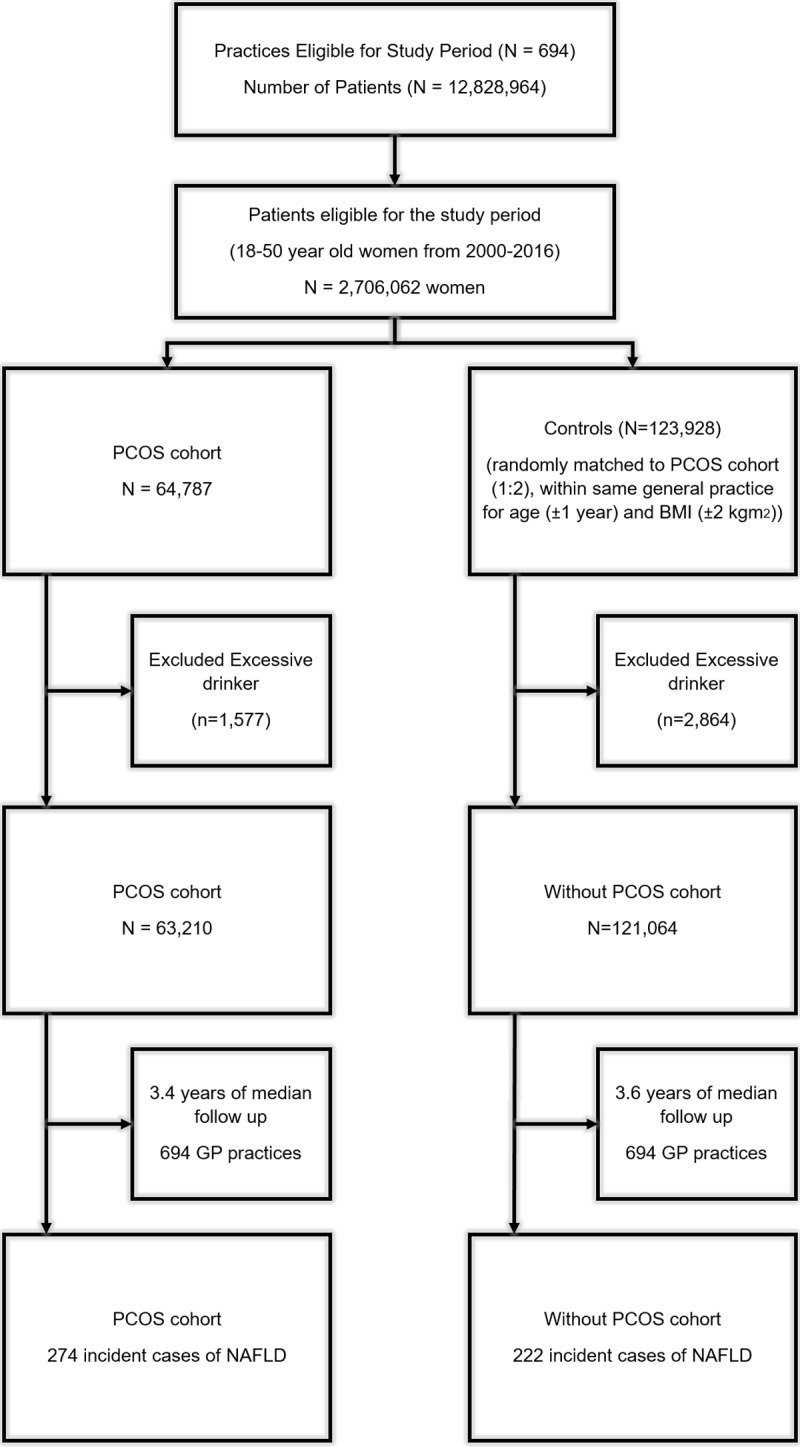
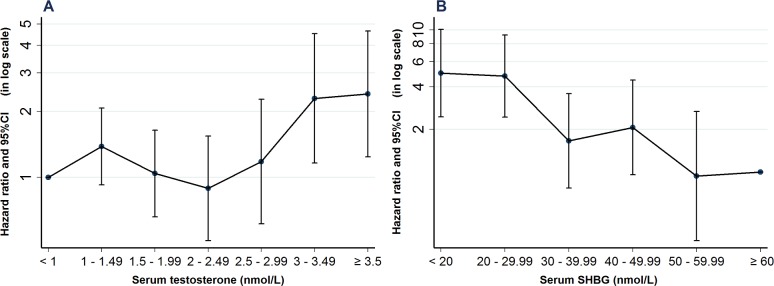
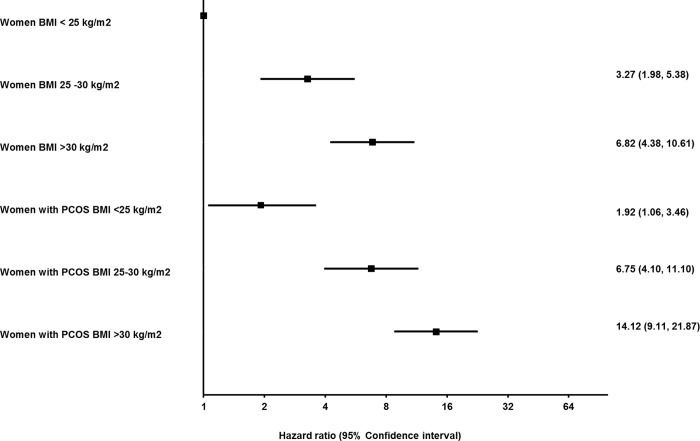
We carried out a retrospective longitudinal cohort study utilizing a large primary care database in the United Kingdom, evaluating NAFLD rates in 63,120 women with PCOS and 121,064 age-, body mass index (BMI)-, and location-matched control women registered from January 2000 to May 2016. In 2 independent cohorts, we also determined the rate of NAFLD in women with a measurement of serum testosterone (n = 71,061) and sex hormone-binding globulin (SHBG; n = 49,625). We used multivariate Cox models to estimate the hazard ratio (HR) for NAFLD and found that women with PCOS had an increased rate of NAFLD (HR = 2.23, 95% CI 1.86-2.66, p < 0.001), also after adjusting for BMI or dysglycemia. Serum testosterone >3.0 nmol/L was associated with an increase in NAFLD (HR = 2.30, 95% CI 1.16-4.53, p = 0.017 for 3-3.49 nmol/L and HR = 2.40, 95% CI 1.24-4.66, p = 0.009 for >3.5 nmol/L). Mirroring this finding, SHBG <30 nmol/L was associated with increased NAFLD hazard (HR = 4.75, 95% CI 2.44-9.25, p < 0.001 for 20-29.99 nmol/L and HR = 4.98, 95% CI 2.45-10.11, p < 0.001 for <20 nmol/L). Limitations of this study include its retrospective nature, absence of detailed information on criteria used to diagnosis PCOS and NAFLD, and absence of data on laboratory assays used to measure serum androgens.
We found that women with PCOS have an increased rate of NAFLD. In addition to increased BMI and dysglycemia, androgen excess contributes to the development of NAFLD in women with PCOS. In women with PCOS-related androgen excess, systematic NAFLD screening should be considered.
雄激素过多是多囊卵巢综合征(PCOS)的一个特征,影响了 10%的女性,代表了一种终生的代谢紊乱,增加了患 2 型糖尿病、高血压和心血管事件的风险。先前的研究表明,PCOS 患者患非酒精性脂肪性肝病(NAFLD)的风险增加,并暗示雄激素过多可能是一个潜在的驱动因素。
我们利用英国一个大型初级保健数据库进行了回顾性纵向队列研究,评估了 63120 名 PCOS 女性和 121064 名年龄、体重指数(BMI)和位置匹配的对照女性的 NAFLD 发生率,这些女性于 2000 年 1 月至 2016 年 5 月注册。在 2 个独立队列中,我们还确定了血清睾酮(n=71061)和性激素结合球蛋白(SHBG;n=49625)测量值的女性中 NAFLD 的发生率。我们使用多变量 Cox 模型来估计 NAFLD 的风险比(HR),发现 PCOS 女性的 NAFLD 发生率增加(HR=2.23,95%CI 1.86-2.66,p<0.001),即使在调整 BMI 或糖代谢异常后也是如此。血清睾酮>3.0 nmol/L 与 NAFLD 增加相关(HR=2.30,95%CI 1.16-4.53,p=0.017,3-3.49 nmol/L 和 HR=2.40,95%CI 1.24-4.66,p=0.009,>3.5 nmol/L)。与这一发现相呼应的是,SHBG<30 nmol/L 与 NAFLD 风险增加相关(HR=4.75,95%CI 2.44-9.25,p<0.001,20-29.99 nmol/L 和 HR=4.98,95%CI 2.45-10.11,p<0.001,<20 nmol/L)。本研究的局限性包括其回顾性性质、缺乏用于诊断 PCOS 和 NAFLD 的标准的详细信息,以及缺乏用于测量血清雄激素的实验室检测数据。
我们发现 PCOS 女性的 NAFLD 发生率增加。除了 BMI 增加和糖代谢异常外,雄激素过多也导致了 PCOS 女性 NAFLD 的发生。对于 PCOS 相关雄激素过多的女性,应考虑进行系统性的 NAFLD 筛查。