Department of Pain Pharmacology, Institute of Pharmacology, Polish Academy of Sciences, Krakow, Poland.
Department of Brain Biochemistry, Institute of Pharmacology, Polish Academy of Sciences, Krakow, Poland.
Front Immunol. 2018 Mar 12;9:494. doi: 10.3389/fimmu.2018.00494. eCollection 2018.
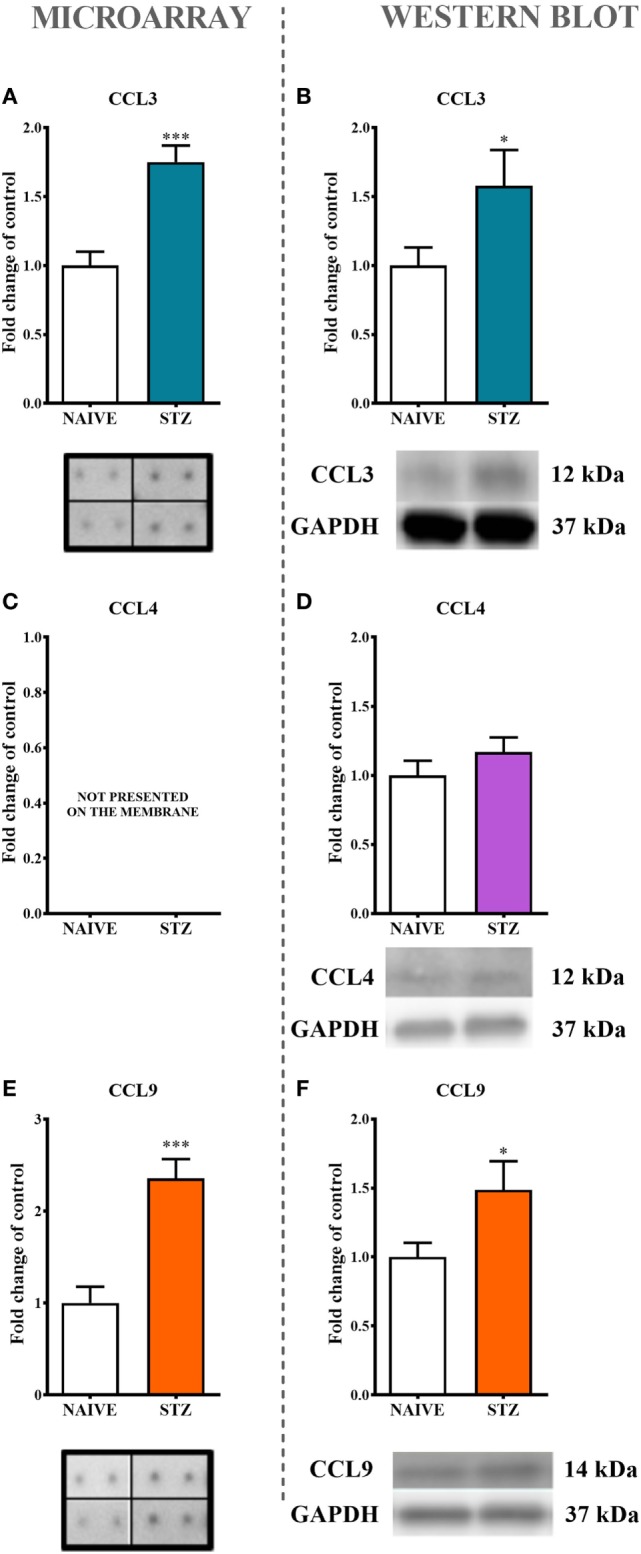
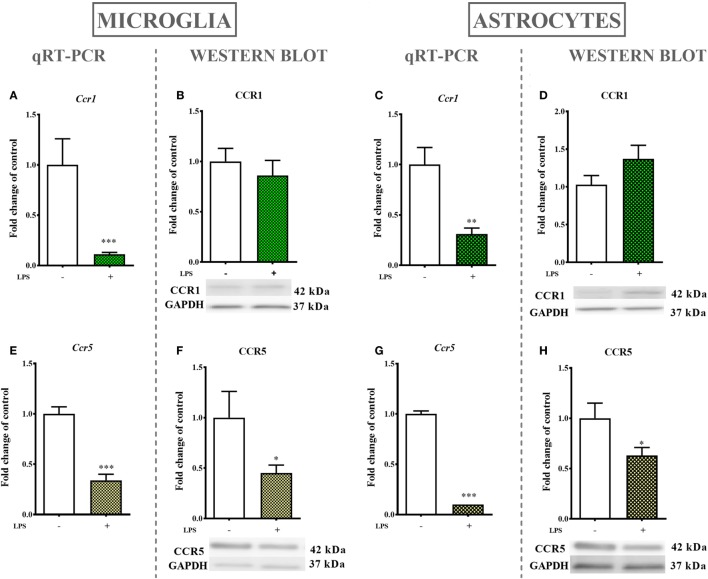
Current investigations underline the important roles of C-C motif ligands in the development of neuropathic pain; however, their participation in diabetic neuropathy is still undefined. Therefore, the goal of our study was to evaluate the participation of macrophage inflammatory protein-1 (MIP-1) family members (CCL3, CCL4, CCL9) in a streptozotocin (STZ)-induced mouse model of diabetic neuropathic pain. Single intrathecal administration of each MIP-1 member (10, 100, or 500 ng/5 μl) in naïve mice evoked hypersensitivity to mechanical (von Frey test) and thermal (cold plate test) stimuli. Concomitantly, protein analysis has shown that, 7 days following STZ injection, the levels of CCL3 and CCL9 (but not CCL4) are increased in the lumbar spinal cord. Performed additionally, immunofluorescence staining undoubtedly revealed that CCL3, CCL9, and their receptors (CCR1 and CCR5) are expressed predominantly by neurons. studies provided evidence that the observed expression of CCL3 and CCL9 may be partially of glial origin; however, this observation was only partially possible to confirm by immunohistochemical study. Single intrathecal administration of CCL3 or CCL9 neutralizing antibody (2 and 4 μg/5 μl) delayed neuropathic pain symptoms as measured at day 7 following STZ administration. Single intrathecal injection of a CCR1 antagonist (J113863; 15 and 20 μg/5 μl) also attenuated pain-related behavior as evaluated at day 7 after STZ. Both neutralizing antibodies, as well as the CCR1 antagonist, enhanced the effectiveness of morphine in STZ-induced diabetic neuropathy. These findings highlight the important roles of CCL3 and CCL9 in the pathology of diabetic neuropathic pain and suggest that they play pivotal roles in opioid analgesia.
目前的研究强调了 C-C 基序配体在神经病理性疼痛发展中的重要作用;然而,它们在糖尿病性神经病变中的参与仍未确定。因此,我们的研究目的是评估巨噬细胞炎性蛋白-1(MIP-1)家族成员(CCL3、CCL4、CCL9)在链脲佐菌素(STZ)诱导的糖尿病性神经病理性疼痛小鼠模型中的参与情况。在未处理的小鼠中,单次鞘内给予每种 MIP-1 成员(10、100 或 500ng/5μl)会引起对机械(von Frey 测试)和热(冷板测试)刺激的敏感性增加。同时,蛋白质分析表明,在 STZ 注射后 7 天,CCL3 和 CCL9(但不是 CCL4)的水平在腰脊髓中增加。此外进行的免疫荧光染色无疑表明,CCL3、CCL9 及其受体(CCR1 和 CCR5)主要由神经元表达。研究提供的证据表明,观察到的 CCL3 和 CCL9 的表达可能部分源自神经胶质;然而,通过免疫组织化学研究仅部分可能证实这一观察结果。单次鞘内给予 CCL3 或 CCL9 中和抗体(2 和 4μg/5μl)可延迟 STZ 给药后第 7 天测量的神经病理性疼痛症状。单次鞘内注射 CCR1 拮抗剂(J113863;15 和 20μg/5μl)也可减轻 STZ 后第 7 天评估的疼痛相关行为。两种中和抗体以及 CCR1 拮抗剂均增强了吗啡在 STZ 诱导的糖尿病性神经病变中的有效性。这些发现强调了 CCL3 和 CCL9 在糖尿病性神经病理性疼痛发病机制中的重要作用,并表明它们在阿片类镇痛药中发挥关键作用。