Department of Otorhinolaryngology, Head and Neck Surgery, Heidelberg University Hospital, Heidelberg, Germany.
Department of Otorhinolaryngology, Head and Neck Surgery, University Medical Center Ulm, Ulm, Germany.
PLoS One. 2018 Mar 29;13(3):e0194989. doi: 10.1371/journal.pone.0194989. eCollection 2018.
The transcription factor SOX2 has been identified as a lineage survival oncogene in squamous cell carcinoma and copy number gain is a common event in several human malignancies including head and neck cancer. However, the regulation and function of SOX2 during carcinogenesis as well as its prognostic value appears to be highly context dependent. As an example, high SOX2 expression in lung squamous cell carcinoma (SCC) is related to a favorable prognosis, while it is associated with poor outcome in lung adenocarcinoma. More recently, higher SOX2 levels and improved survival was also reported for head and neck SCC (HNSCC), and silencing of SOX2 expression in HNSCC cell lines revealed a mesenchymal-like phenotype with prominent vimentin expression. So far, SOX2 expression and its clinical relevance for other head and neck cancers, such as adenoid cystic carcinoma (HNACC) have not been sufficiently investigated.
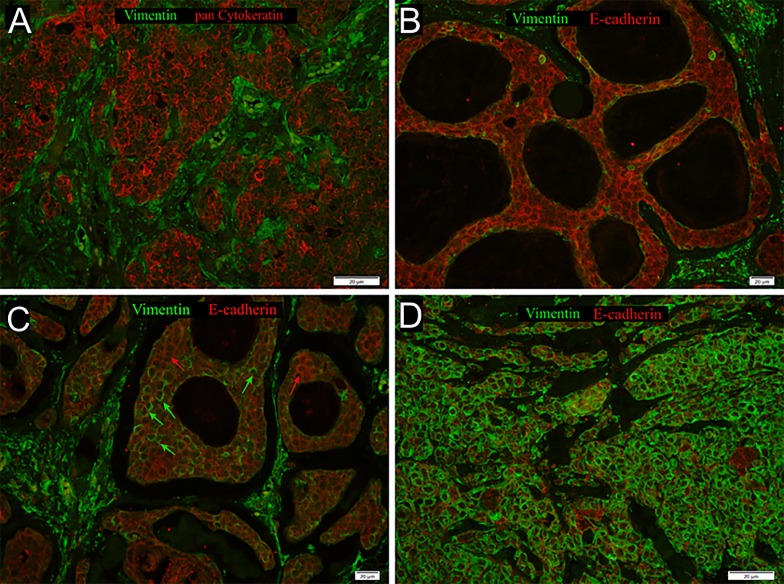
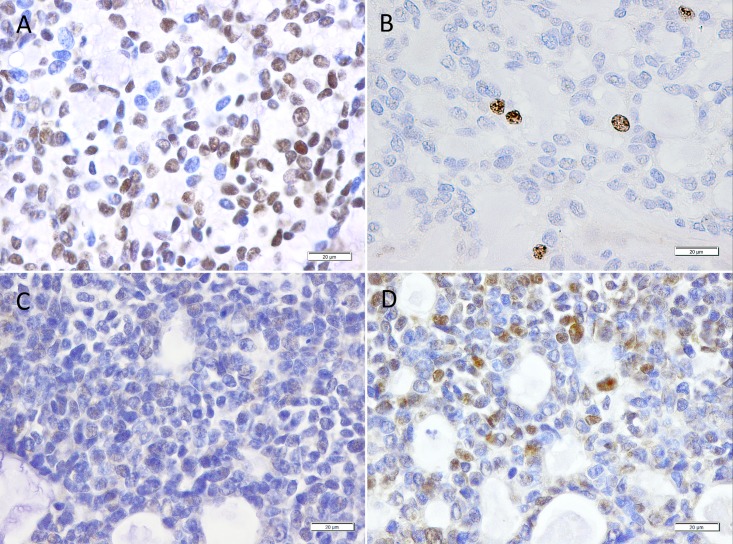
SOX2, vimentin and E-cadherin expression was assessed by immunohistochemical staining on serial sections from formalin fixed and paraffin embedded tissue samples of a patient cohort (n = 45) with primary ACC and correlated with patient and tumor characteristics as well as survival.
High SOX2 expression was found in 14 (31%) primary tumor specimens and was significantly correlated with a N0 lymph node status (p = 0.04), while low SOX2 expression was correlated with a solid growth pattern (p = 0.031). Of the 45 patients, 27 tumor samples resembled an EMT-like phenotype, as assessed by high vimentin and low E-cadherin levels. However, in HNACC SOX2 levels were neither correlated with vimentin nor with E-cadherin expression, further supporting a context dependent regulation and function of SOX2 in distinct tumor entities.
The absence of SOX2 was predominantly found in solid HNACC, which are characterized by a more aggressive phenotype in ACC. However, the underlying molecular mechanisms of SOX2 regulation and function in distinct HNACC subgroups remain to be fully elucidated.
转录因子 SOX2 已被确定为鳞状细胞癌中的谱系存活致癌基因,并且拷贝数增益是包括头颈部癌症在内的几种人类恶性肿瘤中的常见事件。然而,SOX2 在癌变过程中的调节和功能及其预后价值似乎高度依赖于具体情况。例如,肺鳞状细胞癌(SCC)中高 SOX2 表达与预后良好相关,而在肺腺癌中则与不良预后相关。最近,头颈部鳞状细胞癌(HNSCC)中也报道了更高的 SOX2 水平和改善的生存,HNSCC 细胞系中 SOX2 表达的沉默揭示了具有明显波形蛋白表达的间充质样表型。到目前为止,SOX2 表达及其对头颈部其他癌症(如腺样囊性癌(HNACC))的临床相关性尚未得到充分研究。
通过对福尔马林固定和石蜡包埋组织样本的连续切片进行免疫组织化学染色,评估患者队列(n = 45)中原发性 ACC 中的 SOX2、波形蛋白和 E-钙黏蛋白表达,并将其与患者和肿瘤特征以及生存相关联。
在 14 例(31%)原发性肿瘤标本中发现高 SOX2 表达,与 N0 淋巴结状态显著相关(p = 0.04),而低 SOX2 表达与实性生长模式相关(p = 0.031)。在 45 名患者中,27 例肿瘤样本表现出 EMT 样表型,如高波形蛋白和低 E-钙黏蛋白水平所示。然而,在 HNACC 中,SOX2 水平与波形蛋白或 E-钙黏蛋白表达均不相关,这进一步支持 SOX2 在不同肿瘤实体中的调节和功能依赖于具体情况。
在实体性 HNACC 中主要发现 SOX2 缺失,其特征是在 ACC 中表现出更具侵袭性的表型。然而,SOX2 调节和功能在不同 HNACC 亚组中的潜在分子机制仍有待充分阐明。