Cambridge Institute for Medical Research, University of Cambridge, Cambridge CB2 0XY, UK.
Department of Haematology, University of Cambridge, Cambridge, UK.
Science. 2018 Mar 30;359(6383):1533-1536. doi: 10.1126/science.aar5129.
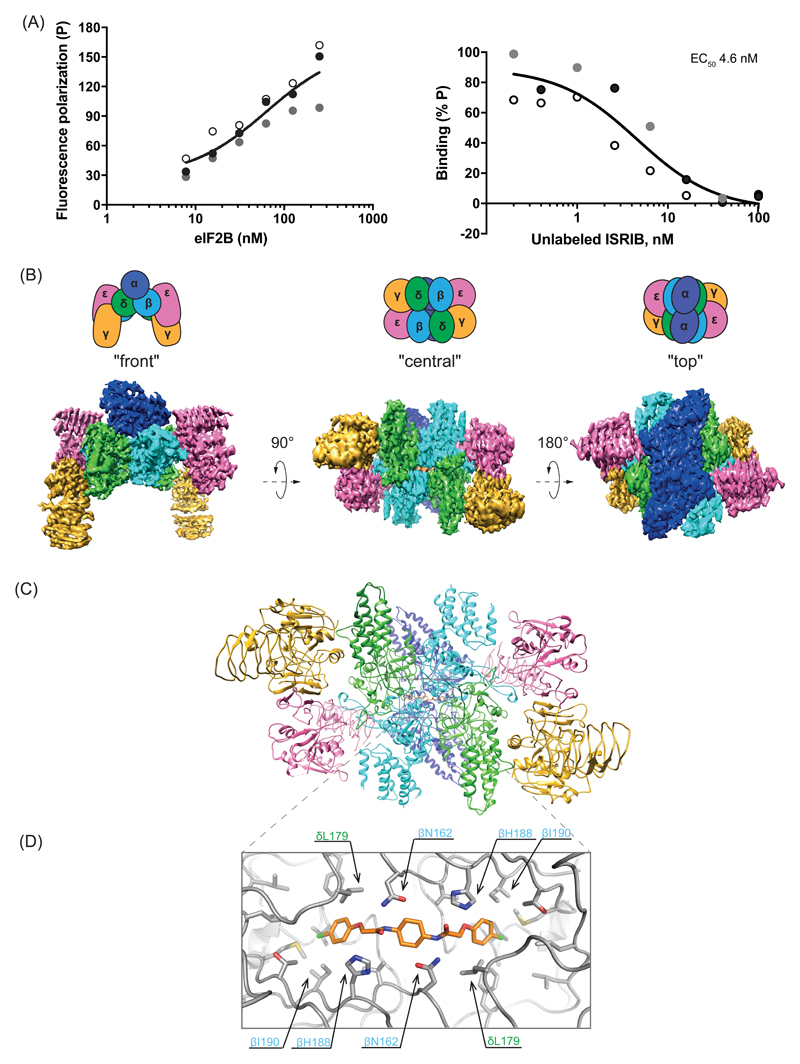
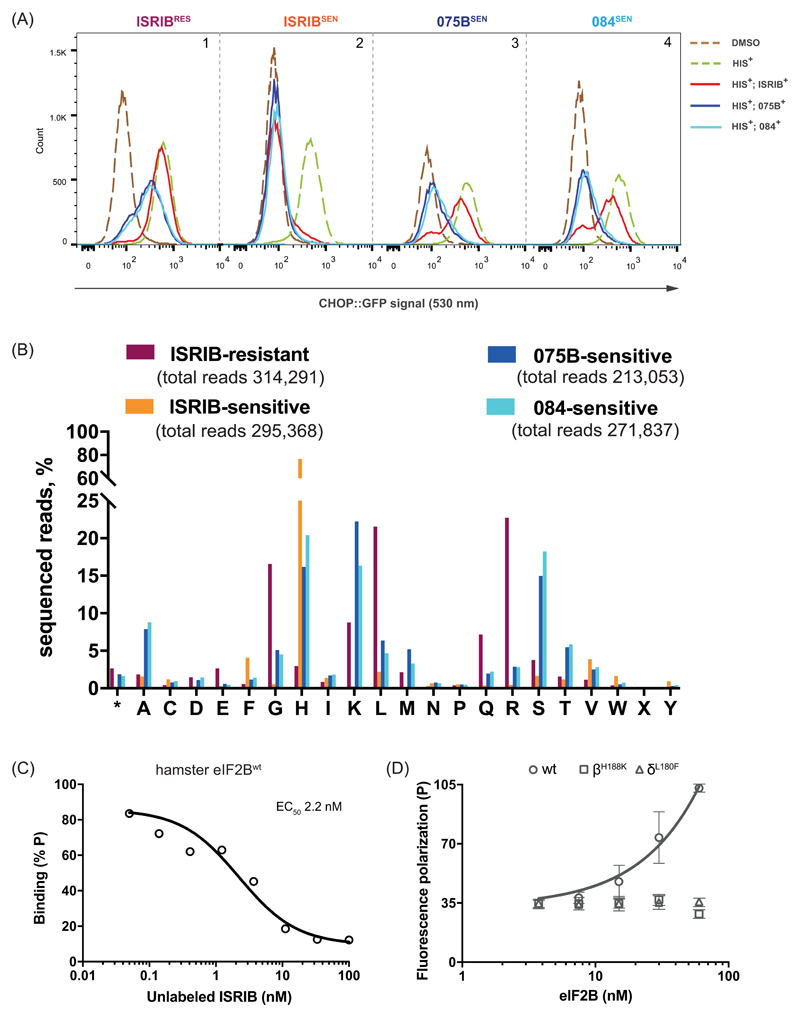
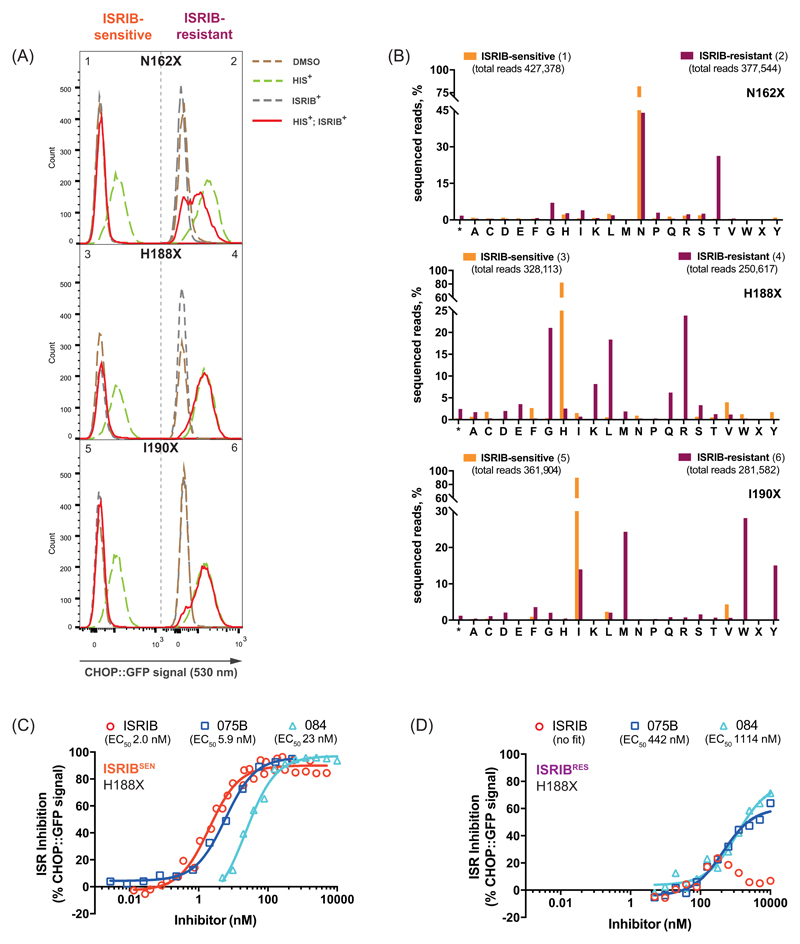
The integrated stress response (ISR) is a conserved translational and transcriptional program affecting metabolism, memory, and immunity. The ISR is mediated by stress-induced phosphorylation of eukaryotic translation initiation factor 2α (eIF2α) that attenuates the guanine nucleotide exchange factor eIF2B. A chemical inhibitor of the ISR, ISRIB, reverses the attenuation of eIF2B by phosphorylated eIF2α, protecting mice from neurodegeneration and traumatic brain injury. We describe a 4.1-angstrom-resolution cryo-electron microscopy structure of human eIF2B with an ISRIB molecule bound at the interface between the β and δ regulatory subunits. Mutagenesis of residues lining this pocket altered the hierarchical cellular response to ISRIB analogs in vivo and ISRIB binding in vitro. Our findings point to a site in eIF2B that can be exploited by ISRIB to regulate translation.
整合应激反应(ISR)是一种保守的翻译和转录程序,影响代谢、记忆和免疫。ISR 是由真核翻译起始因子 2α(eIF2α)的应激诱导磷酸化介导的,该磷酸化会减弱鸟嘌呤核苷酸交换因子 eIF2B。ISR 的一种化学抑制剂 ISRIB 通过磷酸化的 eIF2α 逆转 eIF2B 的衰减,从而保护小鼠免受神经退行性变和创伤性脑损伤。我们描述了一个 4.1 埃分辨率的冷冻电镜结构,其中包含与人 eIF2B 结合的 ISRIB 分子,位于β和δ调节亚基之间的界面上。突变排列在这个口袋周围的残基改变了体内对 ISRIB 类似物的细胞反应的层次结构,以及体外的 ISRIB 结合。我们的发现指出了 eIF2B 中的一个位点,可以被 ISRIB 利用来调节翻译。