University of Pennsylvania, Philadelphia, Pennsylvania, USA.
Nat Protoc. 2018 May;13(5):811-818. doi: 10.1038/nprot.2018.011. Epub 2018 Mar 29.
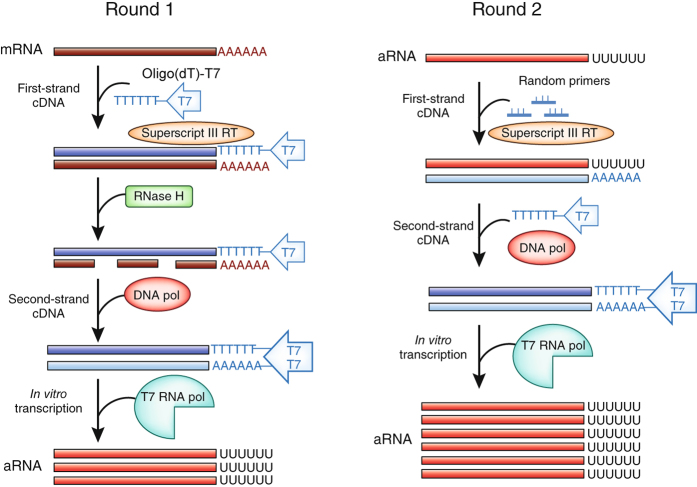
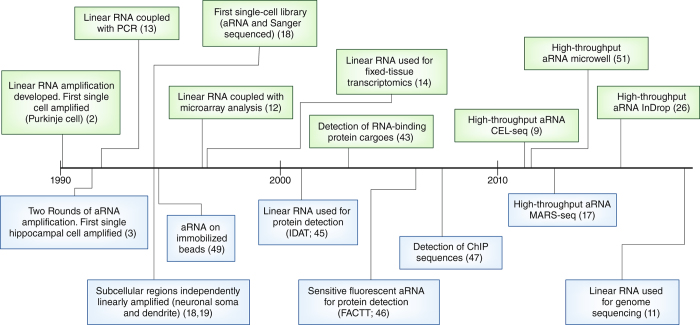
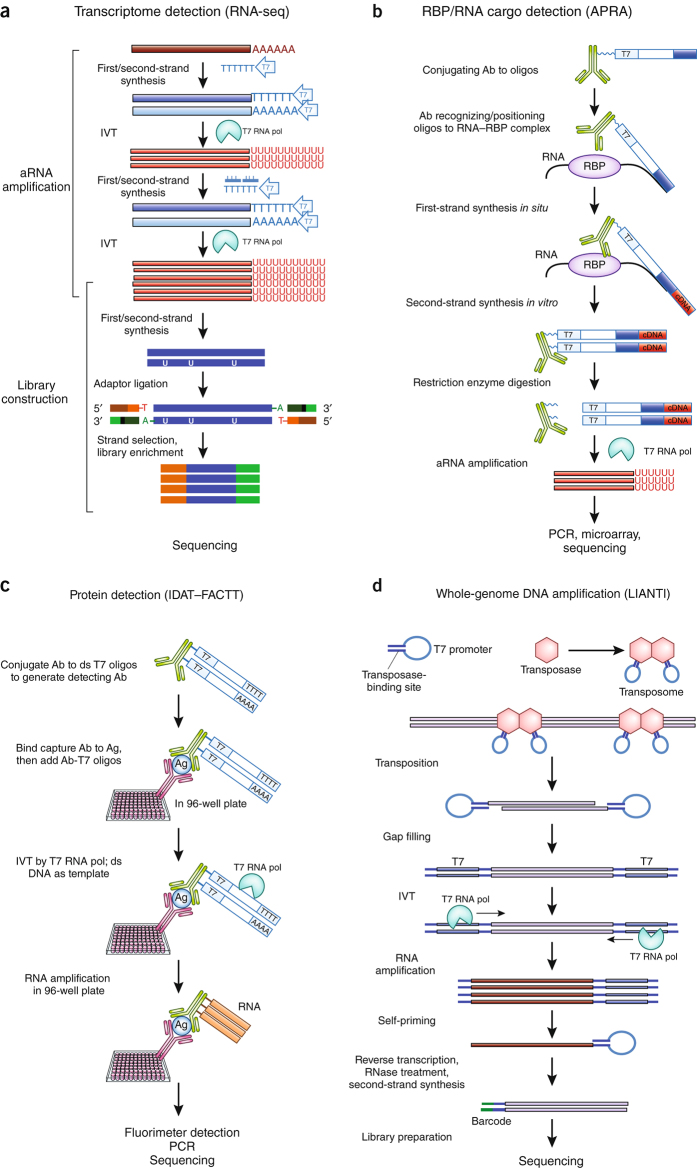
It has been over a quarter of a century since the introduction of the linear RNA amplification methodology known as antisense RNA (aRNA) amplification. Whereas most molecular biology techniques are rapidly replaced owing to the fast-moving nature of development in the field, the aRNA procedure has become a base that can be built upon through varied uses of the technology. The technique was originally developed to assess RNA populations from small amounts of starting material, including single cells, but over time its use has evolved to include the detection of various cellular entities such as proteins, RNA-binding-protein-associated cargoes, and genomic DNA. In this Perspective we detail the linear aRNA amplification procedure and its use in assessing various components of a cell's chemical phenotype. This procedure is particularly useful in efforts to multiplex the simultaneous detection of various cellular processes. These efforts are necessary to identify the quantitative chemical phenotype of cells that underlies cellular function.
自线性 RNA 扩增方法——反义 RNA(aRNA) 扩增问世以来,已经过去了二十五年多。尽管由于该领域的快速发展,大多数分子生物学技术都在迅速被取代,但 aRNA 技术已经成为一个基础,可以通过该技术的各种用途进行扩展。该技术最初是为了从小量起始材料(包括单细胞)中评估 RNA 群体而开发的,但随着时间的推移,其用途已经发展到包括检测各种细胞实体,如蛋白质、RNA 结合蛋白相关货物和基因组 DNA。在本观点中,我们详细介绍了线性 aRNA 扩增程序及其在评估细胞化学表型的各种成分中的应用。该程序在同时检测各种细胞过程的多重化方面特别有用。这些努力对于确定细胞的定量化学表型是必要的,而细胞的定量化学表型是细胞功能的基础。