Beebe Stephen J, Lassiter Brittany P, Guo Siqi
Frank Reidy Research Center for Bioelectrics, 4211 Monarch Ways, Suite 300, Norfolk, VA 23508, USA.
Cancers (Basel). 2018 Mar 30;10(4):97. doi: 10.3390/cancers10040097.
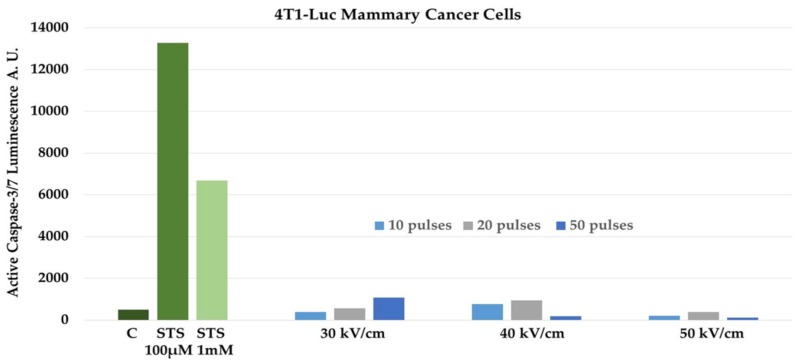
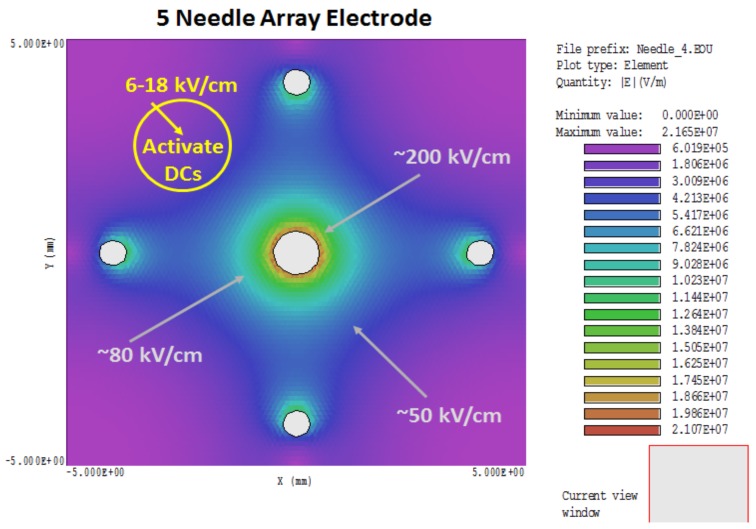
Nanopulse Stimulation (NPS) eliminates mouse and rat tumor types in several different animal models. NPS induces protective, vaccine-like effects after ablation of orthotopic rat N1-S1 hepatocellular carcinoma. Here we review some general concepts of NPS in the context of studies with mouse metastatic 4T1 mammary cancer showing that the postablation, vaccine-like effect is initiated by dynamic, multilayered immune mechanisms. NPS eliminates primary 4T1 tumors by inducing immunogenic, caspase-independent programmed cell death (PCD). With lower electric fields, like those peripheral to the primary treatment zone, NPS can activate dendritic cells (DCs). The activation of DCs by dead/dying cells leads to increases in memory effector and central memory T-lymphocytes in the blood and spleen. NPS also eliminates immunosuppressive cells in the tumor microenvironment and blood. Finally, NPS treatment of 4T1 breast cancer exhibits an abscopal effect and largely prevents spontaneous metastases to distant organs. NPS with fast rise-fall times and pulse durations near the plasma membrane charging time constant, which exhibits transient, high-frequency components (1/time = Hz), induce responses from mitochondria, endoplasmic reticulum, and nucleus. Such effects may be responsible for release of danger-associated molecular patterns, including ATP, calreticulin, and high mobility group box 1 (HMBG1) from 4T1-Luc cells to induce immunogenic cell death (ICD). This likely leads to immunity and the vaccine-like response. In this way, NPS acts as a unique onco-immunotherapy providing distinct therapeutic advantages showing possible clinical utility for breast cancers as well as for other malignancies.
纳米脉冲刺激(NPS)在几种不同的动物模型中可消除小鼠和大鼠的肿瘤类型。在原位大鼠N1-S1肝细胞癌切除后,NPS可诱导出类似疫苗的保护作用。在此,我们结合对小鼠转移性4T1乳腺癌的研究,回顾NPS的一些一般概念,结果表明切除后类似疫苗的效应是由动态、多层免疫机制引发的。NPS通过诱导免疫原性、不依赖半胱天冬酶的程序性细胞死亡(PCD)来消除原发性4T1肿瘤。在较低电场下,如在主要治疗区域周边的电场,NPS可激活树突状细胞(DC)。死亡/濒死细胞对DC的激活会导致血液和脾脏中记忆效应细胞和中枢记忆T淋巴细胞增加。NPS还可消除肿瘤微环境和血液中的免疫抑制细胞。最后,NPS治疗4T1乳腺癌具有远隔效应,并在很大程度上预防向远处器官的自发转移。上升-下降时间快且脉冲持续时间接近质膜充电时间常数的NPS,会呈现瞬态高频成分(1/时间=赫兹),可诱导线粒体、内质网和细胞核产生反应。这些效应可能是导致4T1-Luc细胞释放危险相关分子模式的原因,这些分子模式包括ATP(三磷酸腺苷)、钙网蛋白和高迁移率族蛋白盒1(HMGB1),从而诱导免疫原性细胞死亡(ICD)。这可能会引发免疫和类似疫苗的反应。通过这种方式,NPS作为一种独特的肿瘤免疫疗法,具有明显的治疗优势,显示出对乳腺癌以及其他恶性肿瘤可能具有临床应用价值。