Universidade de Pernambuco (UPE), Instituto de Ciências Biológicas, Programa de Pós-graduação em Biologia Celular e Molecular Aplicada, Recife, PE, Brazil; Universidade Federal de Pernambuco, Departamento de Medicina Tropical, Programa de Pós-Graduação em Medicina Tropical, Recife, PE, Brazil.
Universidade Federal de Pernambuco, Departamento de Medicina Tropical, Programa de Pós-Graduação em Medicina Tropical, Recife, PE, Brazil.
Braz J Infect Dis. 2018 Mar-Apr;22(2):129-136. doi: 10.1016/j.bjid.2018.03.003. Epub 2018 Mar 28.
Biofilm production is an important mechanism for the survival of Pseudomonas aeruginosa and its relationship with antimicrobial resistance represents a challenge for patient therapeutics. P. aeruginosa is an opportunistic pathogen frequently associated to nosocomial infections, especially in imunocompromised hosts.
Analyze the phenotypic biofilm production in P. aeruginosa isolates, describe clonal profiles, and analyze quorum sensing (QS) genes and the occurrence of mutations in the LasR protein of non-biofilm producing isolates.
Isolates were tested for biofilm production by measuring cells adherence to the microtiter plates. Clonal profile analysis was carried out through ERIC-PCR, QS genes were by specific PCR.
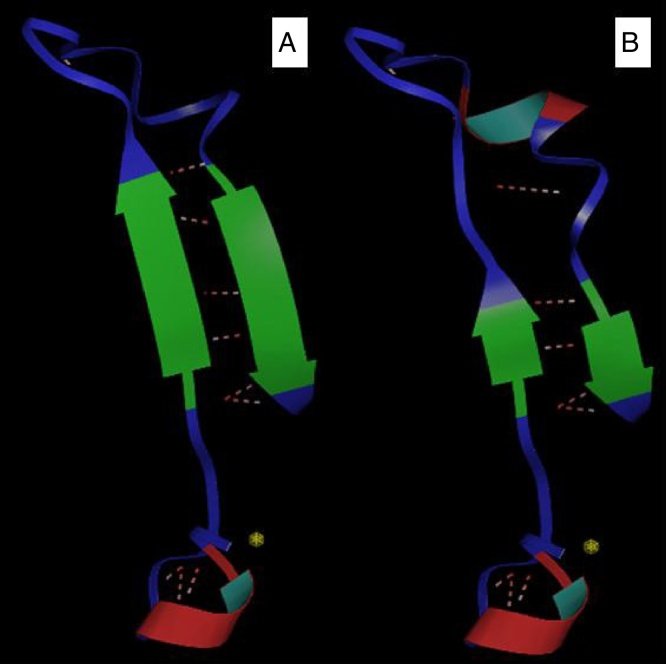
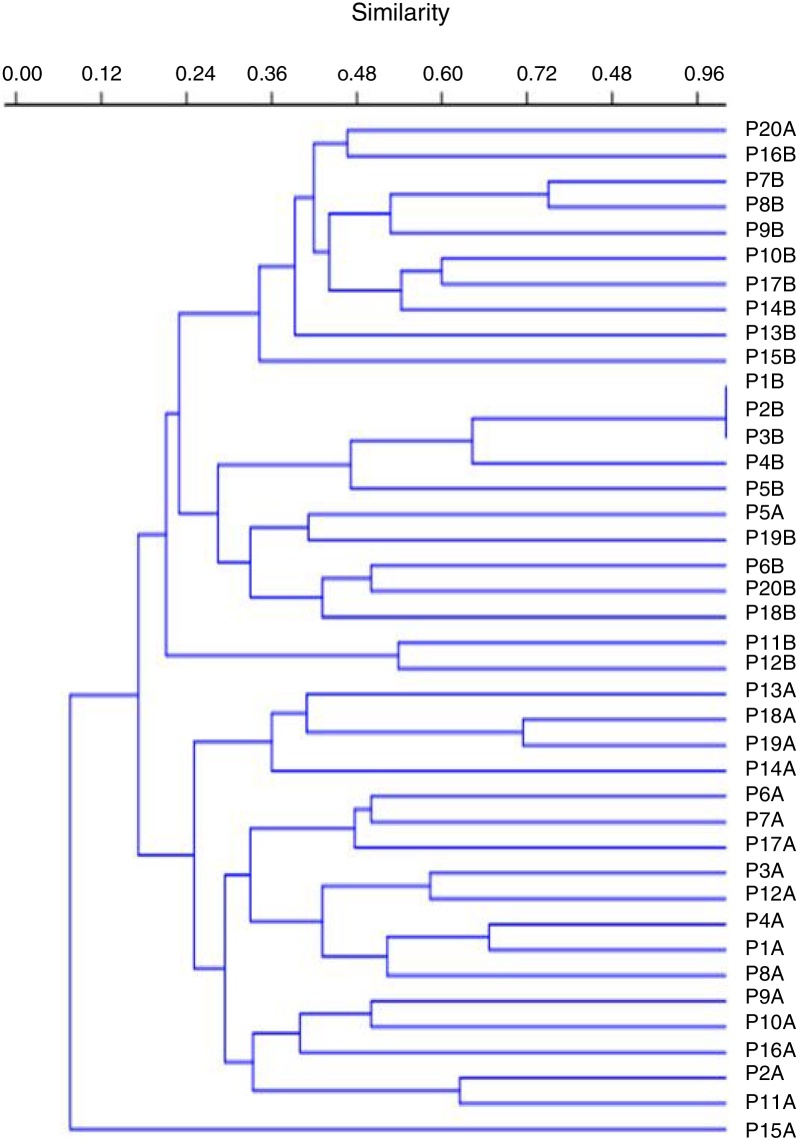
The results showed that 77.5% of the isolates were considered biofilm producers. The results of genotyping showed 38 distinct genetic profiles. As for the occurrence of the genes, 100% of the isolates presented the lasR, rhlI and rhlR genes, and 97.5%, presented the lasI gene. In this study nine isolates were not biofilm producers. However, all presented the QS genes. Amplicons related to genes were sequenced in three of the nine non-biofilm-producing isolates (all presenting different genetic similarity profile) and aligned to the sequences of those genes in P. aeruginosa strain PAO1 (standard biofilm-producing strain). Alignment analysis showed an insertion of three nucleotides (T, C and G) causing the addition of an amino acid valine in the sequence of the LasR protein, in position 53.
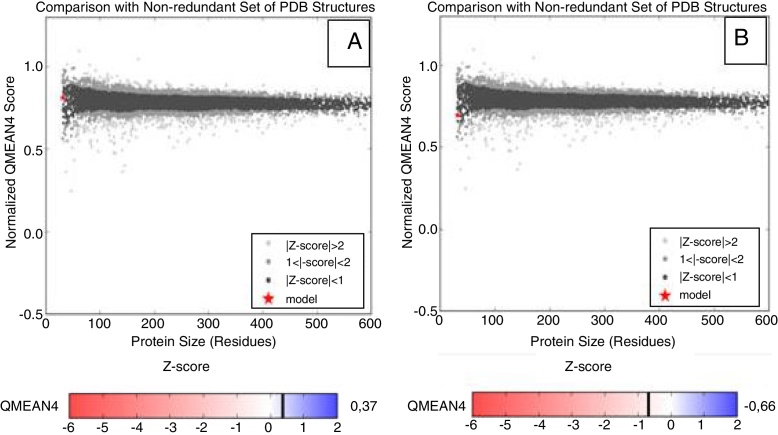
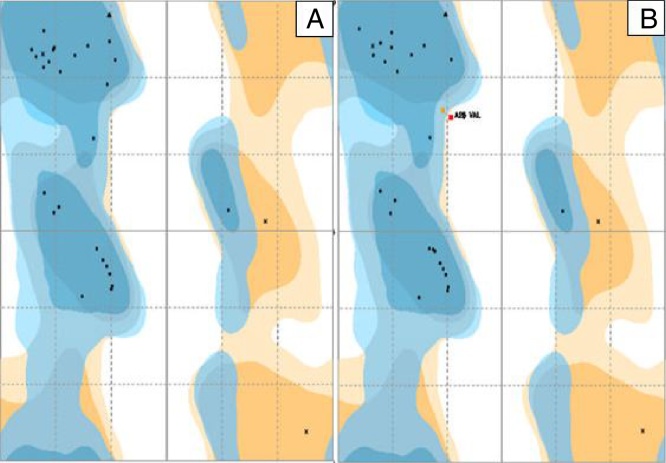
The modeling of the resulting LasR protein showed a conformational change in its structure, suggesting that this might be the reason why these isolates are unable to produce biofilm.
生物膜的产生是铜绿假单胞菌生存的重要机制,其与抗菌药物耐药性的关系是患者治疗的一个挑战。铜绿假单胞菌是一种机会性病原体,常与医院获得性感染有关,尤其是在免疫功能低下的宿主中。
分析铜绿假单胞菌分离株的表型生物膜产生情况,描述克隆谱,并分析群体感应(QS)基因和非生物膜产生分离株中 LasR 蛋白突变的发生情况。
通过测量细胞对微量滴定板的粘附来检测分离物的生物膜产生。通过 ERIC-PCR 进行克隆谱分析,通过特异性 PCR 进行 QS 基因分析。
结果显示,77.5%的分离株被认为是生物膜生产者。基因分型结果显示有 38 种不同的遗传特征。至于基因的发生情况,所有分离株均呈现 lasR、rhlI 和 rhlR 基因,100%的分离株呈现 lasI 基因。在本研究中,有 9 个分离株不是生物膜生产者。然而,所有的分离株都呈现了 QS 基因。在 9 个非生物膜生产分离株中的 3 个(均呈现不同的遗传相似性特征)中,对相关基因的扩增子进行了测序,并与标准生物膜生产株铜绿假单胞菌 PAO1 的基因序列进行了比对。比对分析显示,LasR 蛋白序列中的第 53 位插入了三个核苷酸(T、C 和 G),导致一个缬氨酸的添加。
LasR 蛋白结构的建模显示其结构发生了构象变化,这可能是这些分离株无法产生生物膜的原因。